
Understanding Automotive Brakes
Types, Compounds & What You Need to Know
Your braking system is one of the most critical safety components on your vehicle. Whether you’re commuting through Sherwood Park traffic or hauling a load down the highway, your brakes are what ultimately bring everything to a controlled stop. This guide breaks down the fundamentals—how brakes work, the different types available, and the compounds that make a real difference in performance.
How Brakes Work (Quick Overview)
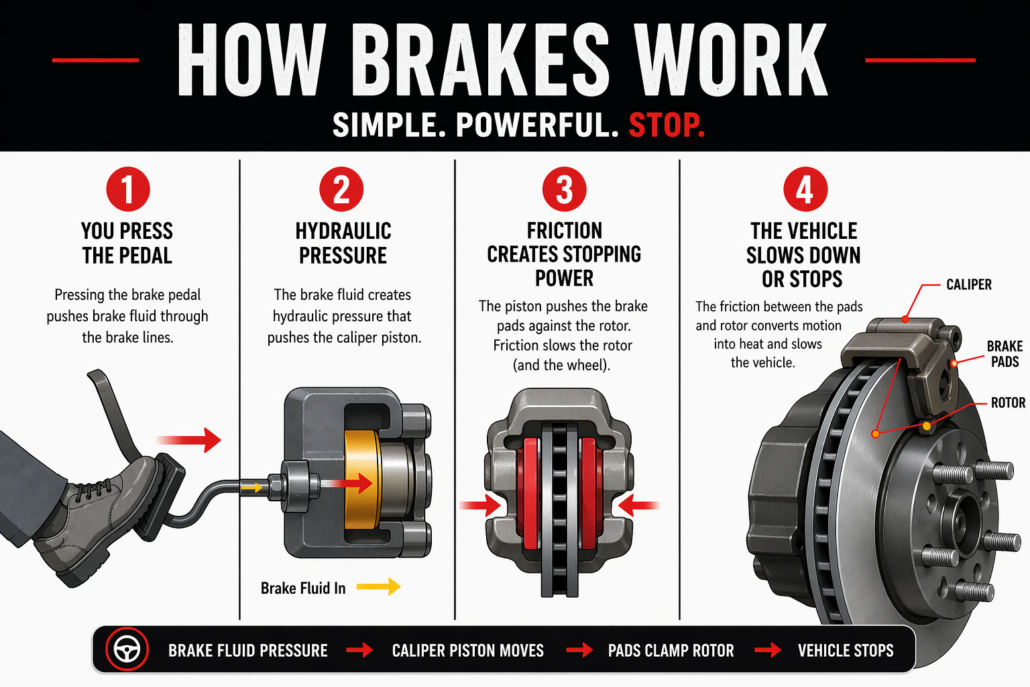
At a basic level, your braking system converts kinetic energy into heat through friction.
When you press the brake pedal:
– Hydraulic fluid transfers force to the piston calipers (or wheel cylinders)
– Brake pads (or shoes) press against a rotating surface (rotor or drum)
– Friction slows the wheel, bringing the vehicle to a stop
Modern vehicles rely on additional systems like ABS (Anti-lock Braking System) and electronic brake force distribution to maintain control and stability under braking.
Types of Braking Systems
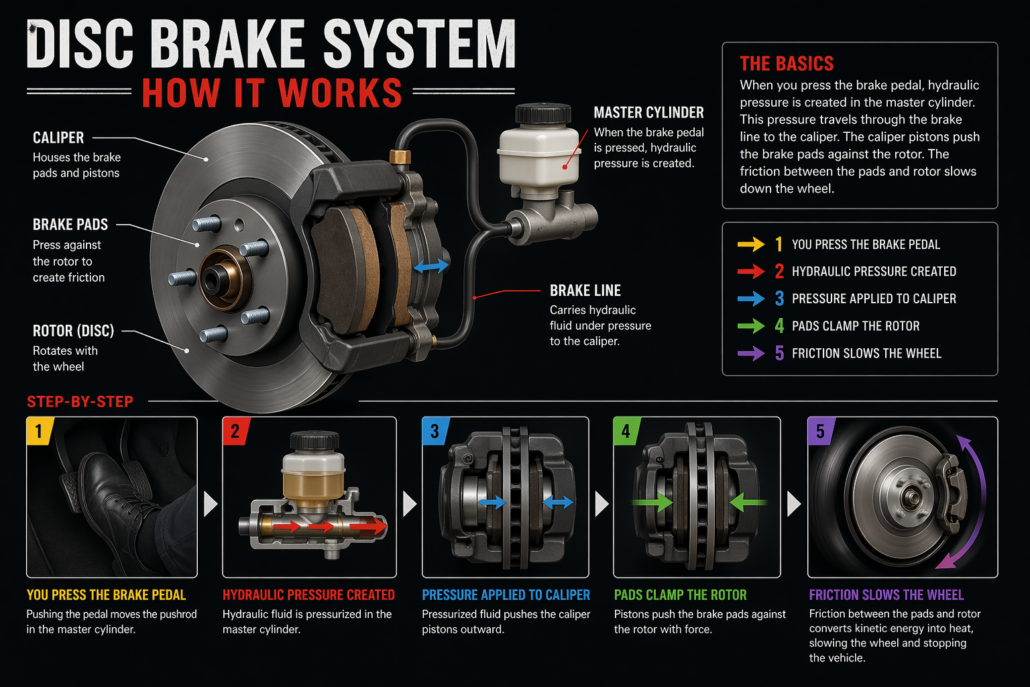
Disc brakes are standard on most modern vehicles, especially on the front axle.
1. Disc Brakes (Most Common)
| key components | advantages | common variations |
|---|---|---|
| Rotor (disc) | Superior heat dissipation | Vented rotors – improved cooling |
| Caliper | Better performance in wet conditions | |
| Brake Pads | More consistent braking under load | Slotted/drilled rotors – help with gas and heat evacuation (more common in performance applications) |
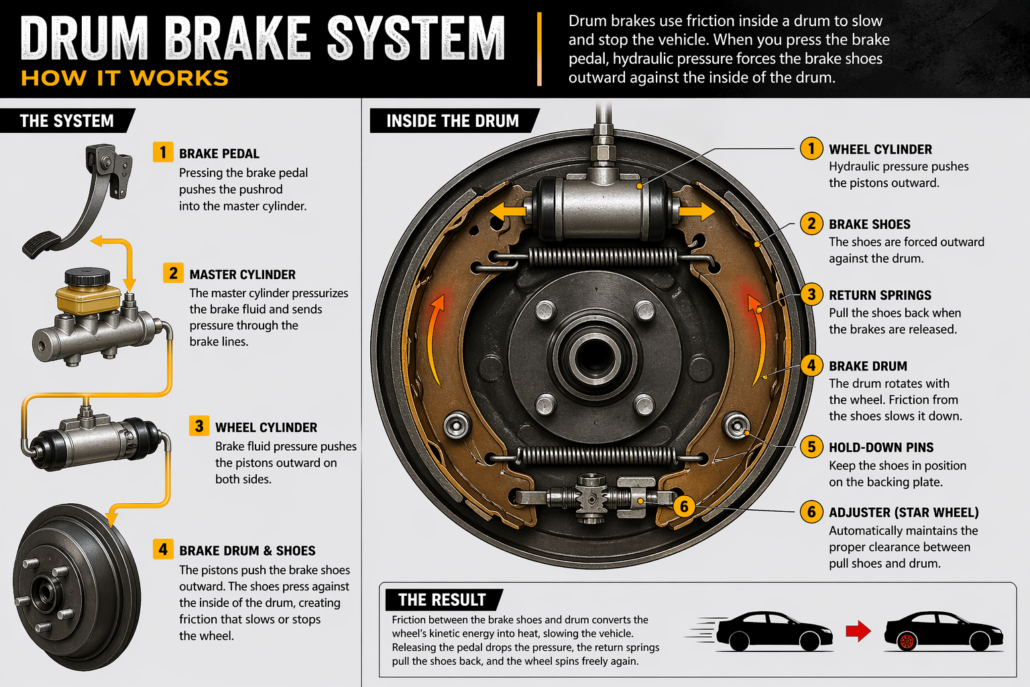
2. Drum Brakes (Older/Rear Applications)
Still found on the rear of some vehicles, especially economy cars and light-duty trucks.
| Key components | aDVANTAGES | LIMITATIONS |
|---|---|---|
| Brake drum | Lower cost | Poor heat dissipation |
| Brake shoes | Built-in parking brake mechanism | |
| Wheel cylinder | Long service life in light-duty use | Reduced performance under heavy braking |
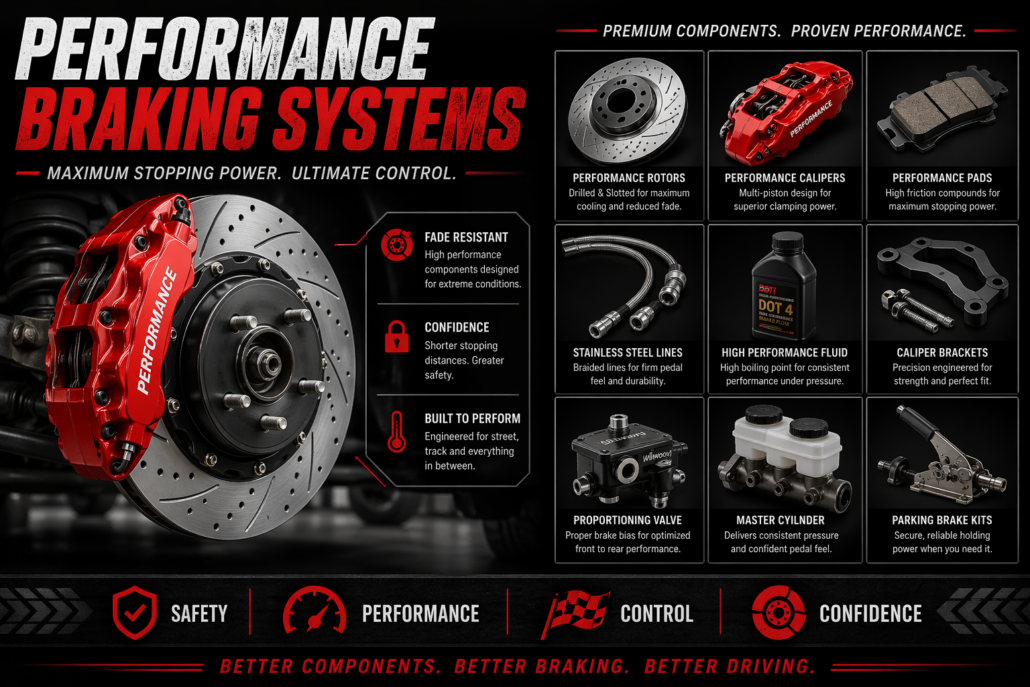
3. Performance Braking Systems
Designed for trucks, towing applications, or performance driving.
| Features: | Benefits: |
|---|---|
| Larger ratios | Increased stopping power |
| Multi-piston calipers | Reduced brake fade |
| High-performance pad compounds | Better heat management under load |
Ideal for lifted trucks, towing setups or anyone pushing their vehicle harder than stock conditions.
Brake Pad Compounds Explained
Not all brake pads are created equal. The compound directly impacts stopping power, noise, dust, and lifespan.
1. Organic (NAO – Non-Asbestos Organic)
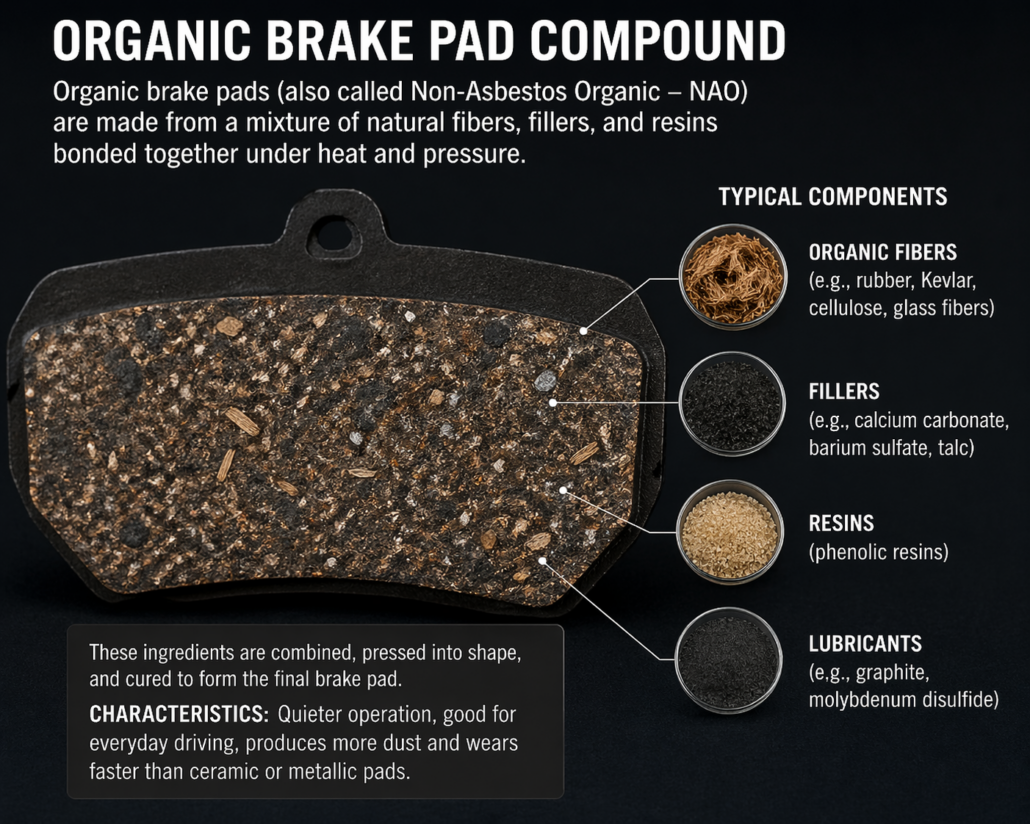
Made from fibers, rubber and resins
| pros | cons |
|---|---|
| Quiet | Faster wear |
| Low Dust | |
| Affordable | Lower heat tolerance |
Best for: Daily driving with light braking demands
2. Semi-Metallic
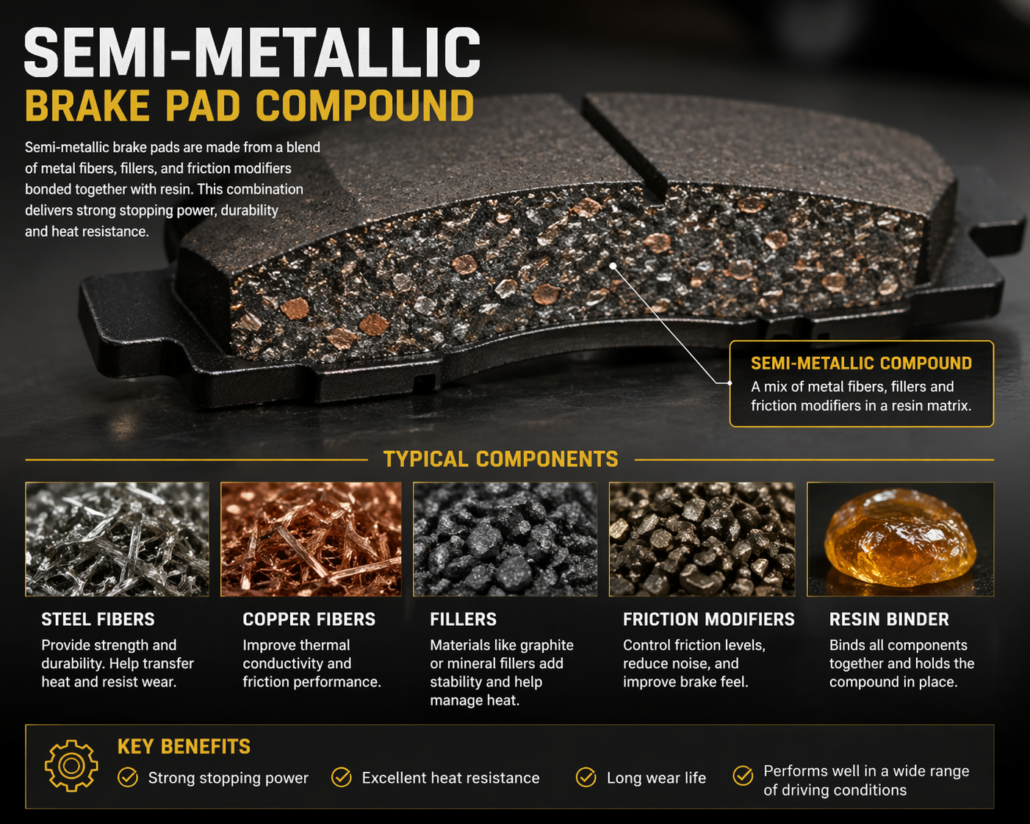
Contains metal fibers (steel, copper, iron)
| PROS | CONS |
|---|---|
| Excellent heat transfer | More brake out |
| Strong braking performance | Can be noisier |
| Durable under load | Slightly more rotor wear |
Best for: Trucks, SUVs, towing and Alberta driving conditions
3. Ceramic
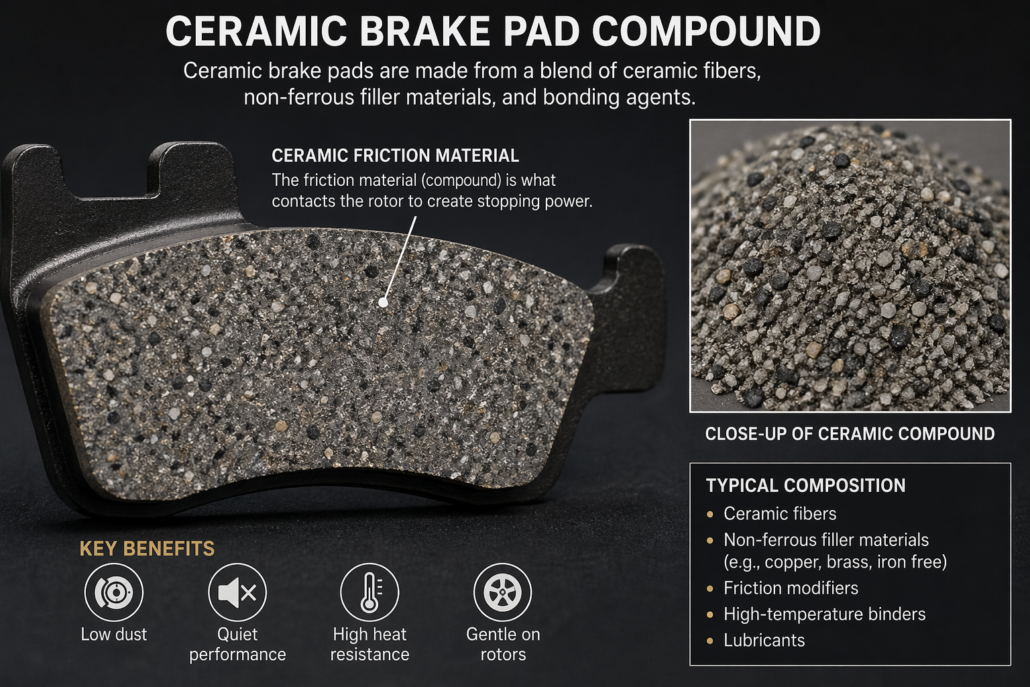
Made from ceramic fibers and fillers.
| pros | cons |
|---|---|
| Quiet operation | Higher cost |
| Low dust | |
| Consistent performance | Not ideal for extreme heavy-duty braking |
Best for: Daily drivers wanting clean wheels and quiet braking
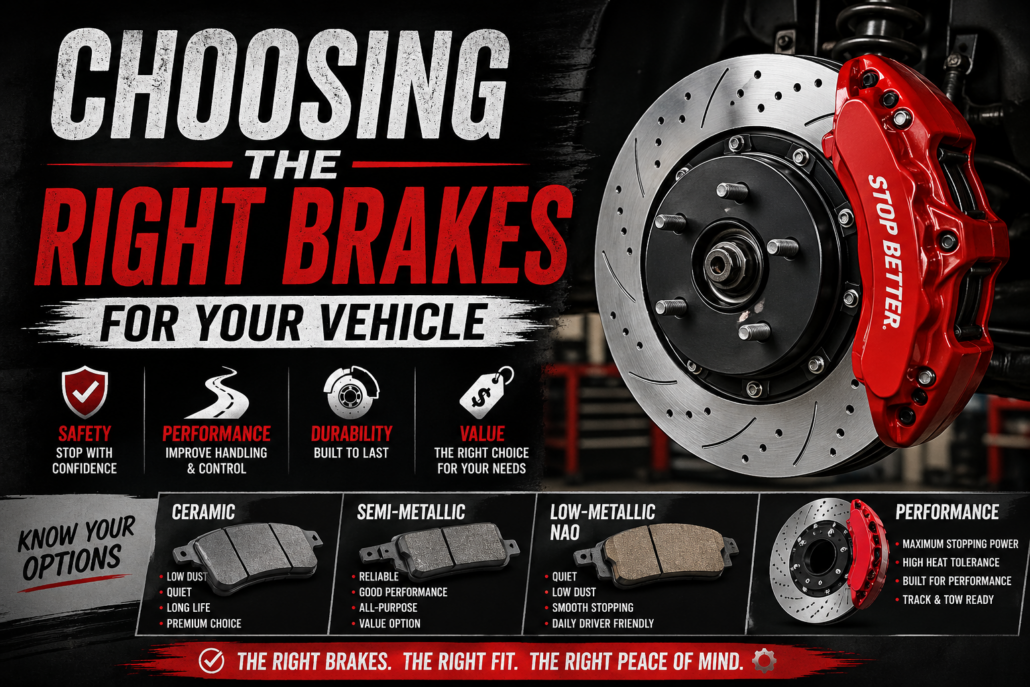
Choosing the Right Brakes for Your Vehicle
The “best” brake setup depends on how you use your vehicle:
| Daily Commuter | Ceramic or organic pads with standard rotors |
| Truck/Towing | Semi-metallic pads with upgraded rotors |
| Performance Builds | Full brake upgrade (pads, rotors, calipers) |
| Off-Road/Lifted trucks | Heat resistant compounds and larger braking surfaces |
If you are running larger tires or added weight (common with trucks), upgrading your brakes isn’t optional – it’s necessary to maintain safe stopping distances.
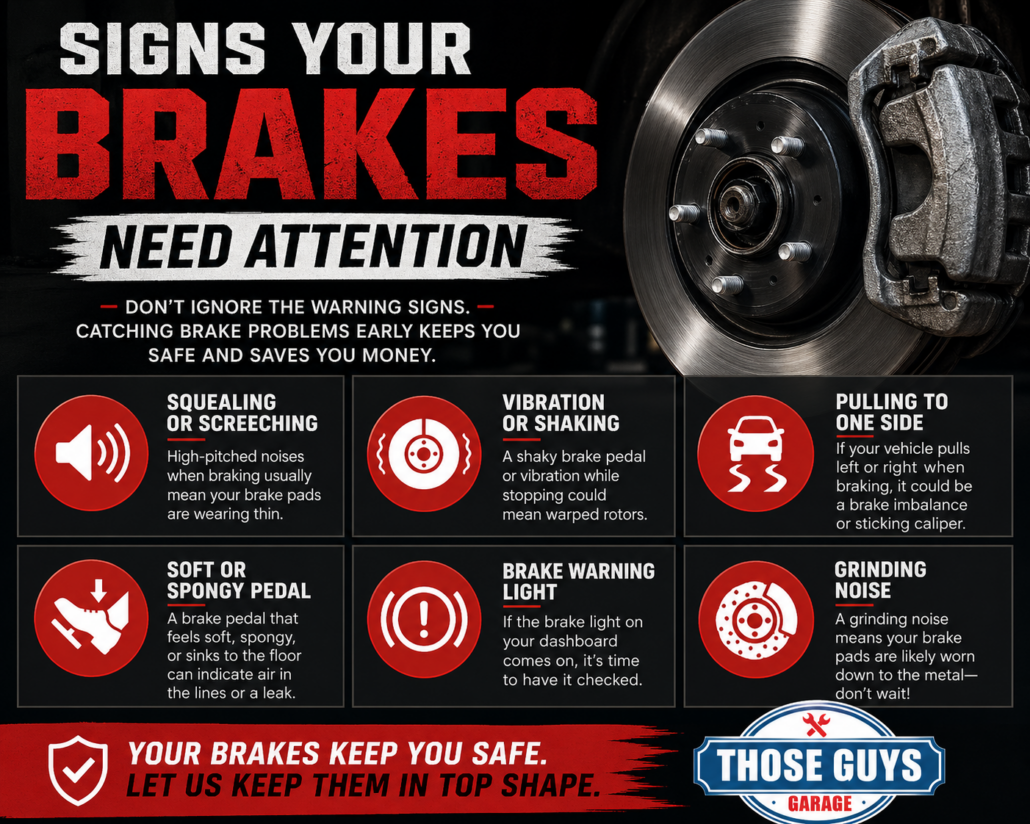
Signs Your Brakes Need Attention
Watch for these common warning signs:
– Squealing or grinding noise
– Vibrations when braking
– Soft or spongy pedal feet
– Increased stopping distance
– Visible scoring on rotors
Ignoring brake issues can quickly lead to more expensive repairs – and more importantly, safety risks.

Final Thoughts
Brakes aren’t just a maintenance item—they’re a performance and safety system that should match how your vehicle is used. Understanding the differences in brake types and pad compounds helps you make smarter decisions, whether you’re replacing worn components or upgrading for better performance.
Need Brake Service or Upgrades in Sherwood Park?
At Those Guys Garage, we provide:
– Full brake inspections
– Pad and rotor replacement
– Performance brake upgrades
– Brake system diagnostics

If you’re unsure what your vehicle needs, the best first step is a proper inspection—because guessing with brakes is never worth the risk.
Book your appointment today and drive with confidence knowing your stopping power is dialed in.