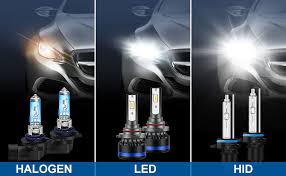
https://thoseguysgarage.com/wp-content/uploads/2026/04/LED-vs-Halogen-vs-HID-Headlights-Banner.png10241536Dustinhttps://thoseguysgarage.com/wp-content/uploads/2025/03/those-garage-guys-logo.pngDustin2026-09-21 12:01:332026-09-16 13:06:35LED vs Halogen vs HID Headlights:
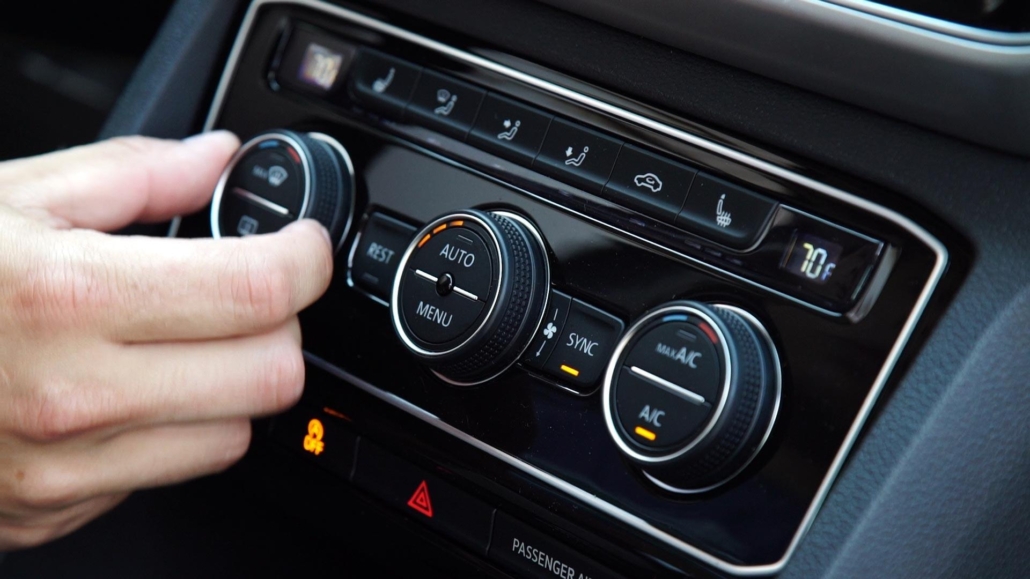
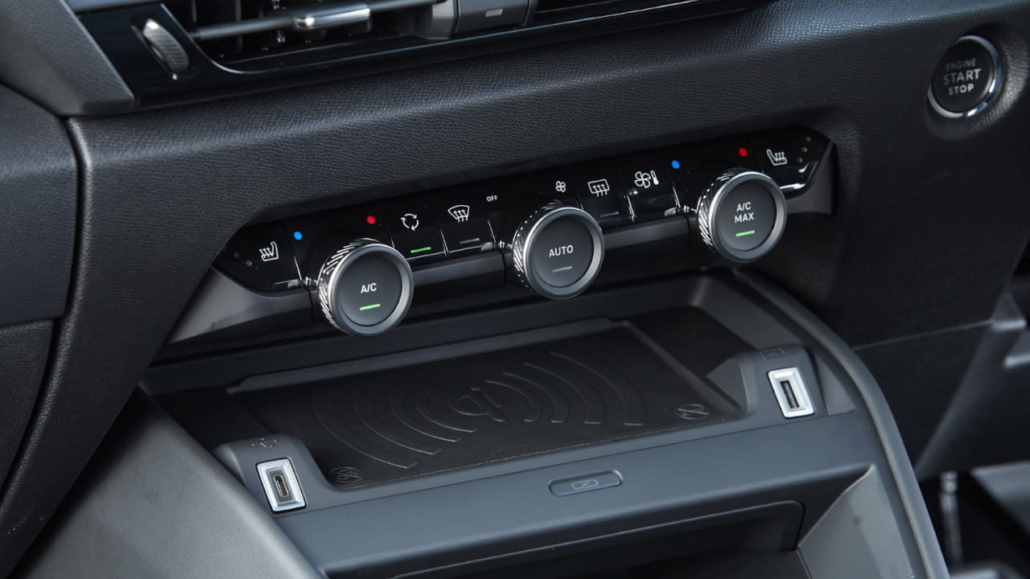
When summer temperatures start climbing, few things are more appreciated than a properly functioning air conditioning system. While most drivers simply expect cold air at the push of a button, the A/C system in your vehicle is a complex network of components working together to keep you comfortable on the road.
Understanding how your vehicle’s air conditioning system works can help you recognize potential issues early and ensure your system continues operating efficiently for years to come.
What Does Your Vehicle’s Air Conditioning System Do?
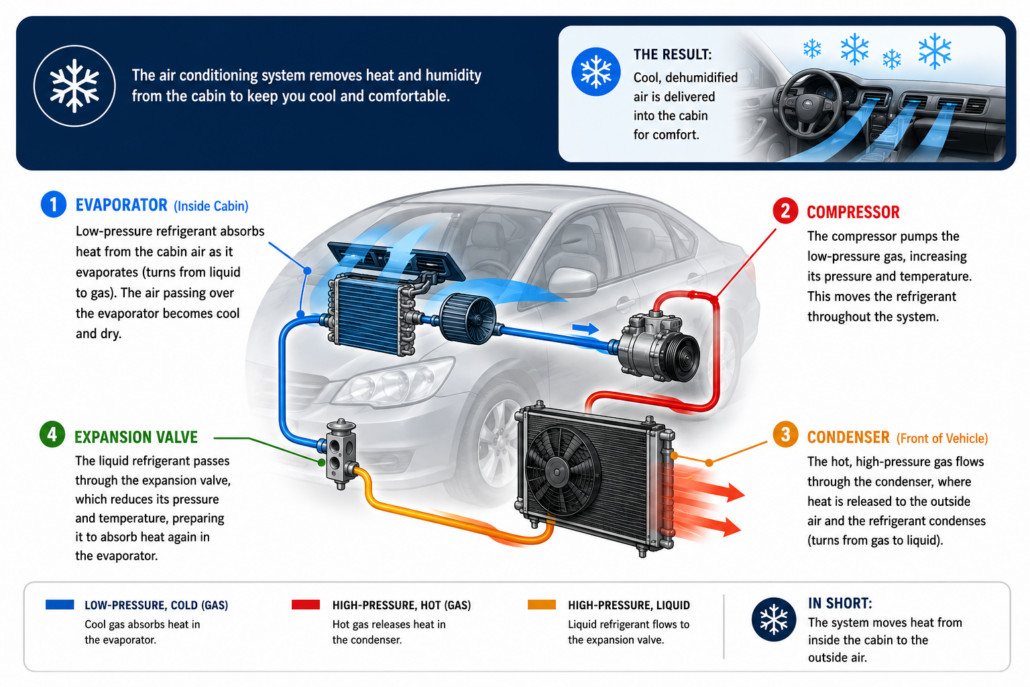
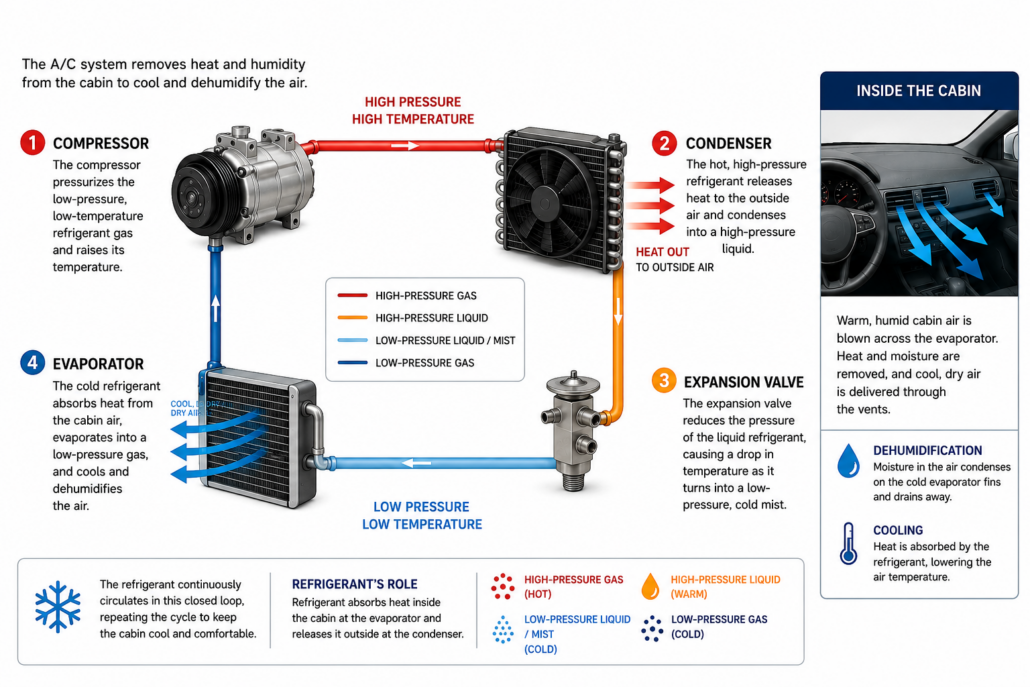
The primary purpose of your vehicle’s air conditioning system is to remove heat and humidity from the cabin, creating a comfortable environment for drivers and passengers. Beyond keeping you cool, your A/C system also plays an important role in improving visibility by helping remove moisture from the air when using the defrost setting.
Main Components of an Air Conditioning System
Several key components work together to produce cold air:
Compressor
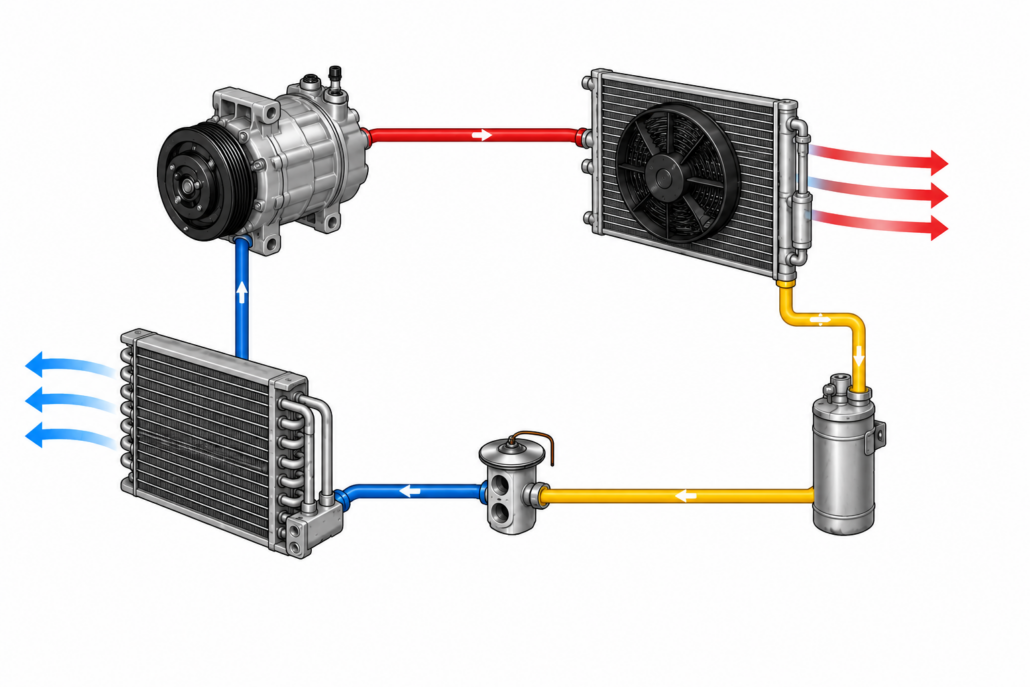
Often referred to as the heart of the A/C system, the compressor circulates refrigerant throughout the system. Driven by the engine through a belt or electronically in some newer vehicles, the compressor pressurizes the refrigerant and moves it through the system.
Expansion Valve or Orifice Tube
The expansion device regulates the flow of refrigerant into the evaporator. As refrigerant passes through, its pressure drops dramatically, allowing it to cool rapidly.
Condenser
Located near the front of the vehicle, the condenser resembles a small radiator. As refrigerant passes through, heat is released and dissipated into the outside air, causing the refrigerant to cool and change from a gas to a liquid.
Evaporator
Located inside the dashboard, the evaporator absorbs heat from the cabin air. As warm air passes over the evaporator, heat is removed and cold air is blown into the vehicle’s interior.
Receiver-Drier or Accumulator
This component removes moisture and contaminants from the refrigerant. Moisture inside the system can cause corrosion and significantly reduce cooling performance.
Refrigerant
Refrigerant is the substance that circulates throughout the A/C system, carrying the heat away from the cabin and releasing it outside the vehicle. Modern vehicles typically use environmentally friendly refrigerants such as R-1234yf, while older vehicles maybe use R-134a.
How the Air Conditioning Process Works
The cooling process follows a continuous cycle:
1. The compressor pressurizes the refrigerant gas. 2. The refrigerant travels to the condenser where heat is released. 3. The cooled liquid refrigerant moves through the receiver-drier. 4. The expansion valve reduces refrigerant pressure. 5. The refrigerant enter the evaporator and absorbs heat from the cabin. 6. Cold air is blown through the vents 7. The refrigerant returns to the compressor, and the cycle repeats.
This process happens continuously while your A/C system is operating.
Common Signs of Air Conditioning Problems
Like any vehicle system, air conditioning can wear out over time. Some common warning signs include:
Weak Airflow
If air isn’t blowing as strongly as it used to, the cause could be:
– Clogged cabin air filter – Failing blower motor – Blocked vents -Electrical issues
Unpleasant Odors
Musty smells often results from mold or bacteria growth on the evaporator core or within the HVAC system.
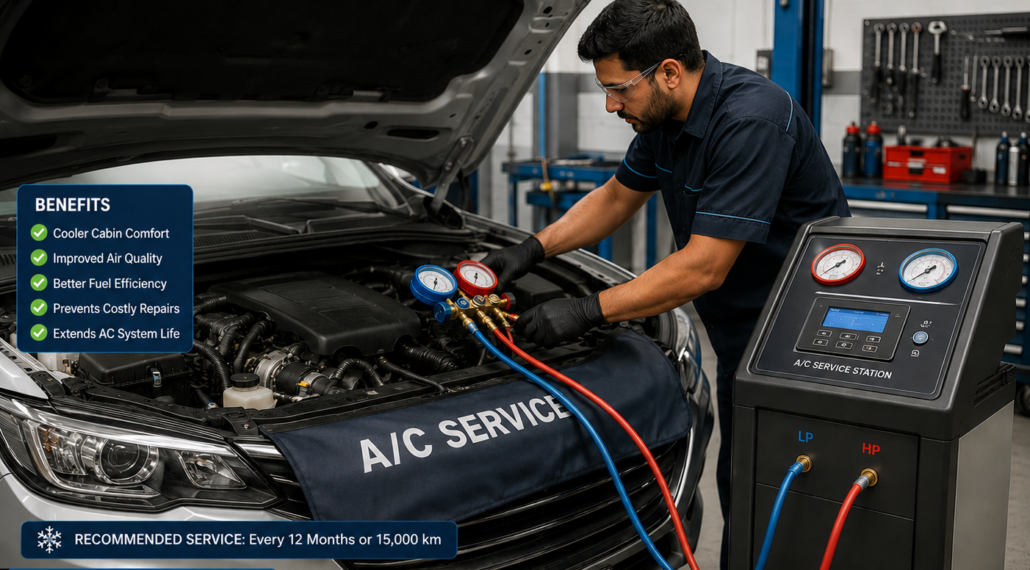
Regular inspections allow technicians to identify small issues before they become major repairs.
Tips for Keeping Your A/C System Healthy
Run Your A/C Year-Round Even during winter, periodically running the air conditioner helps keep seals lubricated and prevents components from drying out.
Repair Cabin Air Filters A clean cabin air filter improves airflow and reduces strain on the HVAC system.
Address Issues Early If your A/C isn’t cooling properly, have it inspected promptly. Operating a system with low refrigerant or failing components can lead to
Keep the Condenser Clean Road debris, dirt, and bugs can reduce condenser efficiency. Keeping the condenser clean helps maintain optimal cooling performance.
Stay Comfortable All Year Long
Your vehicle’s air conditioning system does much more than simply keep you cool—it contributes to comfort, visibility, and overall driving enjoyment. Understanding how the system works and recognizing early warning signs can help you avoid unexpected breakdowns and costly repairs.
If your vehicle’s A/C system isn’t performing the way it should, the experienced technicians at Those Guys Garage can inspect, diagnose, and repair your heating and cooling system to keep you comfortable in every season.
Book Your A/C Inspection Today
Whether your air conditioning isn’t blowing cold, airflow seems weak, or you simply want peace of mind before summer arrives, contact Those Guys Garage today. Our team can help ensure your vehicle’s A/C system is operating at peak performance when you need it most.
https://thoseguysgarage.com/wp-content/uploads/2026/06/Vehicle-AC-System-Banner-Featured.png8871774Dustinhttps://thoseguysgarage.com/wp-content/uploads/2025/03/those-garage-guys-logo.pngDustin2026-08-31 12:01:132026-08-31 12:01:14Understanding Your Air Conditioning System
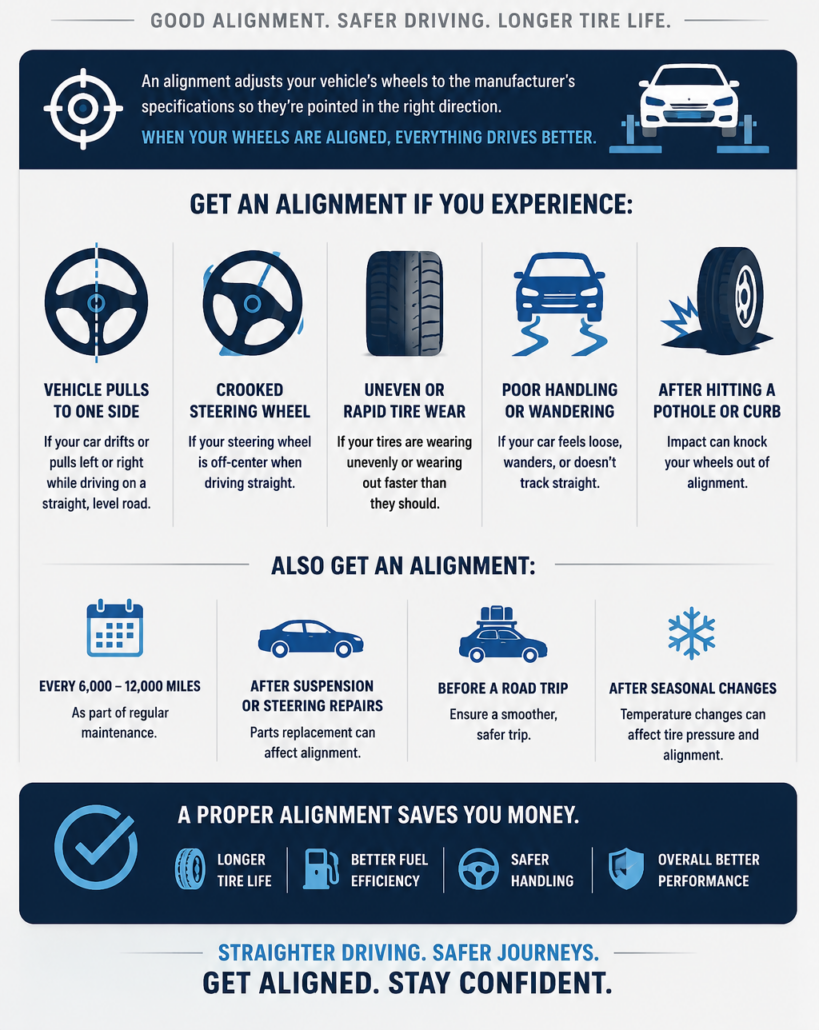
When it comes to vehicle maintenance, wheel alignment is often overlooked until something feels wrong. Maybe your steering wheel isn’t straight, your vehicle pulls to one side, or your tires seem to be wearing out faster than expected. These are all common signs that your vehicle may need an alignment.
At Those Guys Garage, we regularly see vehicles with alignment issues caused by everyday driving conditions throughout Sherwood Park, Edmonton, and Alberta. Understanding what wheel alignment is and why it’s important can help you protect your tires, improve vehicle handling, and save money in the long run.
What Is a Wheel Alignment?
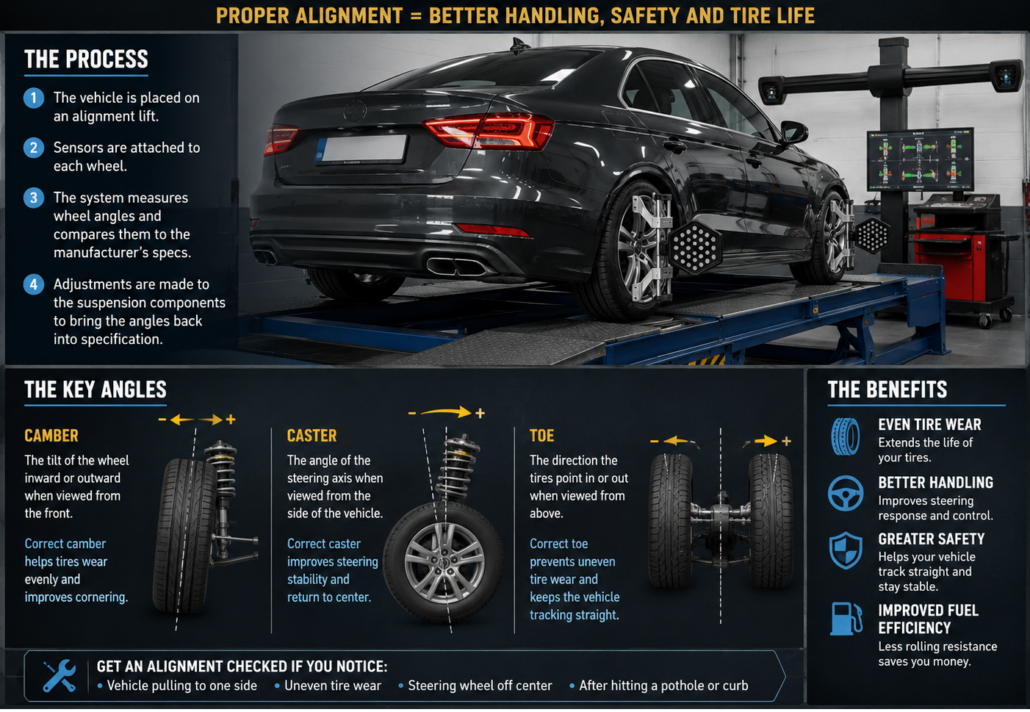
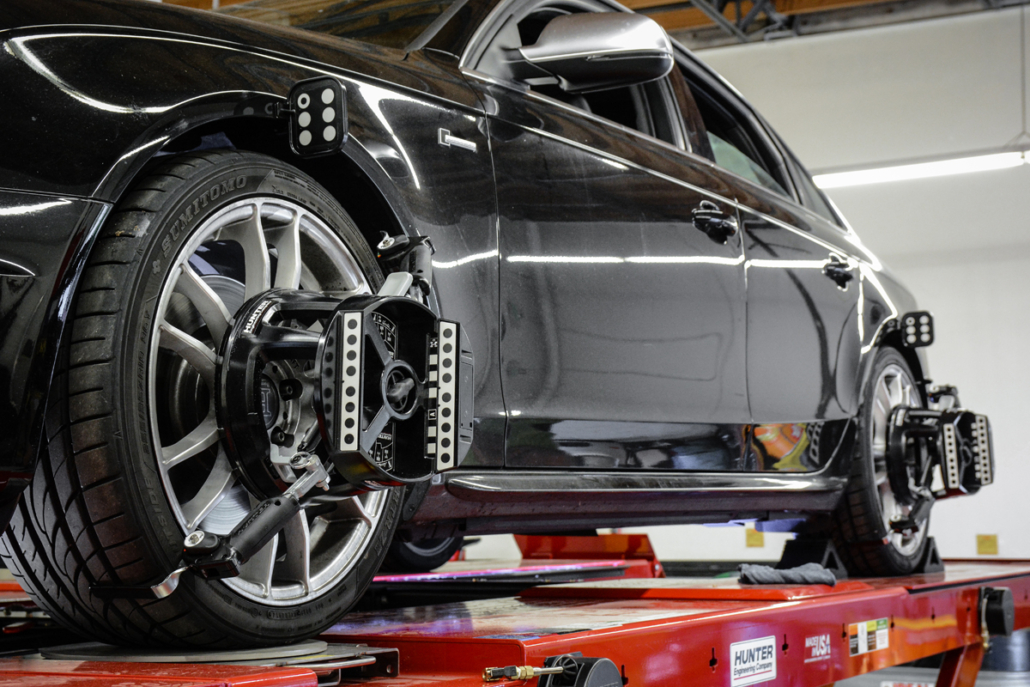
A wheel alignment is the adjustment of your vehicle’s suspension angles to ensure the wheels are positioned correctly according to manufacturer specifications. Contrary to popular belief, an alignment doesn’t actually adjust the wheels themselves—it adjusts the suspension components that determine how the wheels contact the road.
Proper alignment ensures your tires meet the road at the correct angle, your steering remains centered, and your vehicle tracks straight while driving.
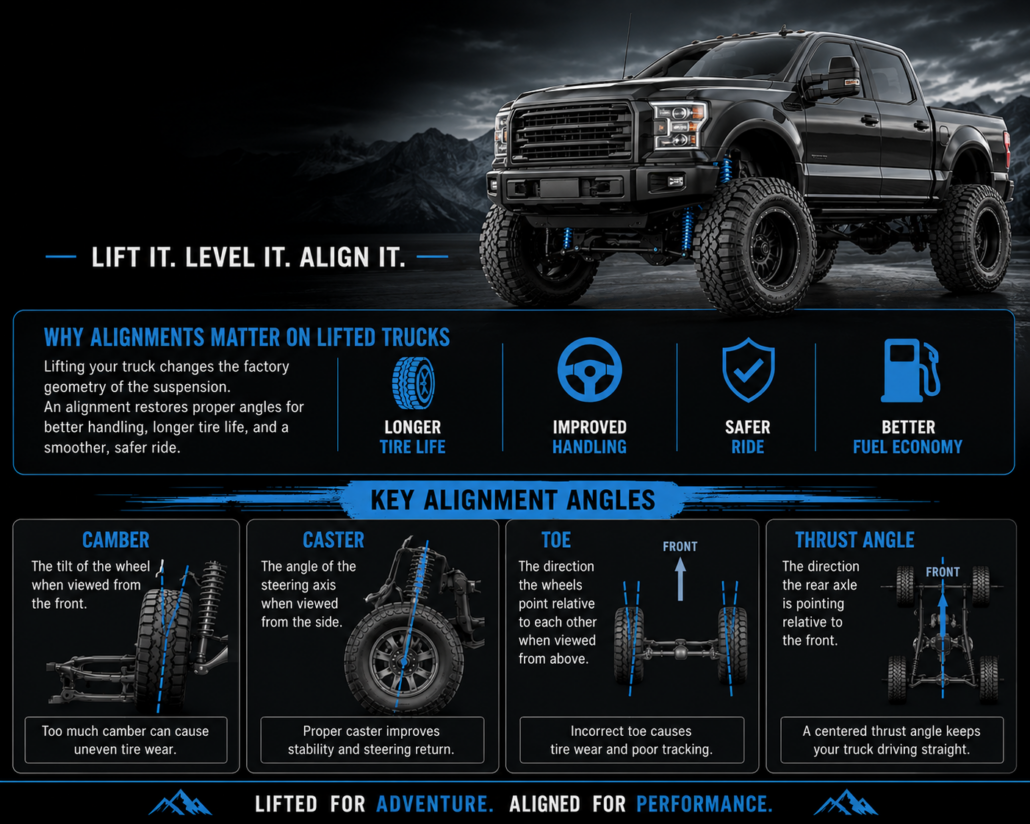
The Three Main Alignment Angles
Modern wheel alignments focus on three critical measurements:
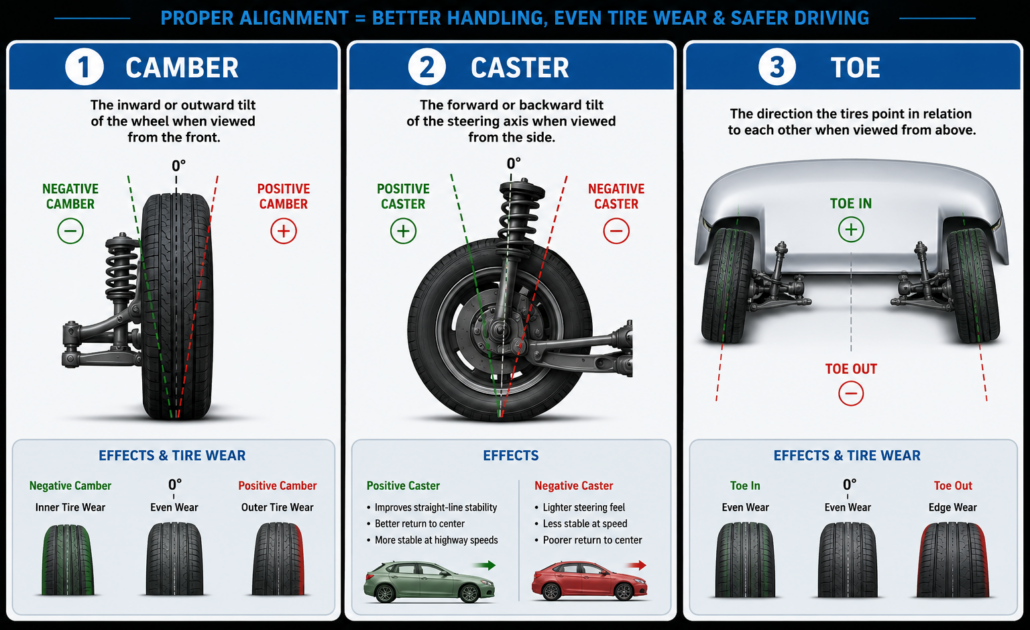
Camber
Camber refers to the inward or outward tilt of the tire when viewed from the front of the vehicle.
Negative Camber: Top of the tire leans inward
Positive Camber: Top of the tire leans outward
Excessive camber can cause uneven tire wear and affect handling performance.
Caster
Caster refers to the angle of the steering axis when viewed from the side of the vehicle.
Proper caster helps maintain steering stability, improves cornering performance, and assists the steering wheel in returning to center after a turn.
Toe
Toe measures whether the front of the tires point inward or outward when viewed from above.
Toe-In: Front of the tires point slightly toward each other
Toe-Out: Front of the tires point slightly away from each other
Improper toe settings are one of the leading causes of rapid tire wear.
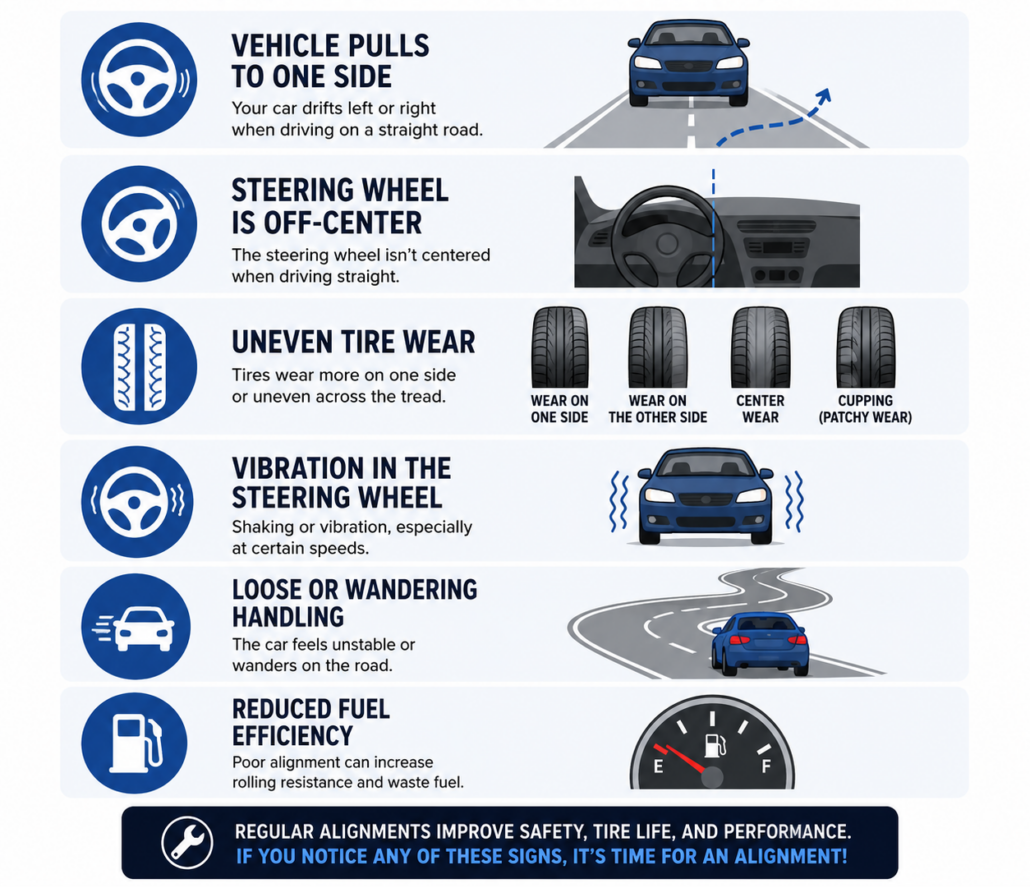
Common Signs Your Vehicle Needs an Alignment
Camber refers to the inward or outward tilt of the tire when viewed from the front of the vehicle
Vehicle Pulling to One Side
If your vehicle drifts left or right while driving on a straight road, alignment issues maybe affecting your steering geometry.
Crooked Steering Wheel
A steering wheel that sits off-center while driving straight often indicates misalignment.
Uneven Tire Wear
Excessive wear on the inside or outside edges of your tires is one of the most common indicators of alignment problems.
Loose or Unstable Steering
If your vehicle feels difficult to control or wanders on the highway, an alignment inspection may be needed.
Reduced Fuel Efficiency
Misaligned wheels create additional rolling resistance, forcing your vehicle to work harder and consume more fuel.
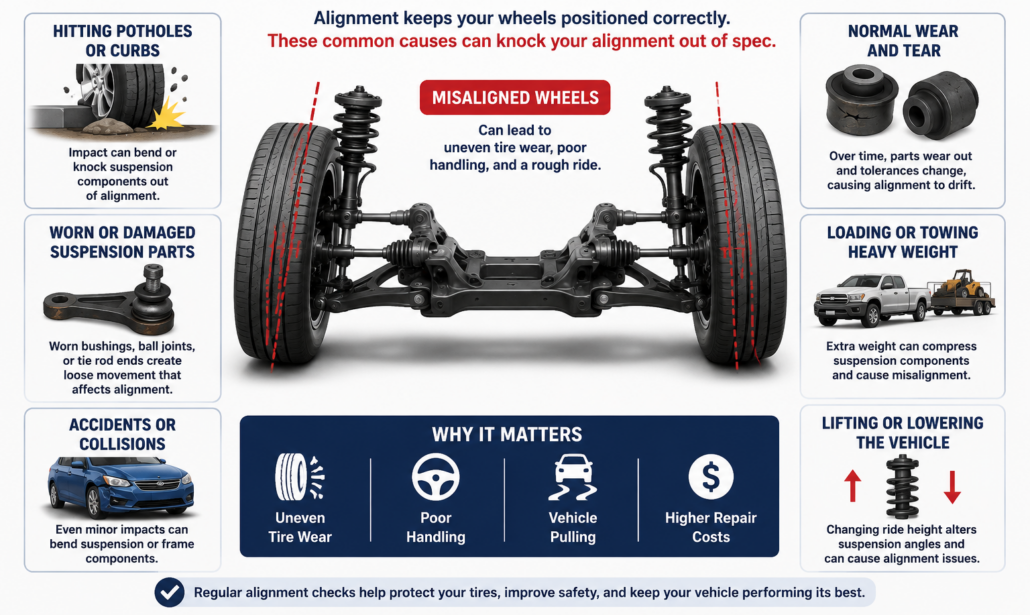
What Causes Alignment Problems?
Wheel alignment can be affected by many everyday driving conditions, including:
Potholes
Rough roads
Leveling kit installations
Curb impacts
Suspension wear
Accidents or collisions
Speed bumps
Lift kit installations
Normal component wear over time
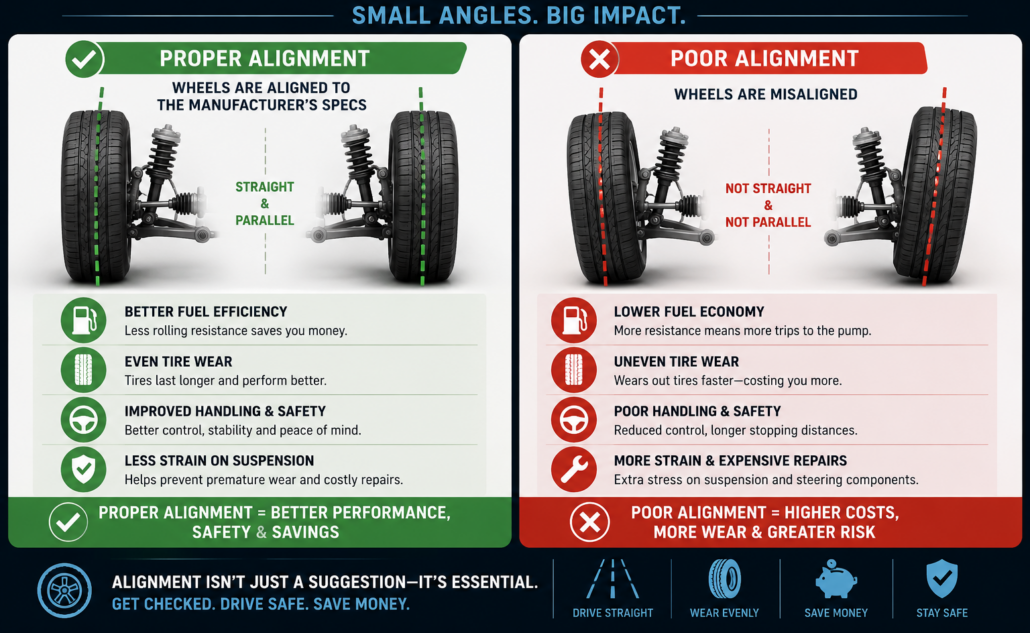
Why Proper Alignment Is Important
Extends Tire Life Tires represent a significant investment. Proper alignment helps ensure even tread wear and maximizes tire lifespan.
Improves Handling Correct alignment allows your vehicle to respond predictably and safely during turns, lane changes, and emergency maneuvers.
Increases Safety A properly aligned vehicle provides better stability and control, especially during adverse weather conditions.
Saves Money Preventing premature tire wear and improving fuel economy can save hundreds of dollars over the life of the vehicle.
When Should You Get an Alignment?
Most manufacturers recommend checking alignment periodically, but you should also consider an alignment if:
– You install new tires. – You replace suspension or steering components. – You install a lift kit or leveling kit. – You notice unusual tire wear. – Your steering feels different than normal. – You’ve recently hit a large pothole or curb.
As a general guideline, having your alignment checked annually can help catch small issues before they become costly repairs.
Alignments and Lifted Trucks
At Those Guys Garage, we frequently install lift kits and leveling kits on trucks and SUVs. Any change to ride height alters suspension geometry and can significantly affect alignment settings.
Following any suspension modification, a professional alignment is essential to ensure proper handling, tire wear, and overall vehicle performance.
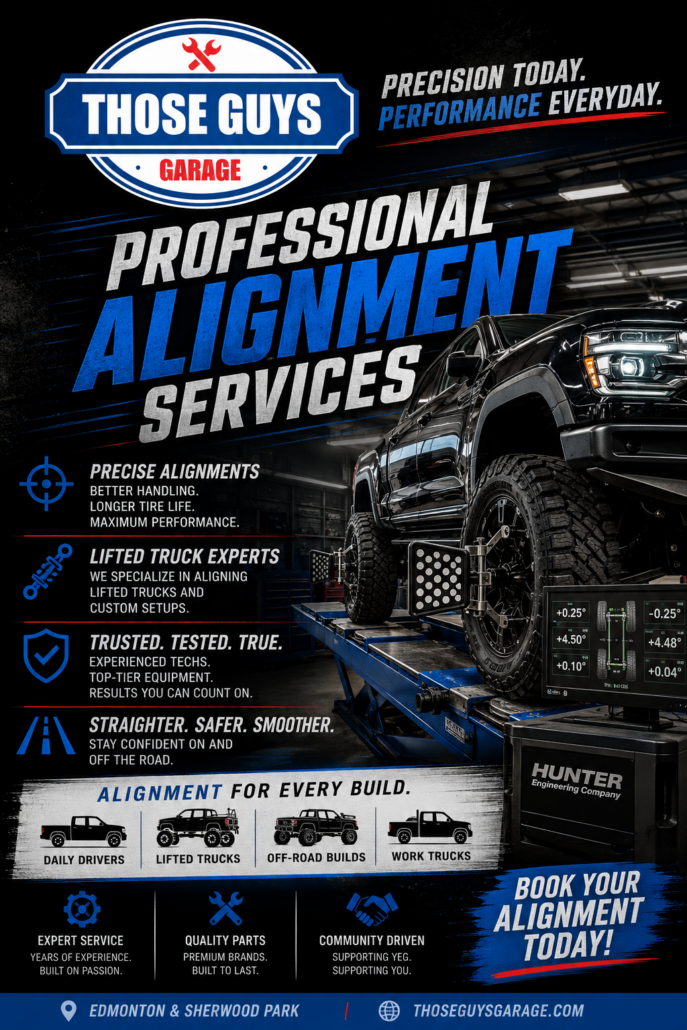
Trust Those Guys Garage for Professional Alignment Services
Whether you drive a daily commuter, family SUV, performance vehicle, or lifted truck, proper wheel alignment plays a major role in vehicle safety, handling, and tire longevity.
Our experienced technicians use professional alignment equipment to accurately measure and adjust your vehicle to manufacturer specifications. If you’ve noticed uneven tire wear, steering concerns, or recently upgraded your suspension, we’re here to help.
Book Your Alignment Today
If your vehicle isn’t driving quite right, don’t wait for alignment issues to damage your tires or suspension components. Contact Those Guys Garage in Sherwood Park today to schedule a professional alignment inspection and keep your vehicle driving straight, safe, and efficiently.
https://thoseguysgarage.com/wp-content/uploads/2026/06/Alignment-Banner-Featured.png5671536Dustinhttps://thoseguysgarage.com/wp-content/uploads/2025/03/those-garage-guys-logo.pngDustin2026-07-14 10:14:522026-06-18 12:21:53Understanding Your Vehicle’s Alignment
Your braking system is one of the most critical safety components on your vehicle. Whether you’re commuting through Sherwood Park traffic or hauling a load down the highway, your brakes are what ultimately bring everything to a controlled stop. This guide breaks down the fundamentals—how brakes work, the different types available, and the compounds that make a real difference in performance.
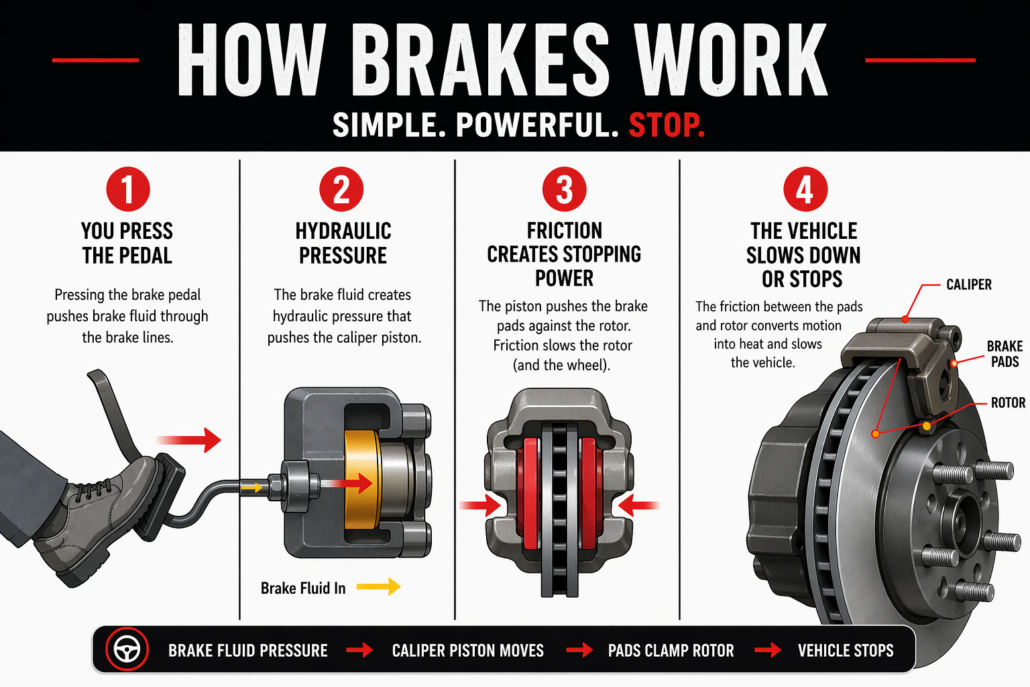
How Brakes Work (Quick Overview)
At a basic level, your braking system converts kinetic energy into heat through friction.
When you press the brake pedal:
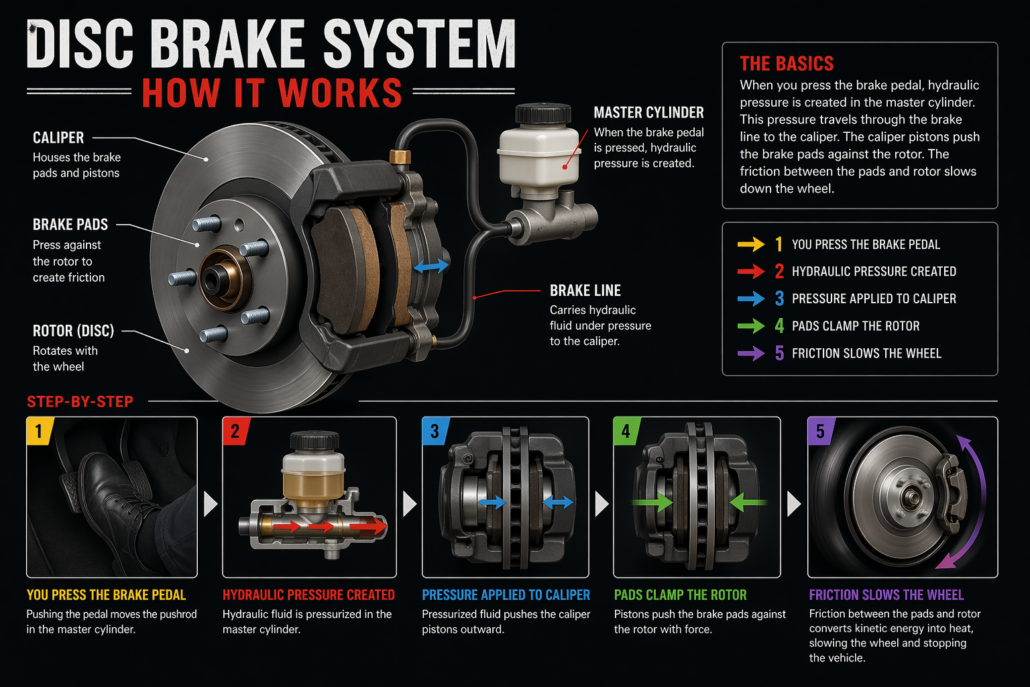
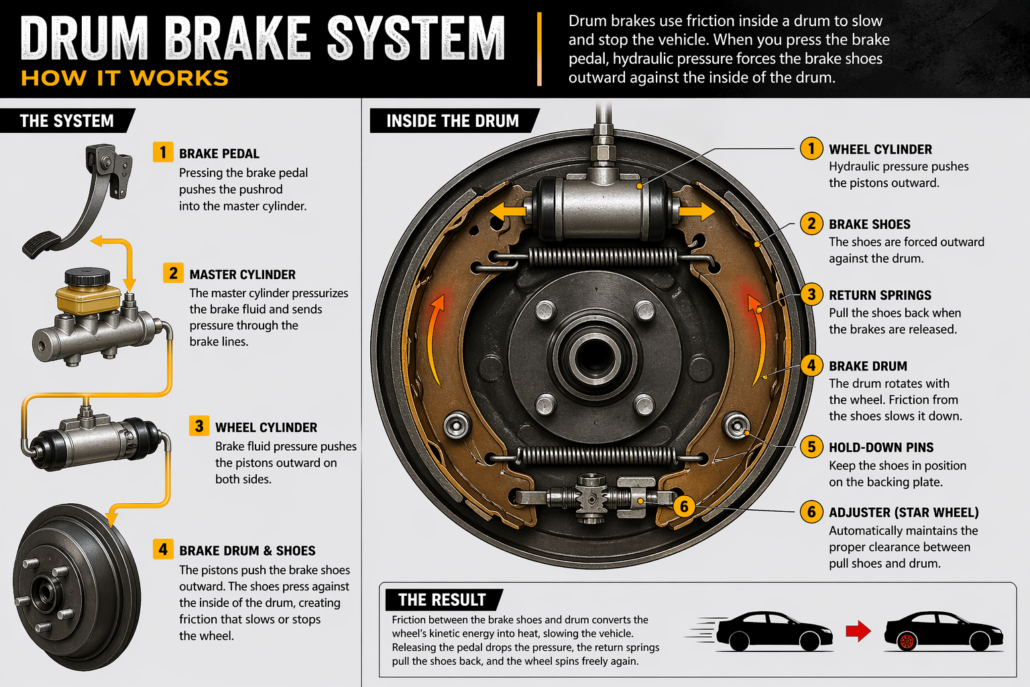
–Hydraulic fluid transfers force to the piston calipers (or wheel cylinders) – Brake pads (or shoes) press against a rotating surface (rotor or drum) – Friction slows the wheel, bringing the vehicle to a stop
Modern vehicles rely on additional systems like ABS (Anti-lock Braking System) and electronic brake force distribution to maintain control and stability under braking.
Types of Braking Systems
Disc brakes are standard on most modern vehicles, especially on the front axle.
1. Disc Brakes (Most Common)
key components
advantages
common variations
Rotor (disc)
Superior heat dissipation
Vented rotors – improved cooling
Caliper
Better performance in wet conditions
Brake Pads
More consistent braking under load
Slotted/drilled rotors – help with gas and heat evacuation (more common in performance applications)
2. Drum Brakes (Older/Rear Applications)
Still found on the rear of some vehicles, especially economy cars and light-duty trucks.
Key components
aDVANTAGES
LIMITATIONS
Brake drum
Lower cost
Poor heat dissipation
Brake shoes
Built-in parking brake mechanism
Wheel cylinder
Long service life in light-duty use
Reduced performance under heavy braking
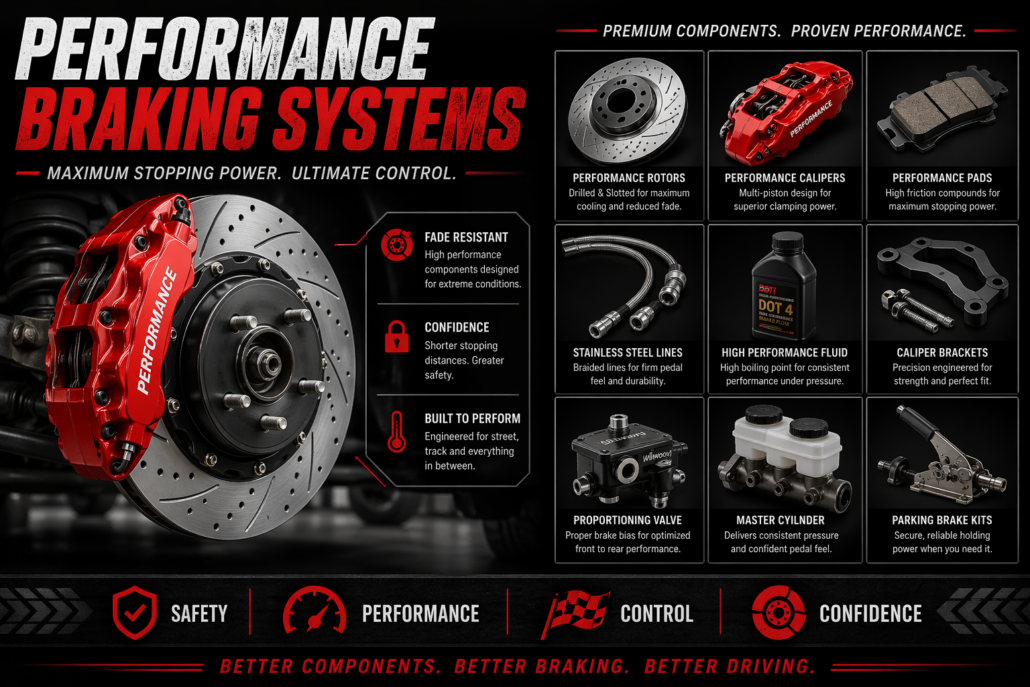
3. Performance Braking Systems
Designed for trucks, towing applications, or performance driving.
Features:
Benefits:
Larger ratios
Increased stopping power
Multi-piston calipers
Reduced brake fade
High-performance pad compounds
Better heat management under load
Ideal for lifted trucks, towing setups or anyone pushing their vehicle harder than stock conditions.
Brake Pad Compounds Explained
Not all brake pads are created equal. The compound directly impacts stopping power, noise, dust, and lifespan.
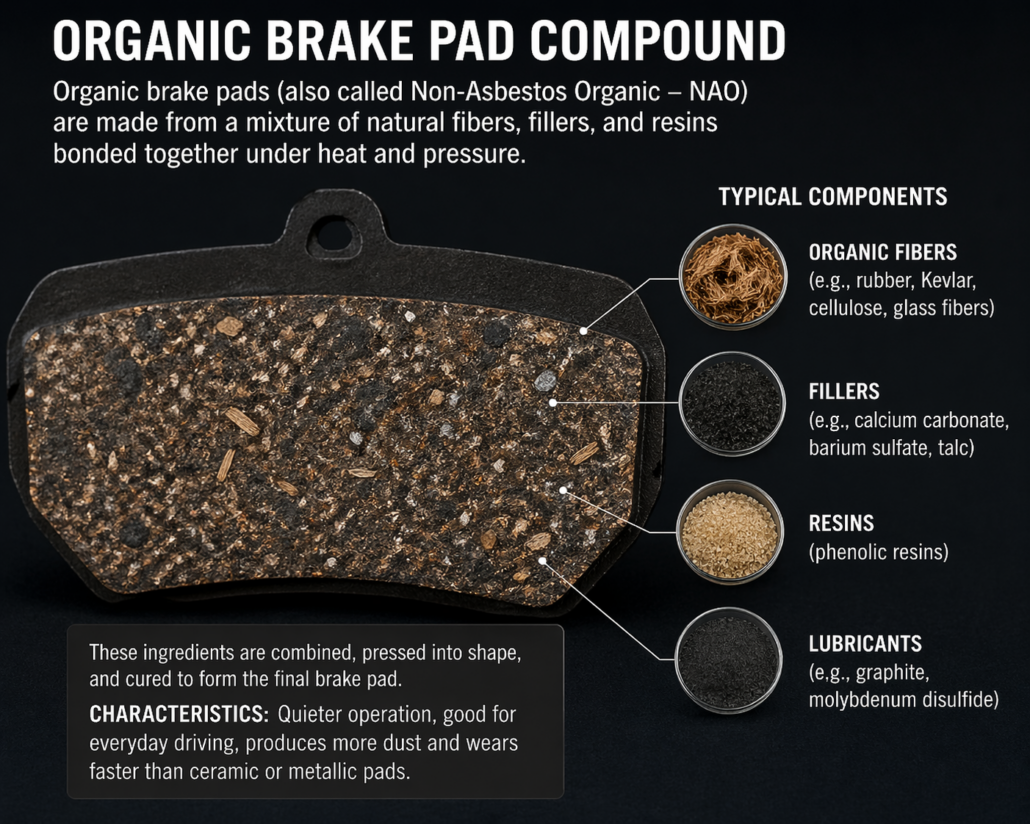
1. Organic (NAO – Non-Asbestos Organic)
Made from fibers, rubber and resins
pros
cons
Quiet
Faster wear
Low Dust
Affordable
Lower heat tolerance
Best for: Daily driving with light braking demands
2. Semi-Metallic
Contains metal fibers (steel, copper, iron)
PROS
CONS
Excellent heat transfer
More brake out
Strong braking performance
Can be noisier
Durable under load
Slightly more rotor wear
Best for: Trucks, SUVs, towing and Alberta driving conditions
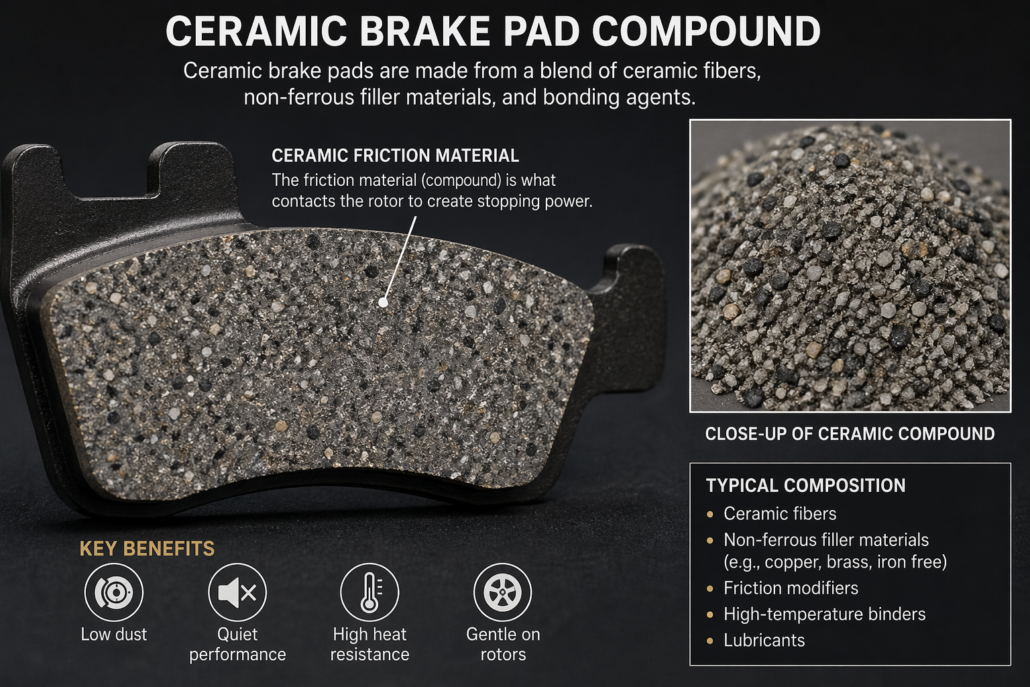
3. Ceramic
Made from ceramic fibers and fillers.
pros
cons
Quiet operation
Higher cost
Low dust
Consistent performance
Not ideal for extreme heavy-duty braking
Best for: Daily drivers wanting clean wheels and quiet braking
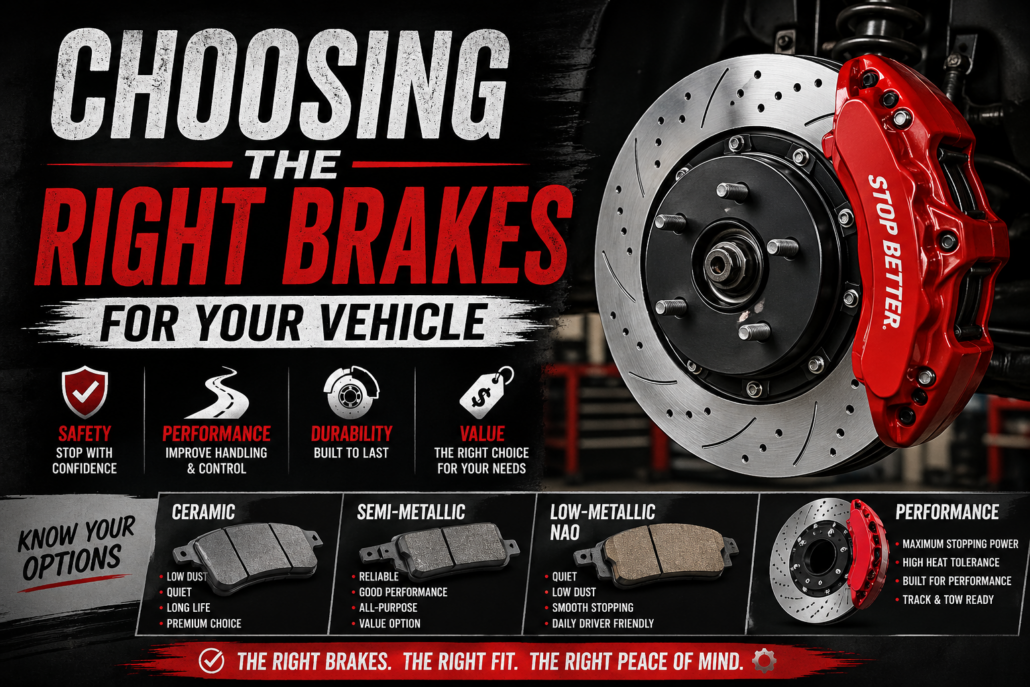
Choosing the Right Brakes for Your Vehicle
The “best” brake setup depends on how you use your vehicle:
Daily Commuter
Ceramic or organic pads with standard rotors
Truck/Towing
Semi-metallic pads with upgraded rotors
Performance Builds
Full brake upgrade (pads, rotors, calipers)
Off-Road/Lifted trucks
Heat resistant compounds and larger braking surfaces
If you are running larger tires or added weight (common with trucks), upgrading your brakes isn’t optional – it’s necessary to maintain safe stopping distances.
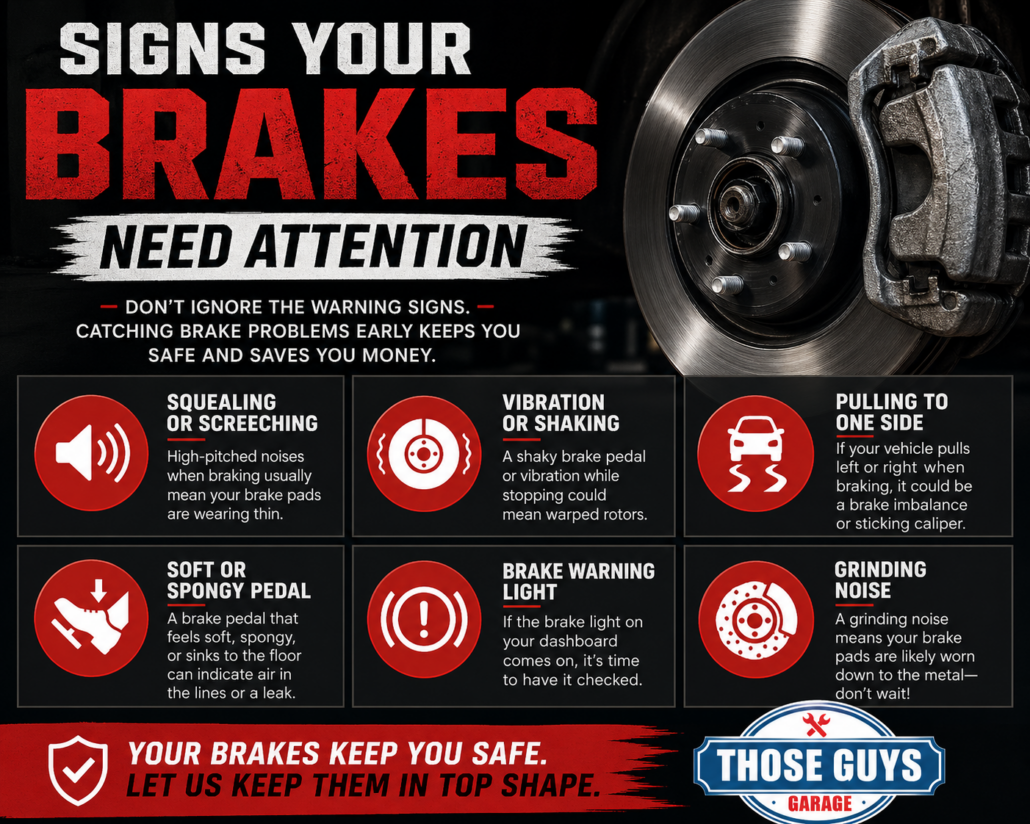
Signs Your Brakes Need Attention
Watch for these common warning signs:
– Squealing or grinding noise – Vibrations when braking – Soft or spongy pedal feet – Increased stopping distance – Visible scoring on rotors
Ignoring brake issues can quickly lead to more expensive repairs – and more importantly, safety risks.
Final Thoughts
Brakes aren’t just a maintenance item—they’re a performance and safety system that should match how your vehicle is used. Understanding the differences in brake types and pad compounds helps you make smarter decisions, whether you’re replacing worn components or upgrading for better performance.
Need Brake Service or Upgrades in Sherwood Park?
At Those Guys Garage, we provide:
– Full brake inspections – Pad and rotor replacement – Performance brake upgrades – Brake system diagnostics
If you’re unsure what your vehicle needs, the best first step is a proper inspection—because guessing with brakes is never worth the risk.
Book your appointment today and drive with confidence knowing your stopping power is dialed in.
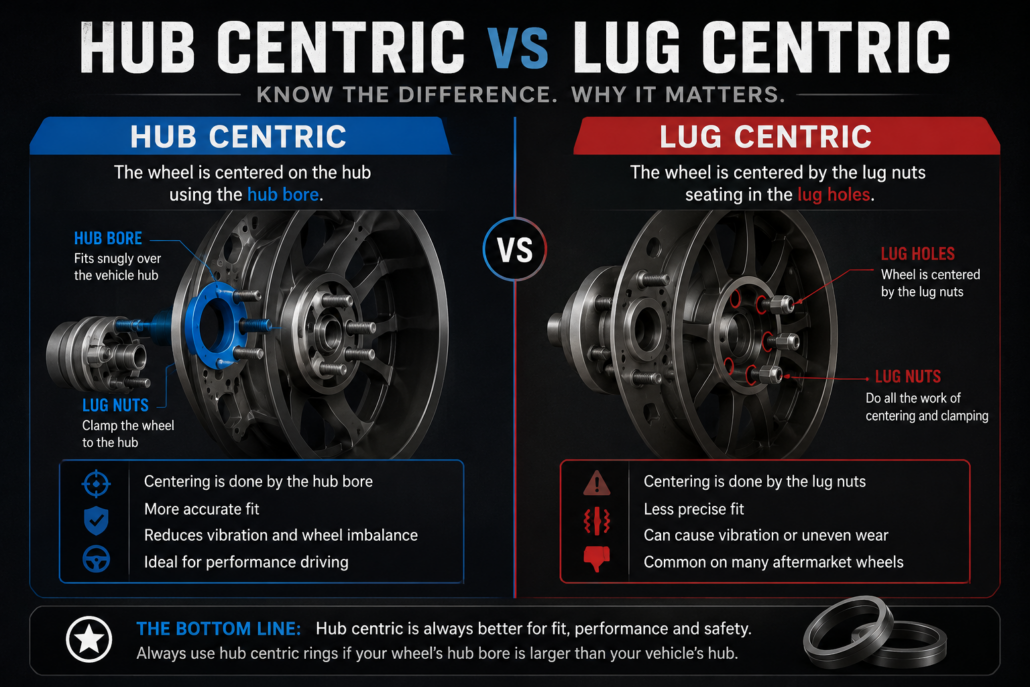
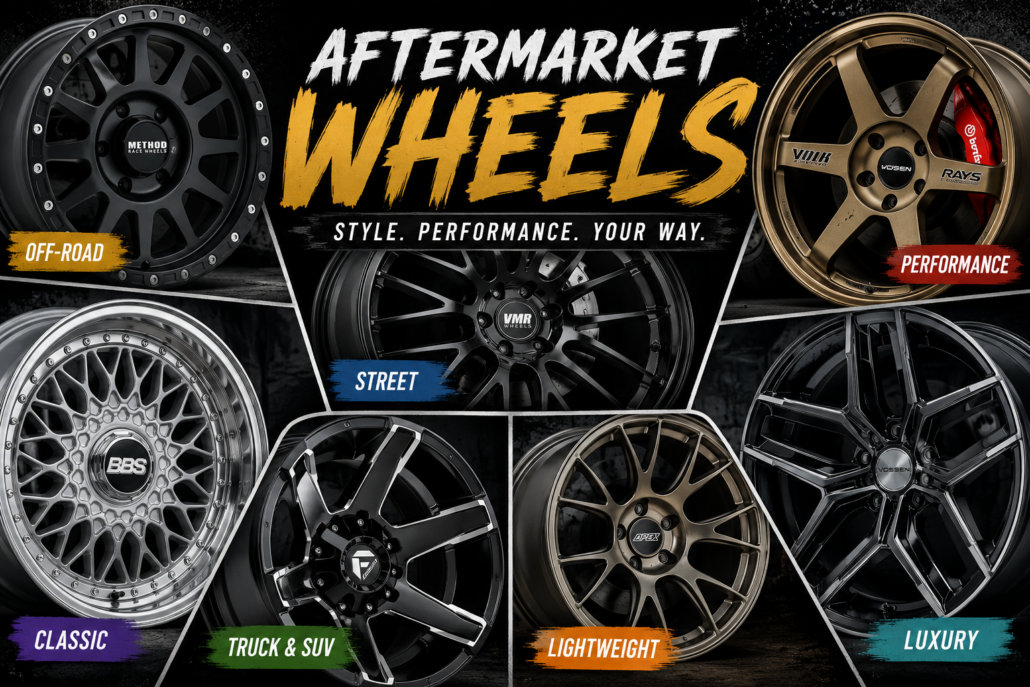
Upgrading your vehicle with aftermarket wheels is one of the most popular ways to completely transform the look, stance, and personality of your ride. Whether you drive a lifted truck, performance car, daily driver, SUV, or off-road build, the right wheel setup can dramatically improve both aesthetics and functionality.
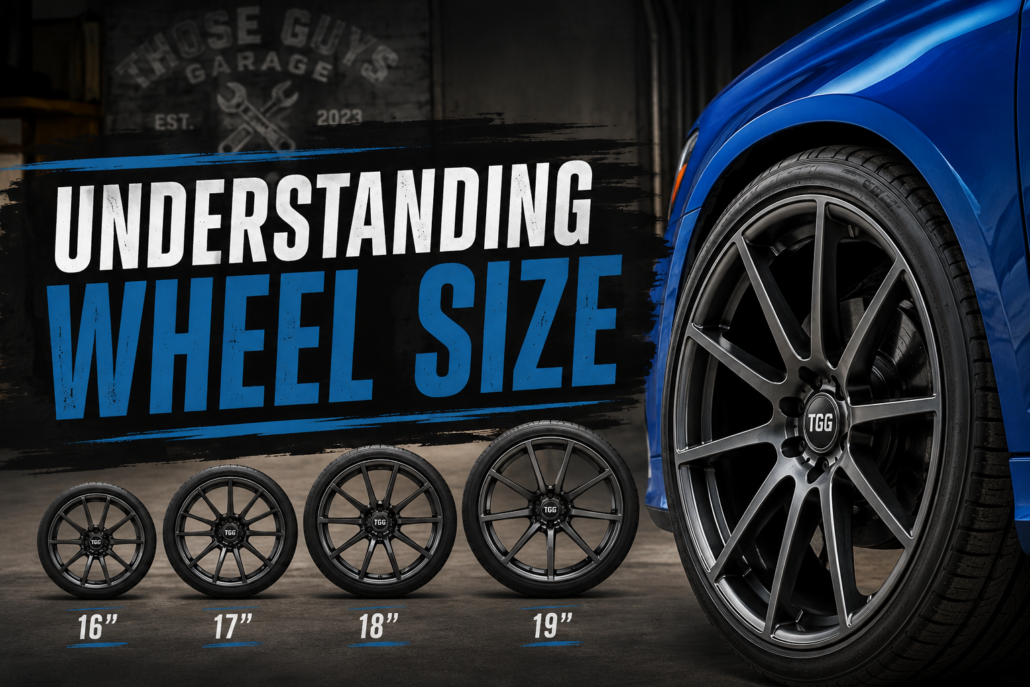
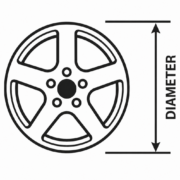
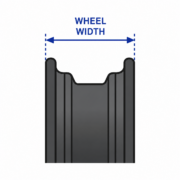
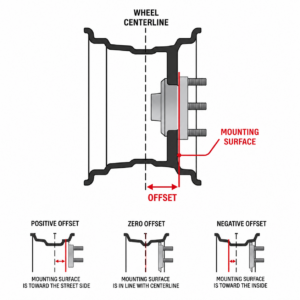
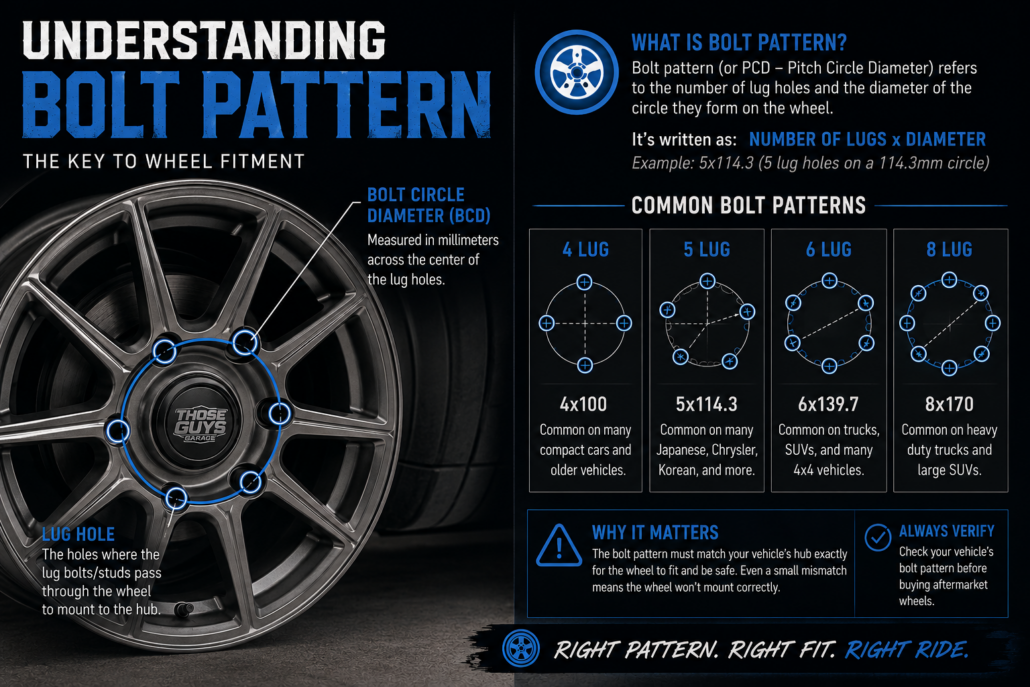
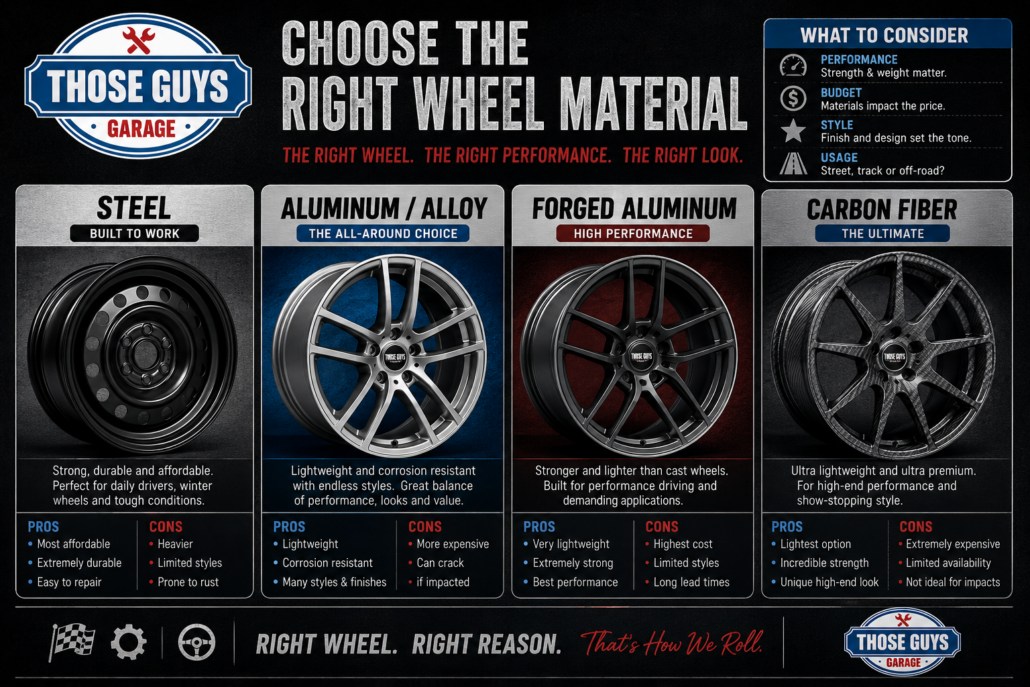
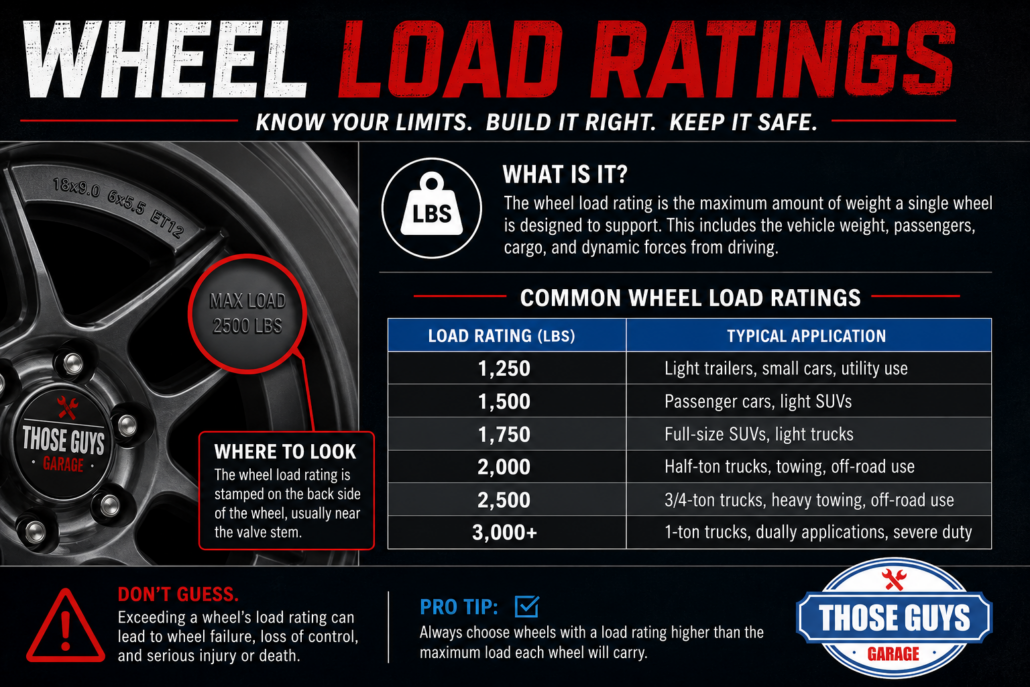
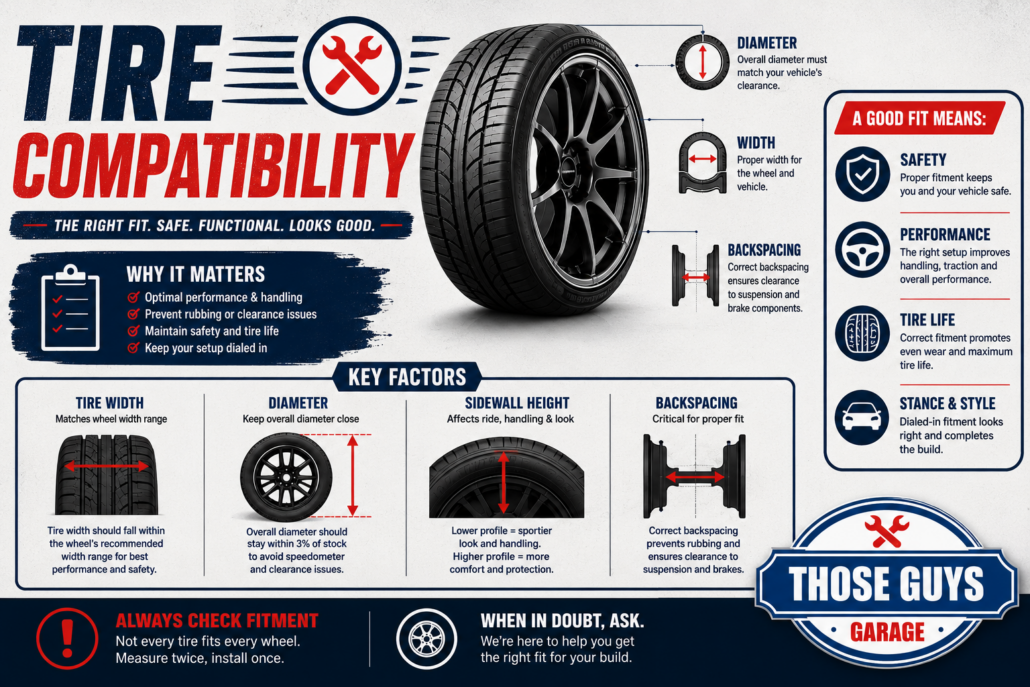
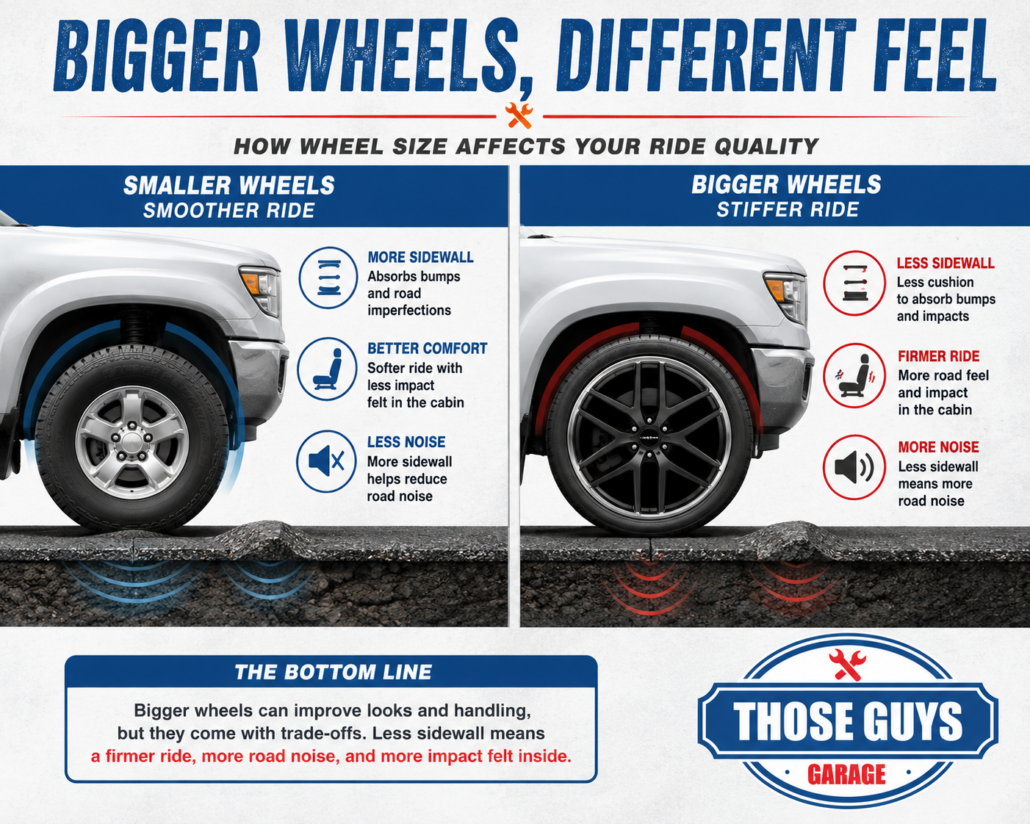
But choosing aftermarket wheels involves much more than simply picking a style you like. Wheel sizing, offsets, bolt patterns, tire compatibility, intended use, and build quality all play major roles in ensuring your new setup performs properly and safely.
In this guide, we’ll break down everything you need to know when choosing aftermarket wheels for your vehicle.
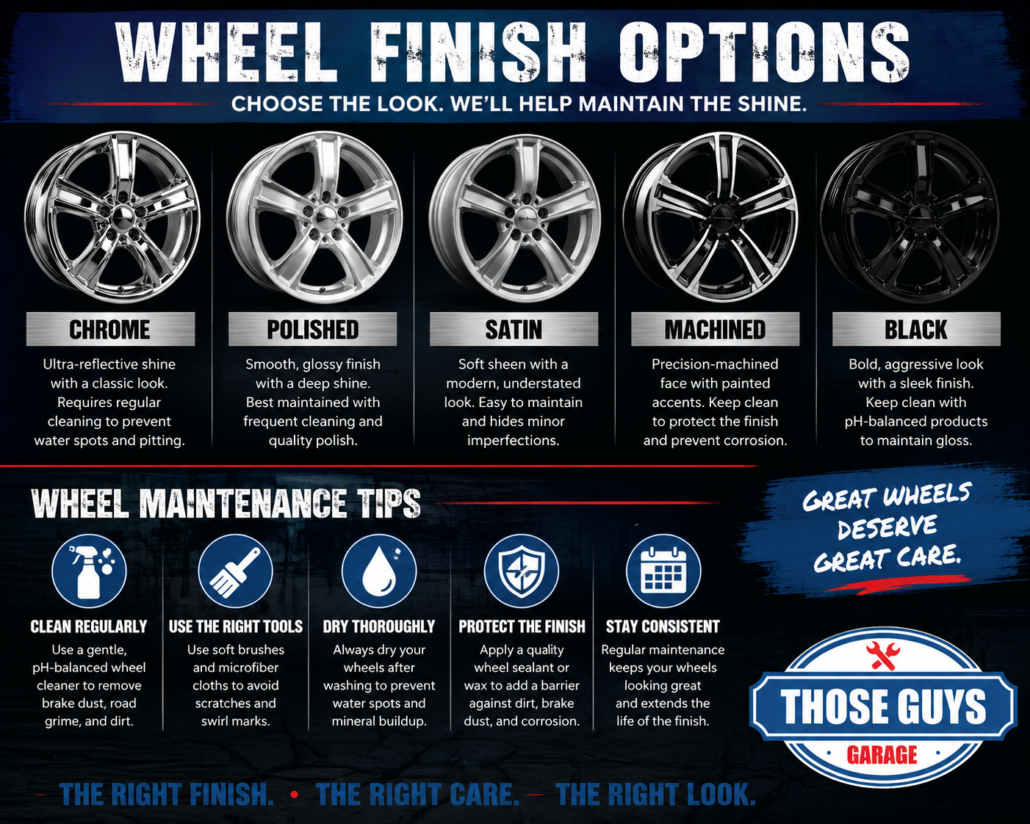
Factory wheels are designed to satisfy a broad range of drivers and manufacturing costs. Aftermarket wheels allow you to personalize your vehicle and tailor it to your specific driving needs.
The right wheel setup should not only look great, but also drive properly, safely and reliably.
Aftermarket wheels are one of the best upgrades you can make to personalize your vehicle and improve its overall appearance and capability. But choosing the right wheels involves much more than simply picking a design you like.
Understanding wheel sizing, offsets, bolt patterns, materials, and intended use helps ensure you invest in a setup that performs as good as it looks.
Whether you want a clean street setup, aggressive off-road stance, or performance-focused build, taking the time to choose the correct wheels will make all the difference in your driving experience.
https://thoseguysgarage.com/wp-content/uploads/2026/05/Choosing-Aftermarket-Wheel-Banner.png10241536Dustinhttps://thoseguysgarage.com/wp-content/uploads/2025/03/those-garage-guys-logo.pngDustin2026-06-01 10:18:152026-06-01 10:09:52Choosing the Right Aftermarket Wheels for Your Vehicle
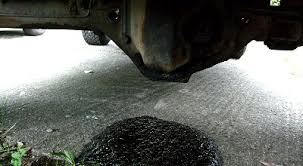
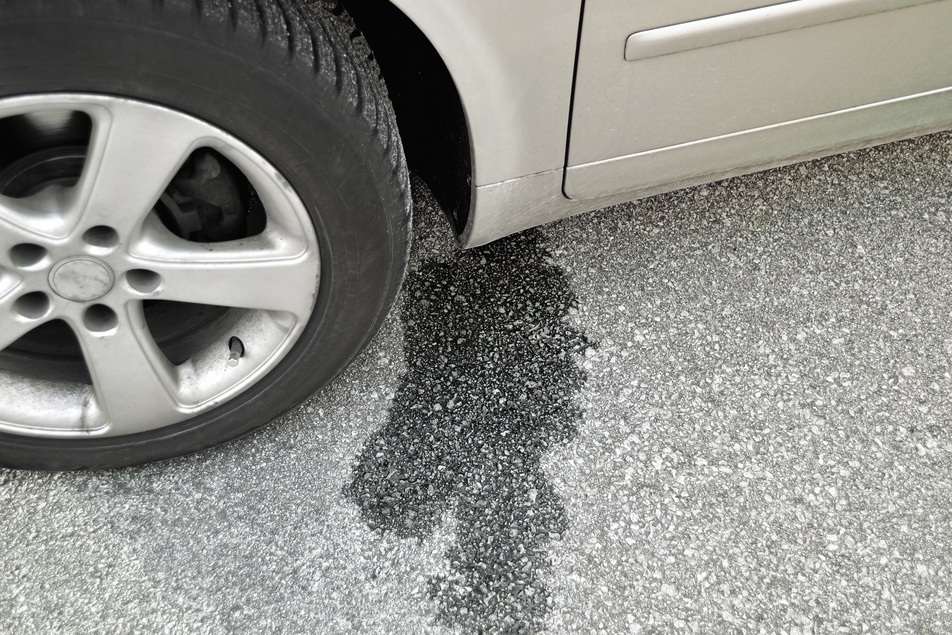
Noticing a puddle under your vehicle can be stressful—but the good news is that the color and texture of the fluid can tell you a lot about what’s going on.
Catching a leak early can save you from major repairs, breakdowns, or unsafe driving conditions. In this guide, we’ll break down the most common automotive fluids, what their leaks look like, and what you should do next.
Why Fluid Leaks Matter
Your vehicle relies on several fluids to function properly—each one plays a critical role in performance, safety, and longevity.
Ignoring a leak can lead to: Engine damage Brake failure Transmission issues Overheating Costly repairs
If you see something on your driveway, it’s worth investigating right away.
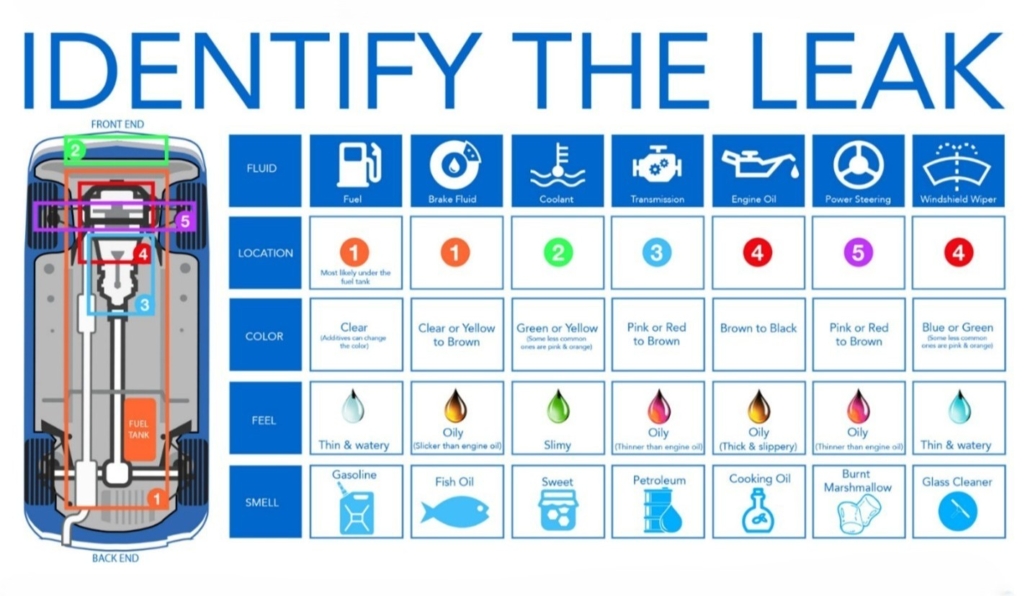
Common Vehicle Fluid Leaks (By Color)
Brown or Black Fluid – Engine Oil
What it means: This is the most common leak. Fresh oil is light brown, but as it ages, it turns dark brown or black.
Where it comes from: Oil pan Valve cover gasket Oil filter Drain plug
What to do: Check your oil level immediately. Driving with low oil can cause severe engine damage.
Red or Pink Fluid – Transmission or Power Steering Fluid
What it means: Red or pink fluid usually indicates transmission fluid or sometimes power steering fluid.
Where it comes from: Transmission lines or pan Cooler lines Power steering hoses
What to do: This isn’t something to ignore—low transmission fluid can lead to slipping or total transmission failure.
Green, Orange or Pink Fluid – Coolant (Antifreeze)
What it means: Coolant comes in multiple colors depending on the type, but it’s usually bright and easy to spot.
Where it comes from: Radiator Hoses Water pump Overflow tank
What to do: Coolant leaks can quickly lead to overheating. If your temperature gauge rises, stop driving immediately.
Yellow or Clear Fluid – Brake Fluid
What it means: Brake fluid is typically clear to yellowish and has a slightly oily feel.
Where it comes from: Brake lines Master cylinder Calipers
What to do: This is serious. A brake fluid leak can reduce stopping power—do not drive the vehicle until it’s inspected.
Blue Fluid – Windshield Washer Fluid
What it means: Bright blue fluid is usually washer fluid.
Where it comes from: Washer reservoir Hoses Spray nozzles
What to do: Not urgent, but you’ll lose visibility support—especially important in Alberta winters.
Brownish-Red Fluid — Gear Oil or Differential Fluid
What it means: Thicker than engine oil and often has a strong sulfur smell.
Where it comes from: Differential Transfer case Axle seals
What to do: Have it checked soon—gear oil protects critical drivetrain components.
Clear Water — Likely Normal (Condensation)
What it means: If it’s clear and odorless, it’s likely just water from:
Where it comes from: Air conditioning condensation Exhaust moisture
What to do: No action needed—this is completely normal.
Quick Tips to Identify a Leak
Check the location (front, middle, rear of vehicle) Look at color and thickness Smell it (carefully) – some fluids have distinct odors Use cardboard under the vehicle overnight to pinpoint the source
When to Bring It In
If you’re unsure about the fluid—or if the leak is:
Growing quickly Dark or thick Near your brakes Causing warning lights
…it’s time to get it inspected.
Trust the Pros at Those Guys Garage
At Those Guys Garage in Sherwood Park, we don’t guess—we diagnose.
Our team can quickly identify leaks, find the source, and fix the issue before it turns into a major repair.
Don’t ignore that spot on your driveway—let’s take a look and keep your vehicle running strong.
Final Thoughts
Fluid leaks are your vehicle’s way of telling you something’s wrong. The sooner you identify the issue, the easier (and cheaper) it is to fix.
If you’re ever unsure—bring it in and let the pros handle it.
https://thoseguysgarage.com/wp-content/uploads/2026/03/Identify-Fluids-Leaks-Banner-Featured.png6321536Dustinhttps://thoseguysgarage.com/wp-content/uploads/2025/03/those-garage-guys-logo.pngDustin2026-05-11 10:49:422026-05-04 11:06:09How to Identify Vehicle Fluid Leaks by Color
Upgrading your vehicle’s lighting isn’t just about looks—it’s about visibility, safety, and performance, especially here in Alberta where dark highways, backroads, and job sites are part of everyday driving.
Whether you’re building out a work truck, overland rig, or weekend warrior, understanding the differences between light bars, pod lights, and beam patterns is key to getting the right setup.
Light Bars vs Pod Lights:
What’s the Difference?
Light Bars
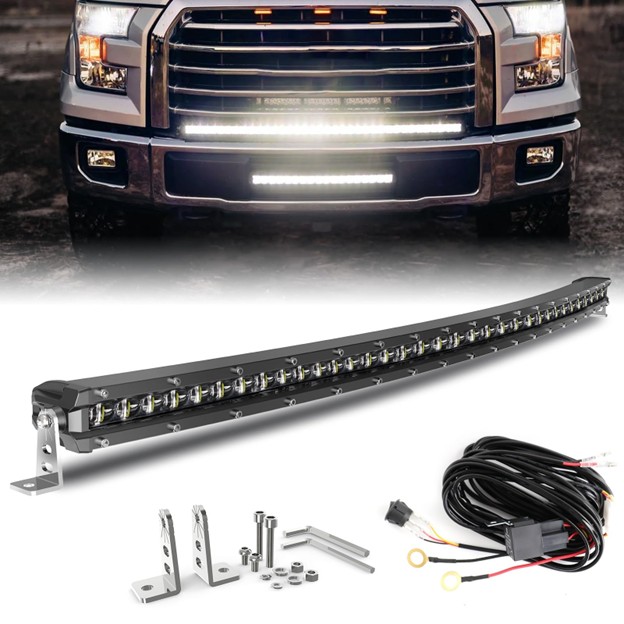
Light bars are long, high-output LED fixtures designed to deliver maximum coverage and brightness.
Best For:
Wide area illumination High-speed driving at night Off-road trails and rural highways
Key Advantages:
Clean, aggressive look Massive light output (lumens) Broad field of vision
Things to Consider:
Legal use on public roads Mounting location (roof vs bumper) Wind noise (roof-mounted setups)
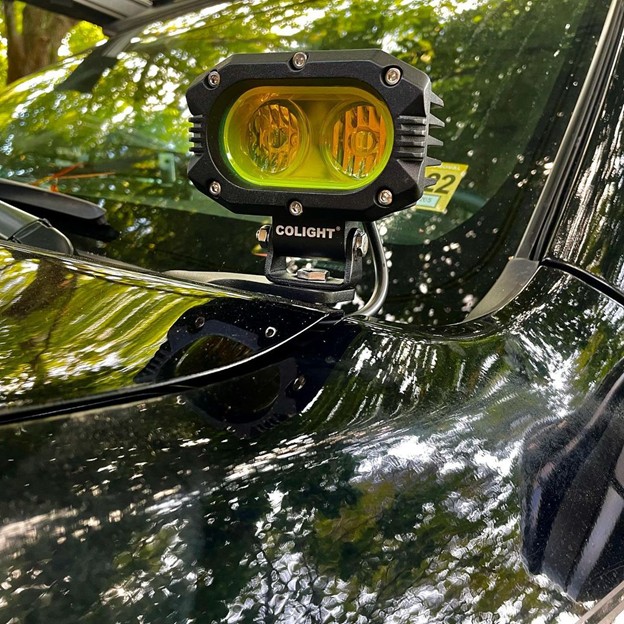
Pod Lights
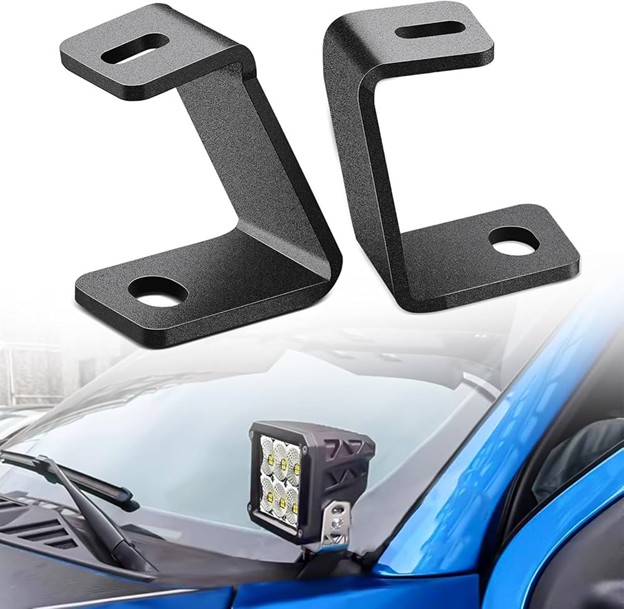
Pod lights are compact, versatile lighting options that can be mounted almost anywhere.
Best For:
Targeted lighting Ditch lighting (side visibility) Fog replacement or auxiliary lighting
Key Advantages:
Ideal for layering with other lighting Flexible mounting options More affordable entry point
Things to Consider:
Beam pattern matters more due to placement Lower output compared to bars (per unit)
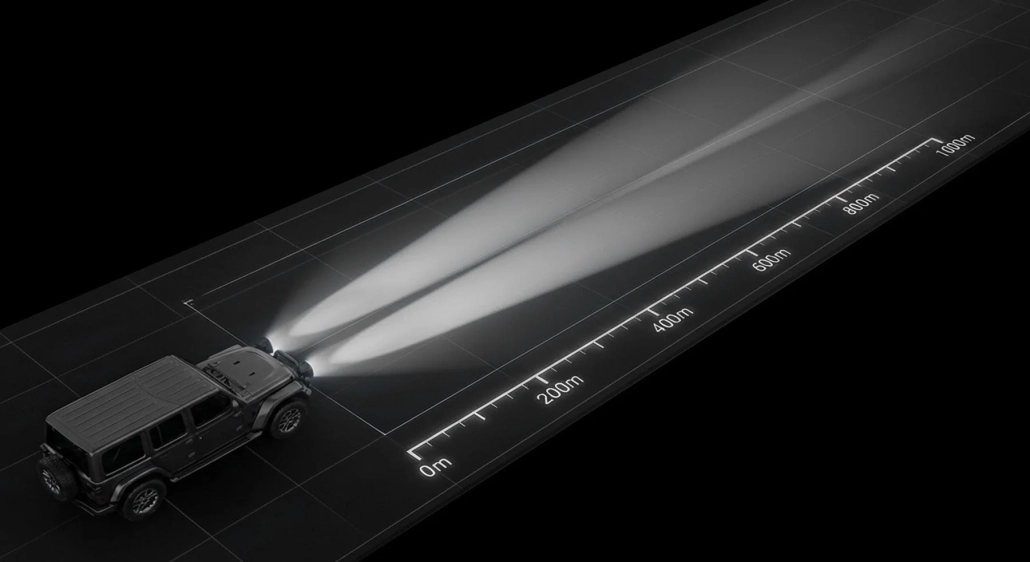
Understanding Beam Patterns (This Is Where It Matters Most)
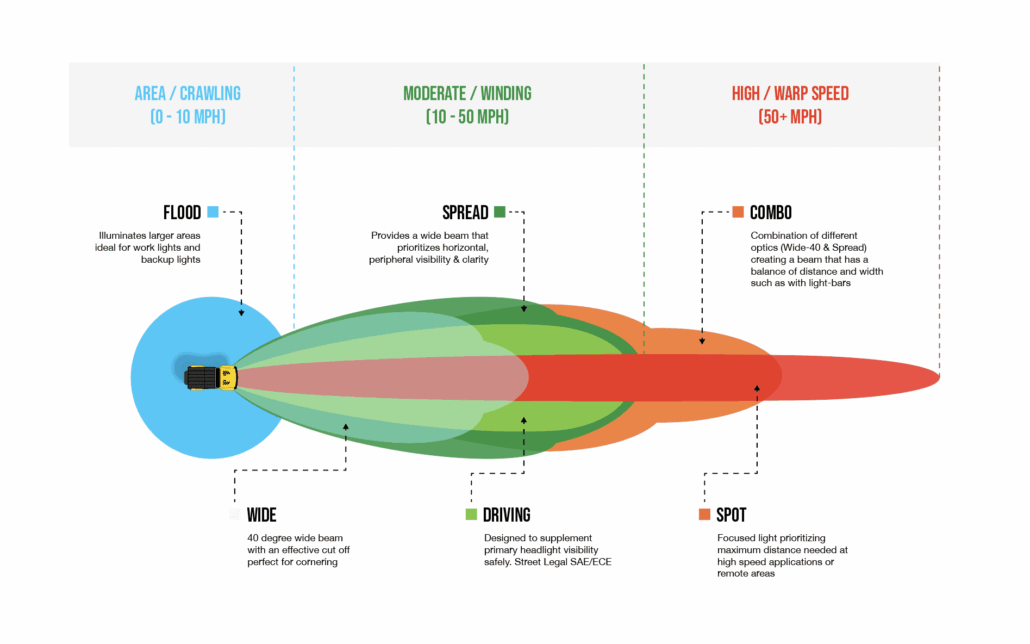
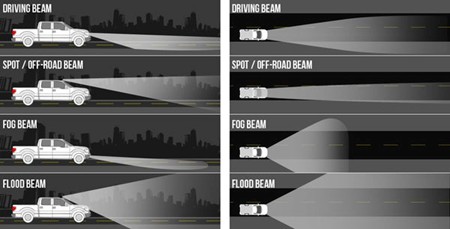
Choosing the right beam pattern can make or break your lighting setup. It determines how the light is distributed in front of your vehicle.
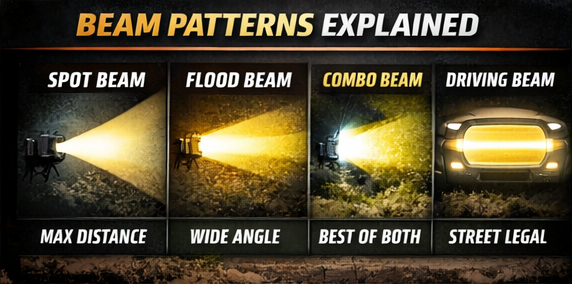
Spot Beam (Distance Focused)
What It Does:
Projects light far down the road in a narrow pattern
Best For:
Highway driving High-speed off-road Rural roads with long sightlines
Key Benefit: ➡️ Maximum distance visibility
Flood Beam (Wide Coverage)
What It Does:
Spreads light wide, but not as far
Best For:
Low-speed driving Job sites Trail riding Campsite or work lighting
Key Benefit: ➡️ Maximum peripheral visibility
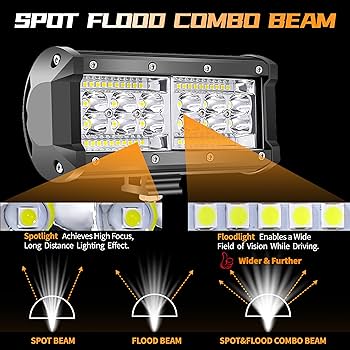
Combo Beam (Best of Both Worlds)
What It Does:
Combines spot (center) and flood (outer) optics
Best For:
Daily drivers with off-road use All-around performance
Key Benefit: ➡️ Balanced distance + width
Driving Beam (Street-Focused Performance)
What It Does:
Controlled pattern designed to mimic high beams
Best For:
On-road use where legal Long-distance night driving
Key Benefit: ➡️ Clean, usable light without excessive scatter
Color Temperature: White vs Amber
White (6000K–6500K):
Bright and crisp Best for clear conditions
Amber / Yellow:
Cuts through:
Snow Fog Dust
Reduces glare and eye fatigue
👉 In Alberta winters, amber lighting is a game-changer for visibility.
Key Features to Look For
When choosing lighting, don’t just look at brightness—focus on quality and reliability:
Lumens vs Lux (usable light vs total output) Build Quality (aluminum housing, impact resistance) IP Rating (waterproof/dustproof – look for IP67/IP68) Wiring Harness & Relays Mounting Hardware Warranty & Brand Reputation
How to Choose the Right Setup
Daily driver (Highway + City)
work truck
Offroad/backroad
winter driving setup (Highly Recommended)
Combo beam light bar or driving lights
Optional ditch lights (pods)
Flood pods for job sites
Combo or flood light bar
Combo light bar
Spot pods (forward)
Flood/amber pods (ditch lighting)
Amber pod lights (ditch or bumper)
Combo or driving beam primary light
Professional Installation Matters
Proper installation ensures:
Safe wiring (no shorts or battery drain) Clean integration with your vehicle Correct aiming for maximum effectiveness Compliance with road regulations
A clean install isn’t just about looks—it’s about reliability and peace of mind.
Final Thoughts
Lighting upgrades are one of the most impactful mods you can make to your vehicle—but only if you choose the right combination of lights and beam patterns.
The best setups aren’t always the biggest—they’re the ones that are purpose-built for how you actually drive.
Need Help Choosing the Right Lighting Setup?
At Those Guys Garage, we help you:
Choose the right lights for your driving style Source trusted brands like Baja Designs, Rough Country, and more Professionally install and wire everything cleanly and safely
👉 Stop guessing and get it done right the first time.
https://thoseguysgarage.com/wp-content/uploads/2026/03/Off-Road-Lighting-Banner.png3471263Dustinhttps://thoseguysgarage.com/wp-content/uploads/2025/03/those-garage-guys-logo.pngDustin2026-03-30 10:10:522026-04-30 16:54:22Choosing the Right Off-Road Lighting
When temperatures drop in Alberta, diesel vehicle owners face a common cold-weather challenge: diesel fuel gelling. If diesel fuel gels, it can clog fuel filters, restrict fuel flow, and potentially leave your truck unable to start — usually at the worst possible time.
For diesel truck owners in the Sherwood Park and Edmonton area, understanding how diesel fuel behaves in cold temperatures and how to prevent gelling can save you from costly repairs and frustrating winter breakdowns.
What is Diesel Fuel Gelling?
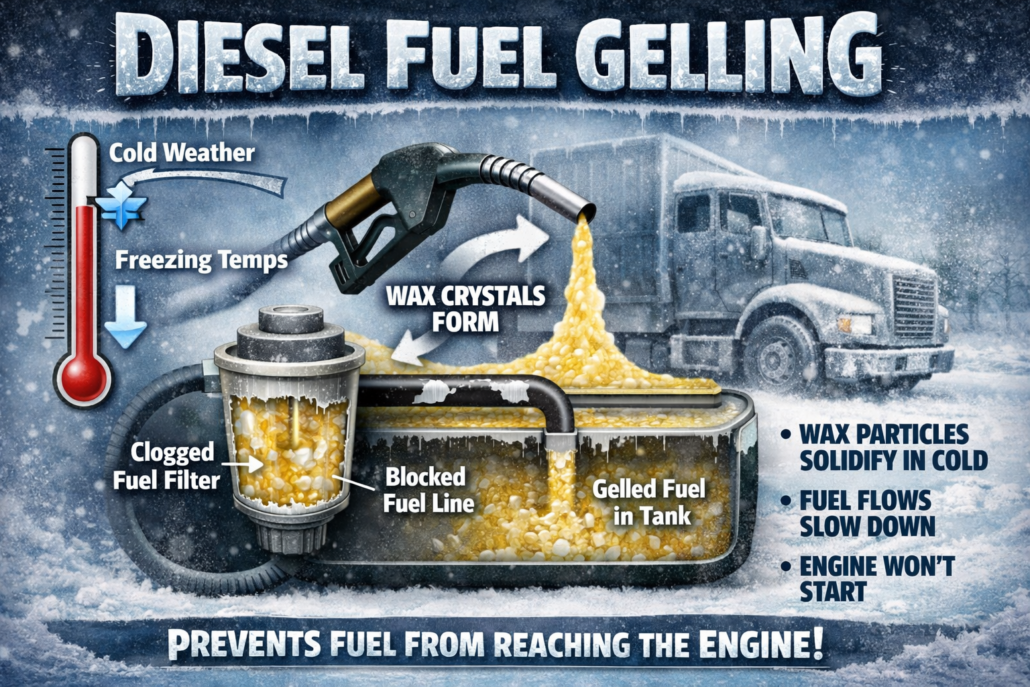
Diesel fuel contains paraffin wax, which helps with lubrication and energy density. When temperatures drop far enough, the wax begins to solidify and form crystals.
As temperatures continue falling, these crystals grow and eventually clog the fuel filter and restrict fuel flow.
Typical temperature points include:
Cloud Point: Wax crystals begin forming (fuel looks cloudy) Cold Filter Plugging Point (CFPP): Wax blocks the fuel filter Pour Point: Fuel becomes too thick to flow
In Alberta winters, temperatures frequently drop below -20°C to -30°C, which means untreated diesel fuel can gel quickly.
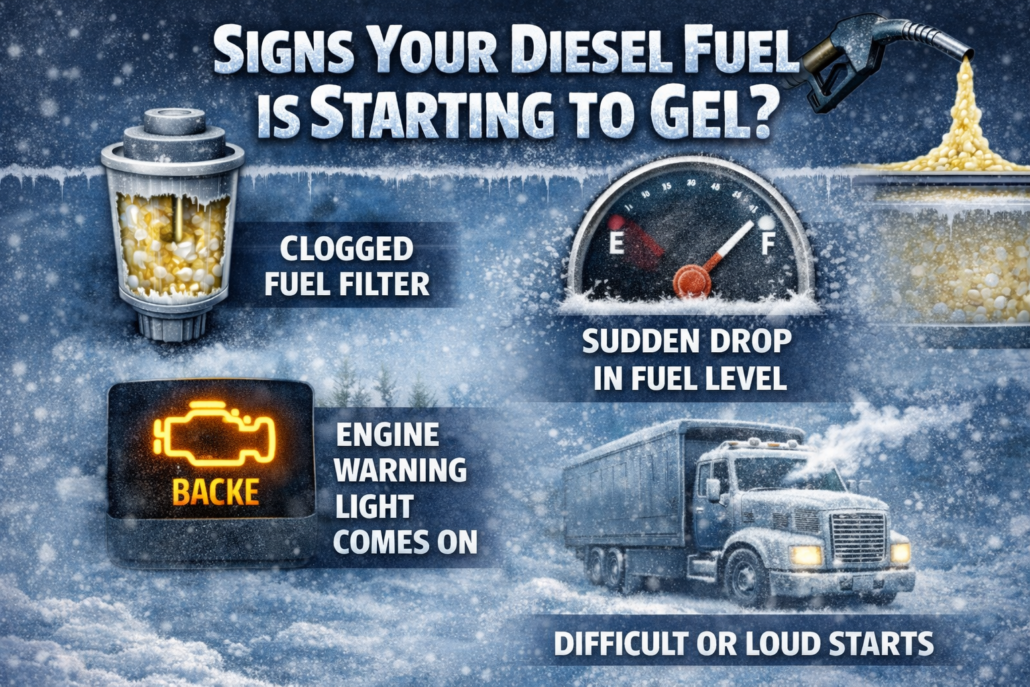
Signs Your Diesel Fuel Is Starting to Gel
If your diesel fuel is gelling, you may notice several symptoms before a full breakdown occurs.
Common warning signs include:
Hard starting in cold weather Loss of engine power Rough running or sputtering Fuel filter clogging Engine stalling shortly after startup
If the fuel fully gels, your truck may not start at all.
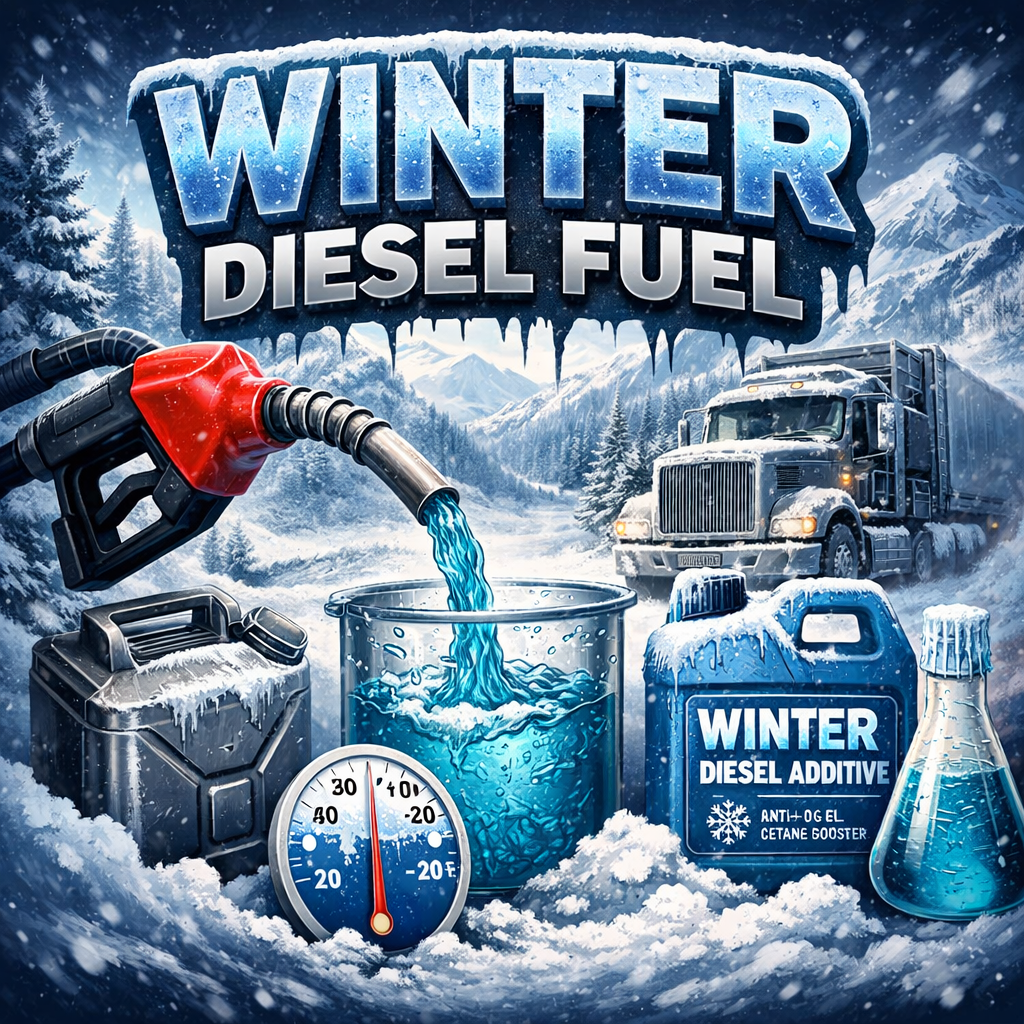
Use Winter Diesel Fuel
Most fuel stations in Canada switch to winter diesel blends during colder months.
Winter diesel typically contains:
Additives that lower the cold filter plugging point A blend of No.1 diesel and No.2 diesel Anti-gel additives
However, winter diesel alone may not always be enough during extreme cold snaps, especially when temperatures fall below -30°C.
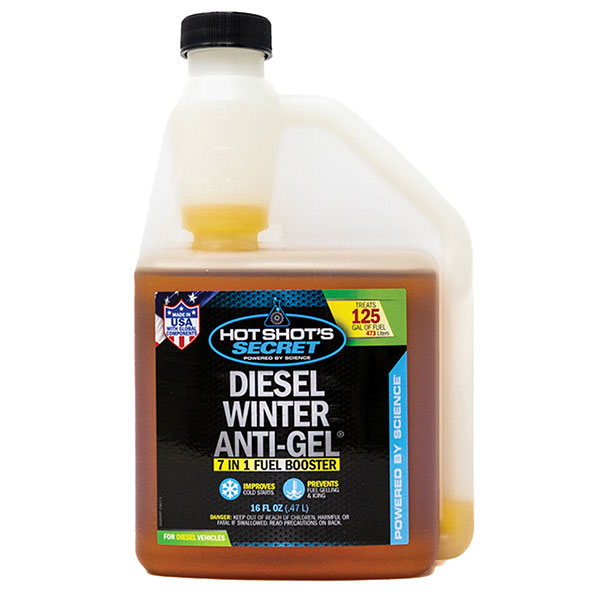
Add a Diesel Anti-Gel Treatment
One of the best preventative measures is adding a diesel fuel treatment designed for winter conditions.
Quality winter diesel additives can:
Prevent wax crystal formation Improve cold starting Protect fuel injectors and pumps Improve fuel lubrication Stabilize fuel during long storage periods
Many diesel truck owners in Alberta use additives regularly during winter months to provide extra protection beyond standard pump diesel.
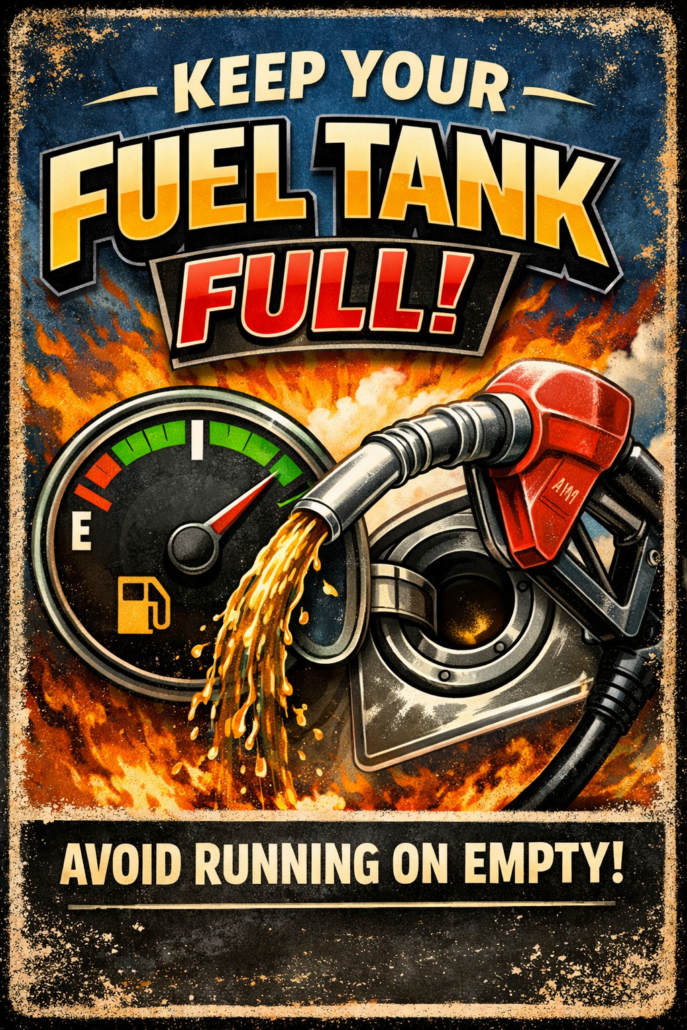
Keep Your Fuel Tank Full
Condensation can form inside partially empty fuel tanks during cold weather.
Water contamination in diesel fuel can:
Freeze in fuel lines Block fuel filters Cause injector issues
Keeping your tank at least half full (preferably full) reduces the amount of air inside the tank and minimizes condensation.
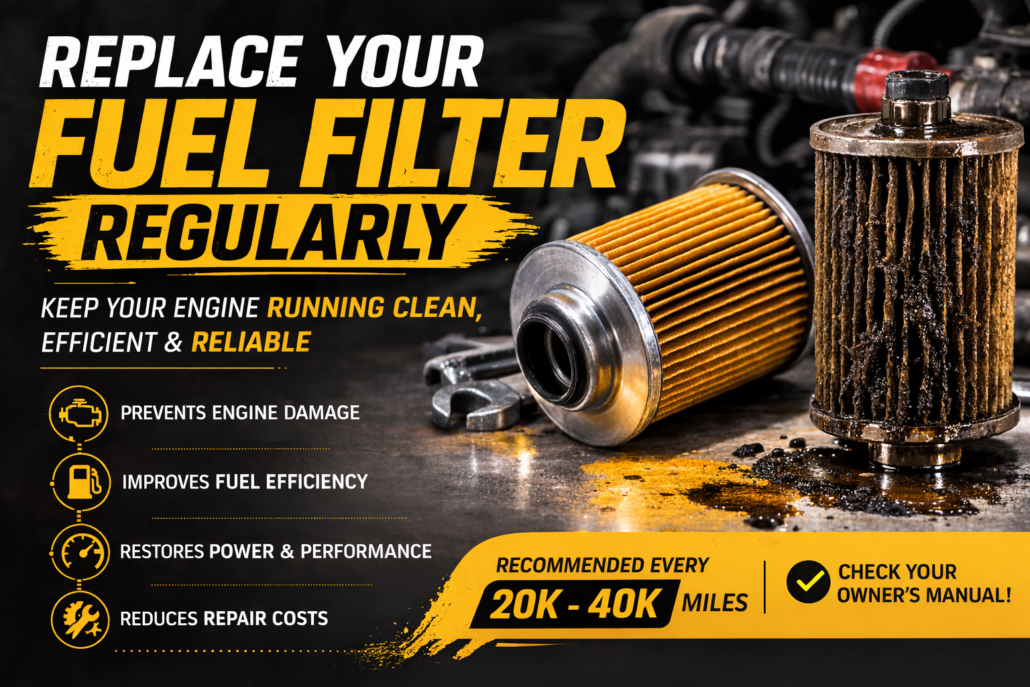
Replace Your Fuel Filter Regularly
Fuel filters play a critical role in protecting your diesel system.
A dirty or partially clogged fuel filter can freeze faster and worsen gelling problems.
For diesel trucks operating in cold climates like Alberta:
Follow manufacturer fuel filter intervals Replace filters before winter if they are near service time Carry a spare filter during long winter trips
A fresh filter allows fuel to flow properly and reduces the chance of winter fuel issues.
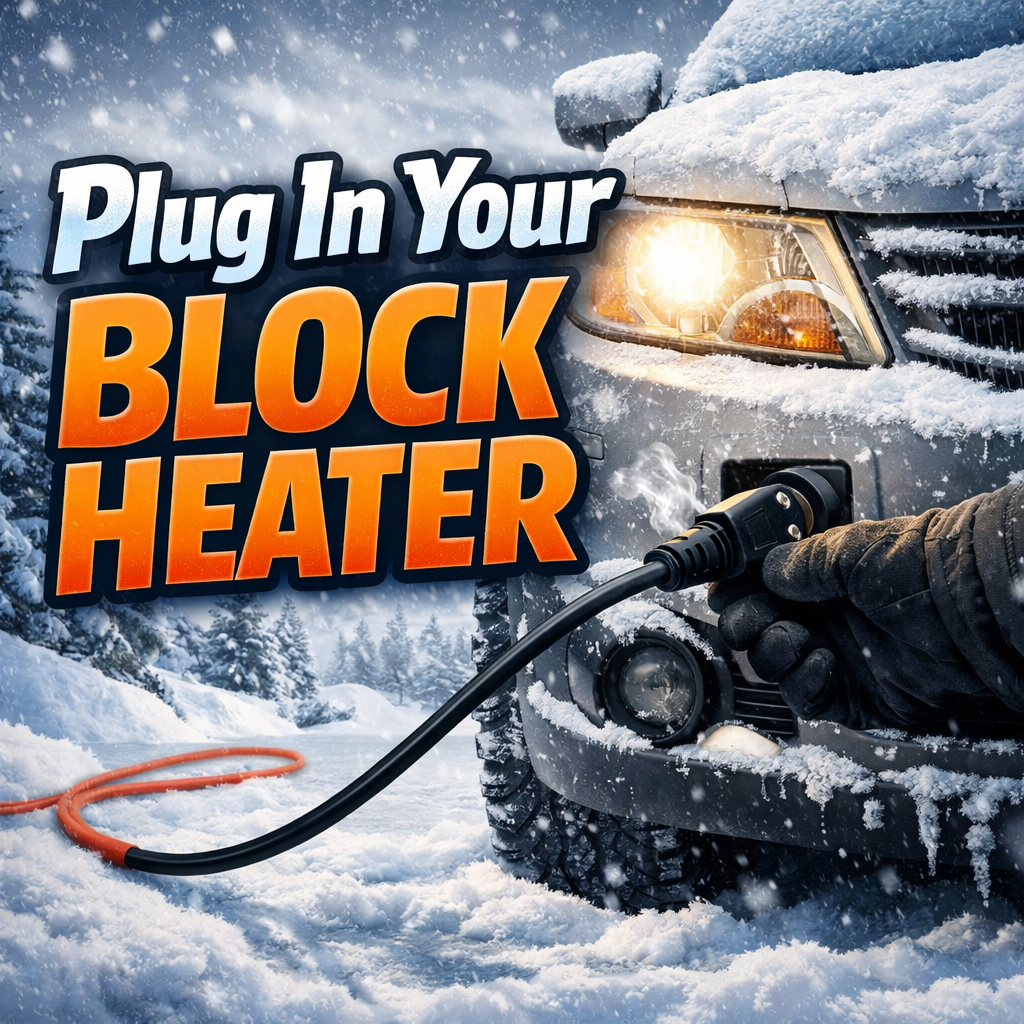
Plug in Your Block Heater
Most diesel trucks are equipped with block heaters, and using them during winter makes a big difference.
Plugging in your truck helps:
Keep engine oil warm Improve cold starts Reduce engine wear Assist with fuel flow in extreme cold
In Alberta winters, many drivers plug in their diesel trucks whenever temperatures drop below -15°C.
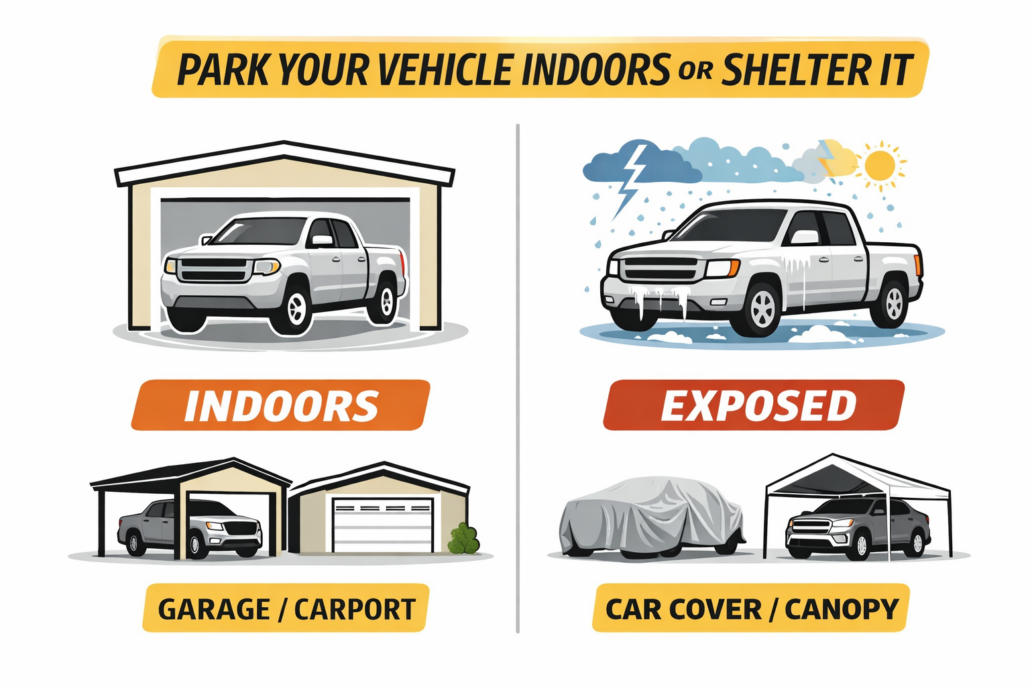
Park Indoors or Shelter Your Truck
Whenever possible, park in a garage or sheltered area.
Even a few degrees of warmth can make a difference in preventing diesel fuel issues.
If indoor parking isn’t available:
Park out of the wind Use a vehicle cover Consider insulated engine blankets
These steps help maintain engine and fuel system temperatures.
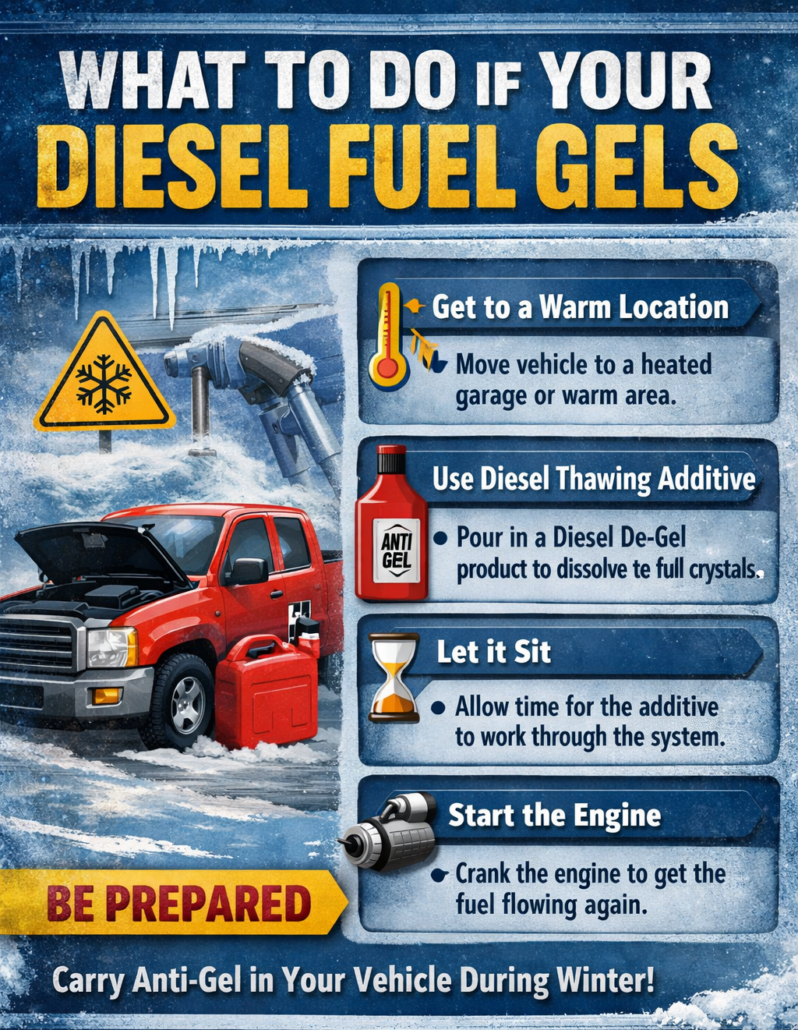
What To Do If Your Diesel Fuel Gels
If your diesel fuel has already gelled, avoid repeatedly cranking the engine, as this can damage components.
Instead:
1. Move the vehicle to a warm location if possible 2. Replace the fuel filter if clogged 3. Add a diesel emergency de-gelling treatment 4. Allow time for the fuel to warm and liquefy
In severe cases, professional service may be required to restore fuel flow.
Stay Prepared for Winter Driving
Diesel trucks are extremely capable in harsh climates, but cold weather requires proper preparation.
Preventing diesel fuel gelling comes down to a few simple habits:
Use winter diesel fuel Add a quality anti-gel treatment Keep your tank full Maintain your fuel filters Plug in your block heater
Taking these preventative steps will help ensure your diesel truck starts reliably — even during the coldest Alberta mornings.
Need Help Preparing Your Diesel Truck for Winter?
At Those Guys Garage in Sherwood Park, we help diesel owners stay ready for Alberta’s toughest winters.
Our services include:
Diesel fuel system inspections Fuel filter replacement Winter vehicle maintenance Diesel performance accessories and treatments
If you want to keep your diesel running strong all winter long, book your appointment today and let our team help you stay ahead of the cold.
https://thoseguysgarage.com/wp-content/uploads/2026/03/Diesel-Fuel-Gelling-Banner-Featured.png7561536Dustinhttps://thoseguysgarage.com/wp-content/uploads/2025/03/those-garage-guys-logo.pngDustin2026-03-24 09:48:542026-03-24 09:48:55How to Prevent Diesel Fuel Gelling in Winter
Your tires do far more than just keep your vehicle rolling down the road. They affect your vehicle’s handling, fuel economy, ride comfort, braking ability, and safety.
However, when you look at the sidewall of a tire, it can feel like you’re reading a secret code — numbers, letters, and symbols that most drivers don’t understand.
In this guide, we’ll break down what those tire markings mean, how to read them, and why they matter when choosing the right tires for your vehicle.
Why Tire Information Matters
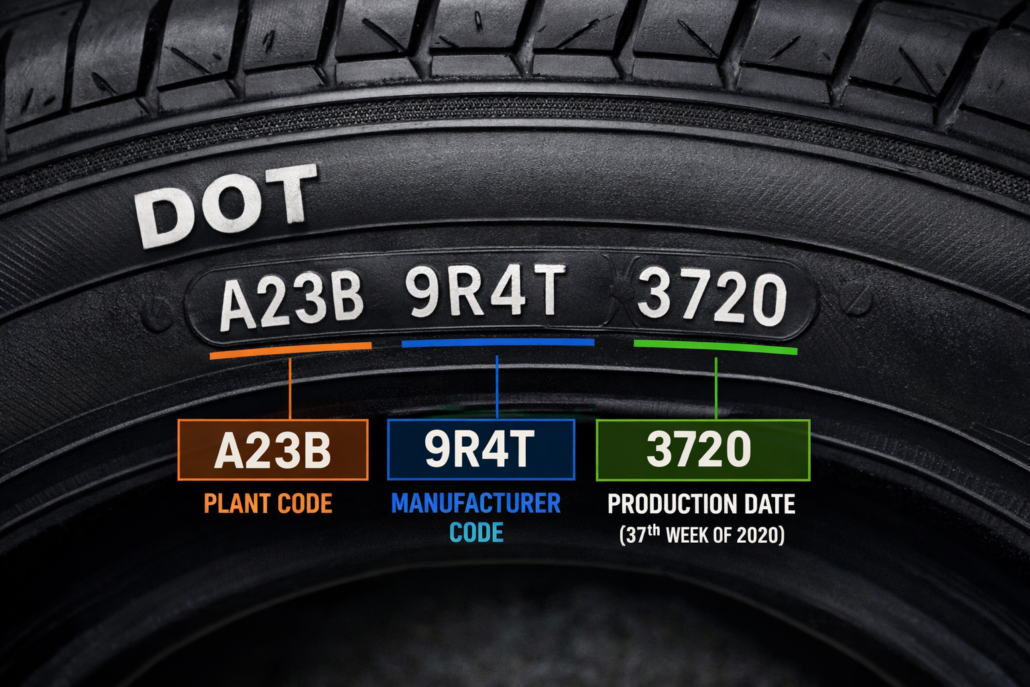
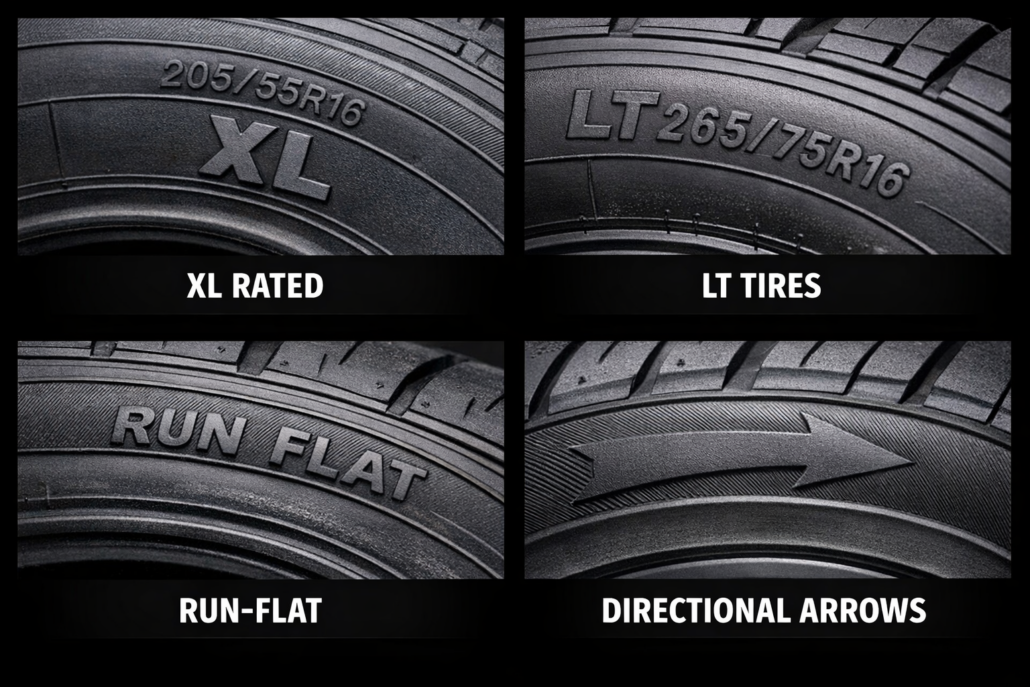
Choosing the correct tire for your vehicle isn’t just about size. Each tire contains critical information about:
Load capacity Speed capability Tire construction Weather performance Manufacturing details
Understanding these markings helps ensure you’re running safe, properly rated tires for your vehicle and driving conditions — especially important for Canadian drivers dealing with rain, snow, and extreme temperature changes.
How to Read a Tire Size
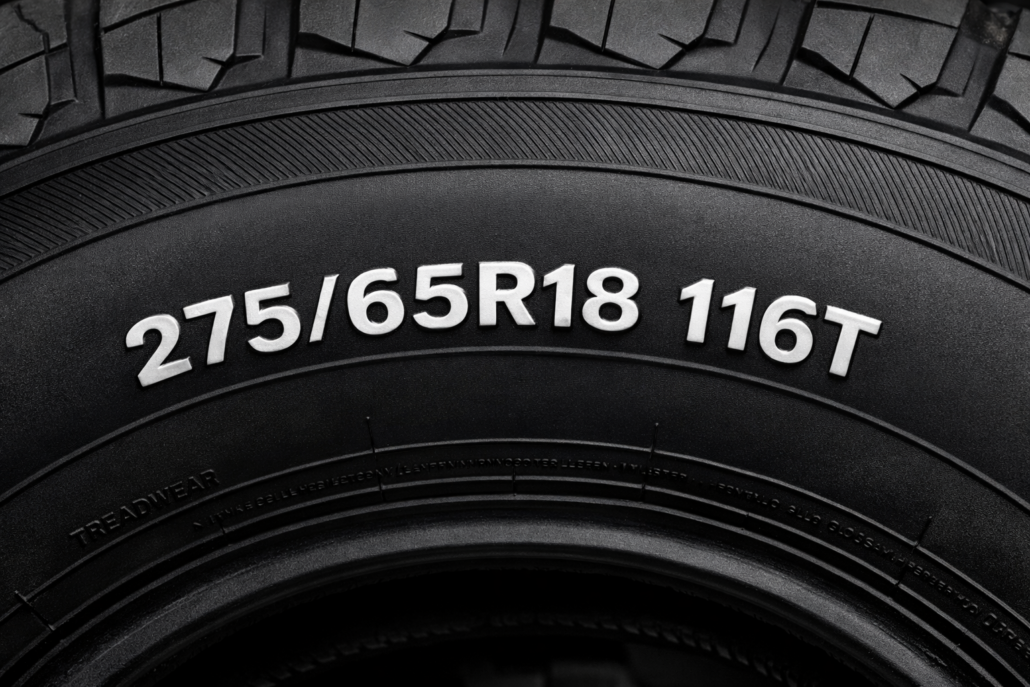
Most passenger tires use a format similar to this: Example: 275/65R18 116T
Each part of that code provides specific information about the tire.
Tire Width (275)
ASPECT RATIO (65)
TIRE CONSTRUCTION (R)
WHEEL DIAMETER (18)
The first number represents the tire width in millimeters, measured from sidewall to sidewall.
The second number is the aspect ratio, which represents the height of the sidewall as a percentage of the tire width.
The letter indicates how the tire is built.
This number indicates the diameter of the wheel the tire fits, measured in inches.
275 = 275 mm wide
65 means the sidewall height is 65% of the tire width.
R = Radial Construction
18 = Fits an 18-inch wheel
Wider tires typically provide:
✔ Better grip ✔ Improved handling ✔ More aggressive appearance
However, they can sometimes reduce fuel efficiency or increase road noise.
Choosing the correct tire size and rating ensures your vehicle performs safely and efficiently.
Need Help Choosing the Right Tires?
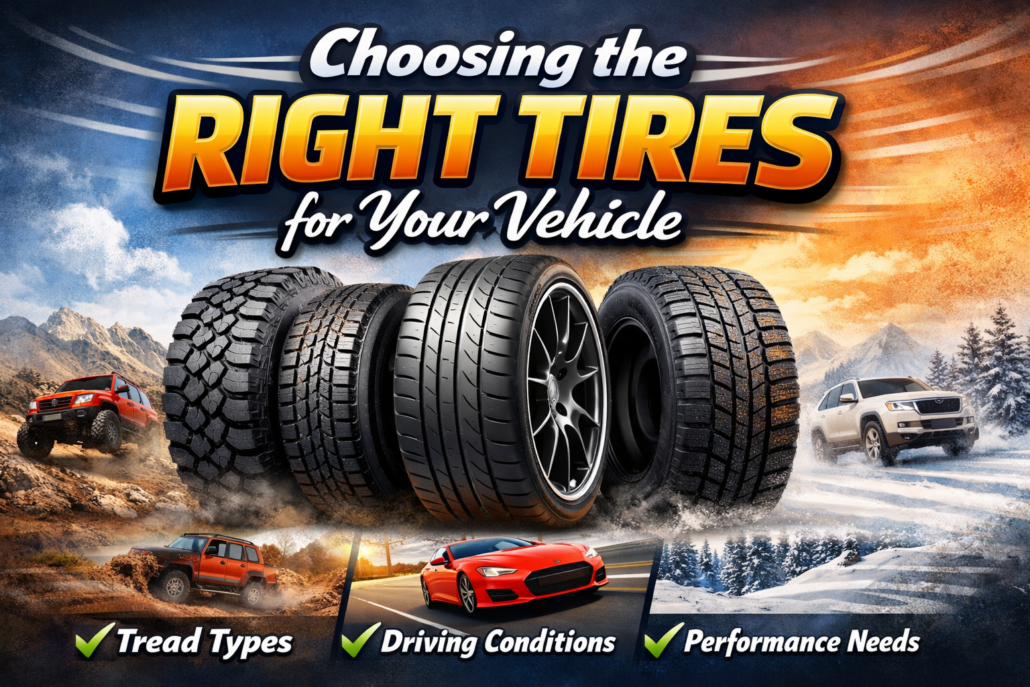
At Those Guys Garage, we help drivers find the right tires for their vehicle and driving style. Whether you’re looking for all-terrain tires, winter tires, or an aggressive off-road setup, our team can help you choose the right combination for performance and safety.
If you’re unsure what tire size or rating is best for your vehicle, stop by the shop or contact us and we’ll help you get rolling with confidence.
https://thoseguysgarage.com/wp-content/uploads/2026/03/Understanding-Tires-Banner.png6311536Dustinhttps://thoseguysgarage.com/wp-content/uploads/2025/03/those-garage-guys-logo.pngDustin2026-03-16 12:03:122026-03-16 12:03:13Understanding Your Tires
How They Work, The Different Types, and the Pros & Cons for Drivers
If you’ve ever seen the yellow horseshoe-shaped warning light pop up on your dash, you’ve experienced your vehicle’s Tire Pressure Monitoring System (TPMS) in action.
TPMS has been mandatory on new vehicles in North America since the late 2000s, and it plays a critical role in safety, tire longevity, and fuel efficiency—especially with our Alberta temperature swings.
In this blog, we’ll break down:
What TPMS is The two main types of TPMS systems How each system works The pros and cons of each What you should know as a vehicle owner
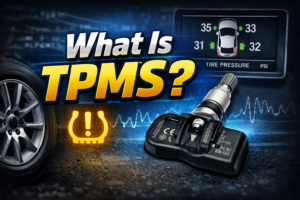
What Is TPMS?
TPMS (Tire Pressure Monitoring System) is an electronic system designed to monitor the air pressure inside your tires and alert you when pressure drops below the manufacturer’s recommended threshold.
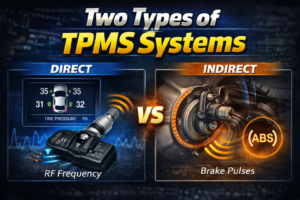
There are two primary types of TPMS used in modern vehicles:
Direct TPMS Indirect TPMS
Let’s break each one down.
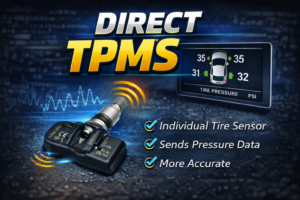
1. Direct TPMS (Sensor-Based System)
How Direct TPMS Works
Direct TPMS uses physical pressure sensors mounted inside each wheel, typically attached to the valve stem or strapped to the wheel barrel.
Each sensor:
Measures actual tire pressure (PSI or kPa) Sends a radio frequency signal to the vehicle’s TPMS control module Displays pressure readings on the dash (in many vehicles) Triggers a warning light if pressure drops below threshold
Some advanced systems even show:
Individual tire pressures Tire temperature readings
Pros of Direct TPMS
✔ Highly accurate — measures actual pressure ✔ Real-time monitoring ✔ Can identify which specific tire is low ✔ Not affected by tire rotations (if relearned properly) ✔ Better overall safety feedback
Cons of Direct TPMS
✘ Sensors have batteries that eventually die (typically 5–10 years) ✘ Higher replacement cost ✘ Sensors can be damaged during tire mounting/dismounting ✘ Requires relearn procedure after rotations or wheel swaps ✘ Winter wheel packages often require additional sensors
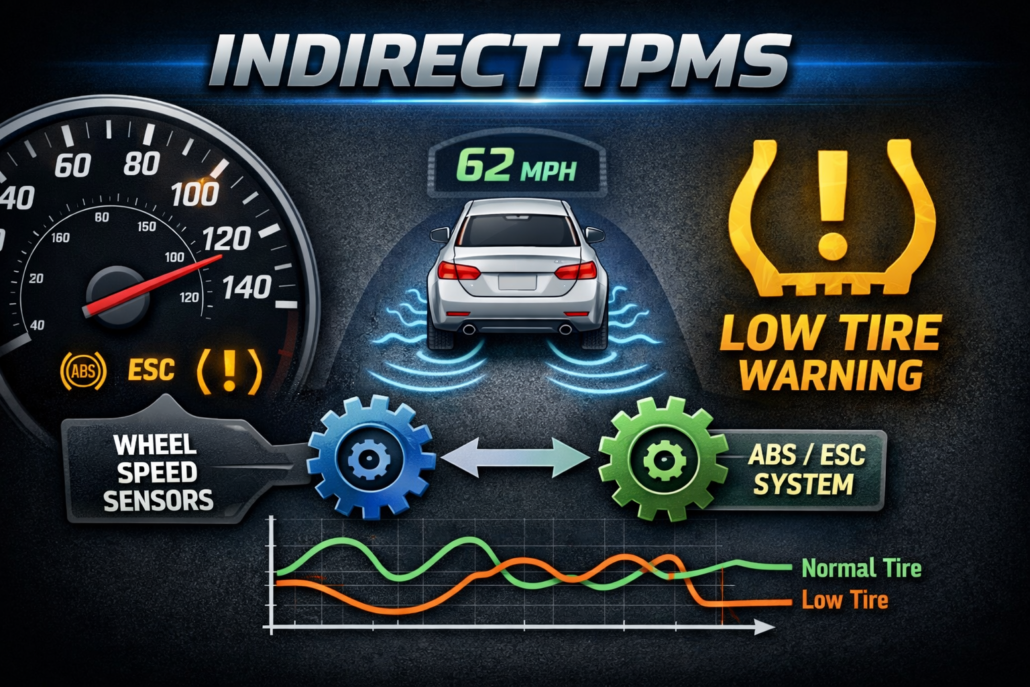
2. Indirect TPMS (ABS-Based System)
How Indirect TPMS Works
Indirect TPMS does not use physical pressure sensors. Instead, it relies on the vehicle’s ABS (Anti-lock Braking System) wheel speed sensors.
Here’s how it works:
A tire with lower air pressure has a smaller rolling diameter That tire rotates faster than properly inflated tires The ABS system detects the difference in wheel speed The system interprets that difference as low tire pressure The TPMS warning light turns on
Pros of Indirect TPMS
✔ No internal tire sensors ✔ Lower replacement cost ✔ No sensor batteries to fail ✔ No additional cost for winter wheel packages ✔ Lighter system weight
Cons of Indirect TPMS
✘ Less accurate ✘ Does not display actual PSI ✘ Cannot always identify which tire is low ✘ Requires manual recalibration after adjusting pressures ✘ May not detect equal pressure loss in all four tires
Key Differences at a Glance
FEATURE
DIRECT TPMS
indirect tpms
Measures Actual PSI
✔ Yes
✘ No
Users Physical Sensors
✔ Yes
✘ No
Battery Replacement Required
✔ Yes
✘ No
Displays Individual Tire Pressure
Often
Rarely
Accuracy Level
High
Moderate
Cost of Service
Higher
Lower
Why TPMS Matters
In climates like Edmonton and Sherwood Park, temperature swings can cause rapid pressure changes.
Rule of thumb: For every 10°C drop in temperature, tire pressure drops approximately 1–2 PSI.
That’s why you’ll often see TPMS lights appear during seasonal transitions.
Why is my TPMS Light on, but my tires look fine? Tires can be 20% underinflated and still appear visually normal. Always verify with a calibrated tire gauge.
Can I ignore the TPMS Light? Technically yes. Advisable? No.
The system is part of your vehicle’s safety network.
What happens if a TPMS sensor fails? Direct systems will trigger a flashing TPMS light The sensor must be replaced and programmed Driving is still possible, but monitoring is lost
Final Thoughts: Which System is Better?
From a technical standpoint:
Direct TPMS is more accurate and safety-focused Indirect TPMS is simpler and lower-cost
Most modern vehicles use direct TPMS due to regulatory standards and improved safety performance.
It’s important to ensure sensors are properly programmed and compatible with the vehicle’s system.
https://thoseguysgarage.com/wp-content/uploads/2026/02/TPMS-Systems-Banner.png10241536Dustinhttps://thoseguysgarage.com/wp-content/uploads/2025/03/those-garage-guys-logo.pngDustin2026-03-09 10:03:112026-04-30 16:55:54Understanding TPMS Systems in Modern Vehicles