
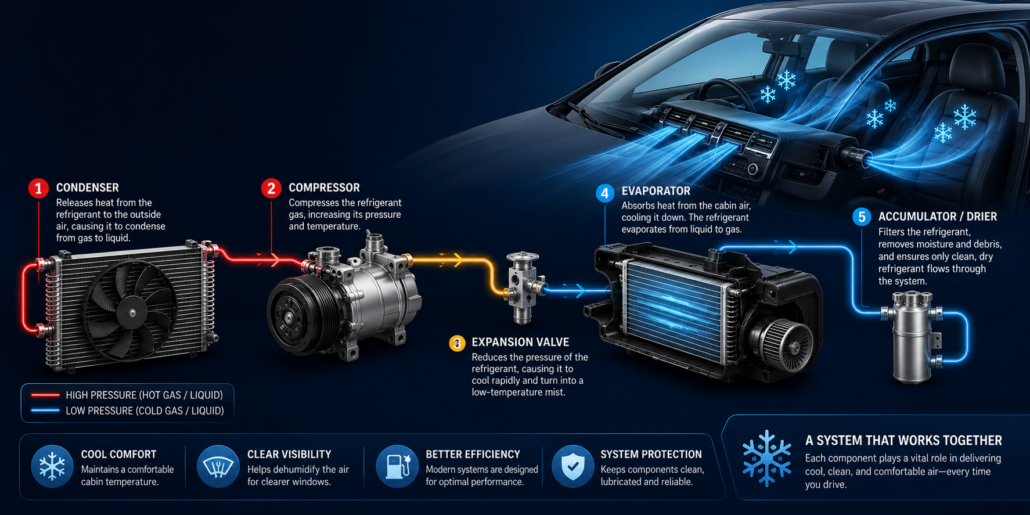
Understanding Your Air Conditioning System
When summer temperatures start climbing, few things are more appreciated than a properly functioning air conditioning system. While most drivers simply expect cold air at the push of a button, the A/C system in your vehicle is a complex network of components working together to keep you comfortable on the road.
Understanding how your vehicle’s air conditioning system works can help you recognize potential issues early and ensure your system continues operating efficiently for years to come.
What Does Your Vehicle’s Air Conditioning System Do?
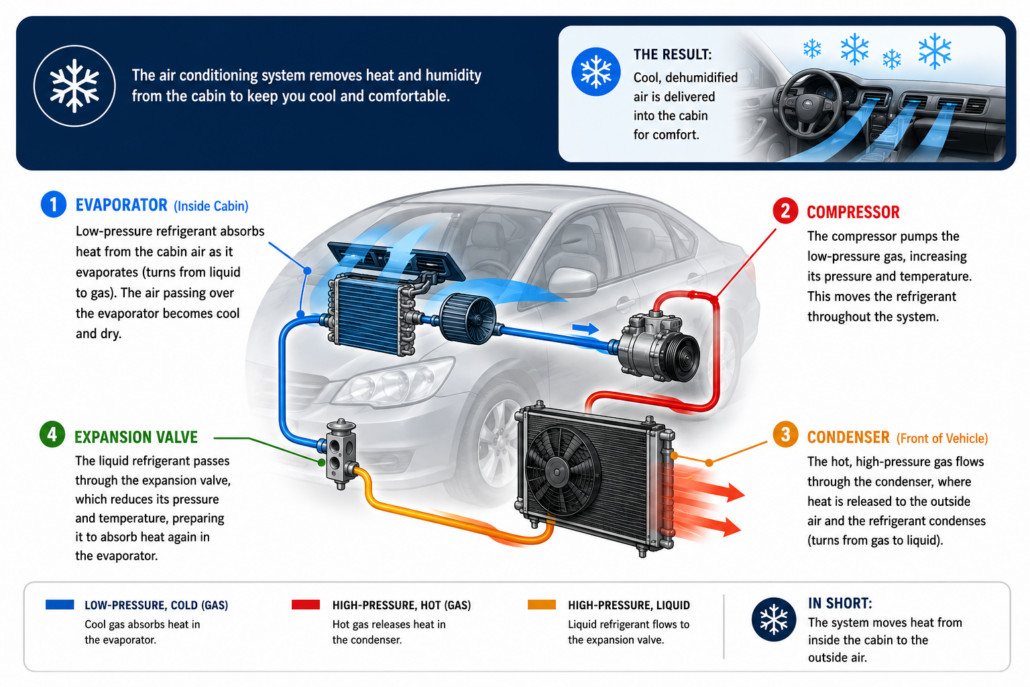
The primary purpose of your vehicle’s air conditioning system is to remove heat and humidity from the cabin, creating a comfortable environment for drivers and passengers. Beyond keeping you cool, your A/C system also plays an important role in improving visibility by helping remove moisture from the air when using the defrost setting.
Main Components of an Air Conditioning System
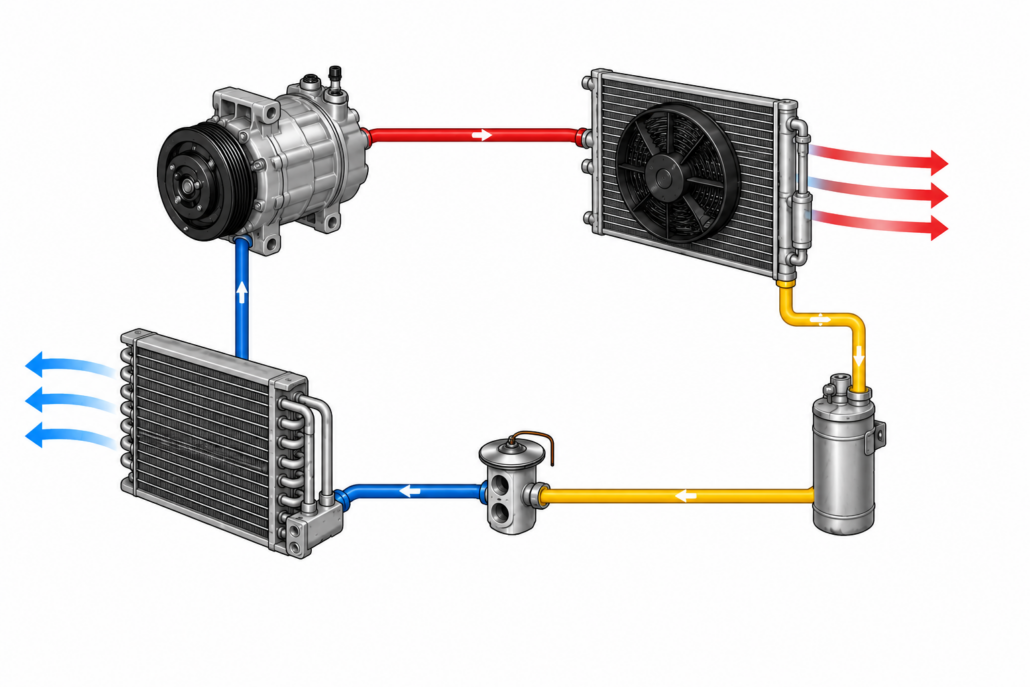
Several key components work together to produce cold air:
Compressor
Often referred to as the heart of the A/C system, the compressor circulates refrigerant throughout the system. Driven by the engine through a belt or electronically in some newer vehicles, the compressor pressurizes the refrigerant and moves it through the system.
Expansion Valve or Orifice Tube
The expansion device regulates the flow of refrigerant into the evaporator. As refrigerant passes through, its pressure drops dramatically, allowing it to cool rapidly.
Condenser
Located near the front of the vehicle, the condenser resembles a small radiator. As refrigerant passes through, heat is released and dissipated into the outside air, causing the refrigerant to cool and change from a gas to a liquid.
Evaporator
Located inside the dashboard, the evaporator absorbs heat from the cabin air. As warm air passes over the evaporator, heat is removed and cold air is blown into the vehicle’s interior.
Receiver-Drier or Accumulator
This component removes moisture and contaminants from the refrigerant. Moisture inside the system can cause corrosion and significantly reduce cooling performance.
Refrigerant
Refrigerant is the substance that circulates throughout the A/C system, carrying the heat away from the cabin and releasing it outside the vehicle. Modern vehicles typically use environmentally friendly refrigerants such as R-1234yf, while older vehicles maybe use R-134a.
How the Air Conditioning Process Works
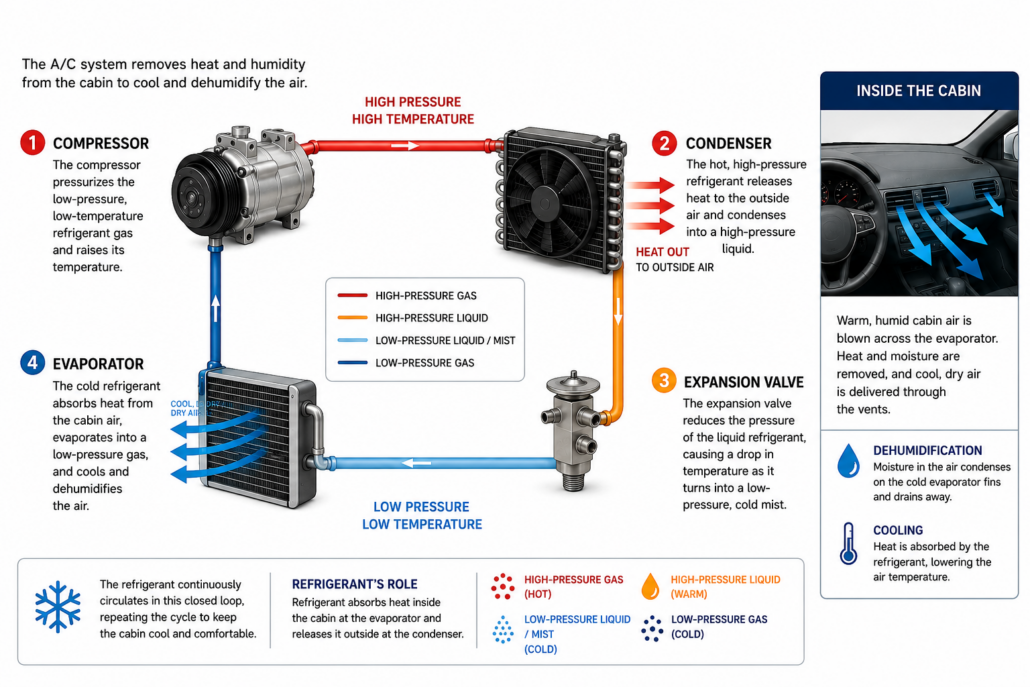
The cooling process follows a continuous cycle:
1. The compressor pressurizes the refrigerant gas.
2. The refrigerant travels to the condenser where heat is released.
3. The cooled liquid refrigerant moves through the receiver-drier.
4. The expansion valve reduces refrigerant pressure.
5. The refrigerant enter the evaporator and absorbs heat from the cabin.
6. Cold air is blown through the vents
7. The refrigerant returns to the compressor, and the cycle repeats.
This process happens continuously while your A/C system is operating.
Common Signs of Air Conditioning Problems
Like any vehicle system, air conditioning can wear out over time. Some common warning signs include:
Weak Airflow
If air isn’t blowing as strongly as it used to, the cause could be:
– Clogged cabin air filter
– Failing blower motor
– Blocked vents
-Electrical issues
Unpleasant Odors
Musty smells often results from mold or bacteria growth on the evaporator core or within the HVAC system.
Air Isn’t Cold
Warm air from the vents may indicate
– Low refrigerant levels
– Refrigerant leaks
– Compressor failure
– Faulty expansion valve
– Electrical problems
Unusual Noises
Grinding, squealing, or rattling noises when the A/C is operating can signal:
– Worn compressor bearings
– Loose components
– Damaged compressor clutch
Water Leaks Inside the Vehicle
A clogged evaporator drain can cause condensation to accumulate and leak into the passenger compartment.
Why Regular A/C Maintenance Matters
Many drivers don’t think about their air conditioning system until it stops working.
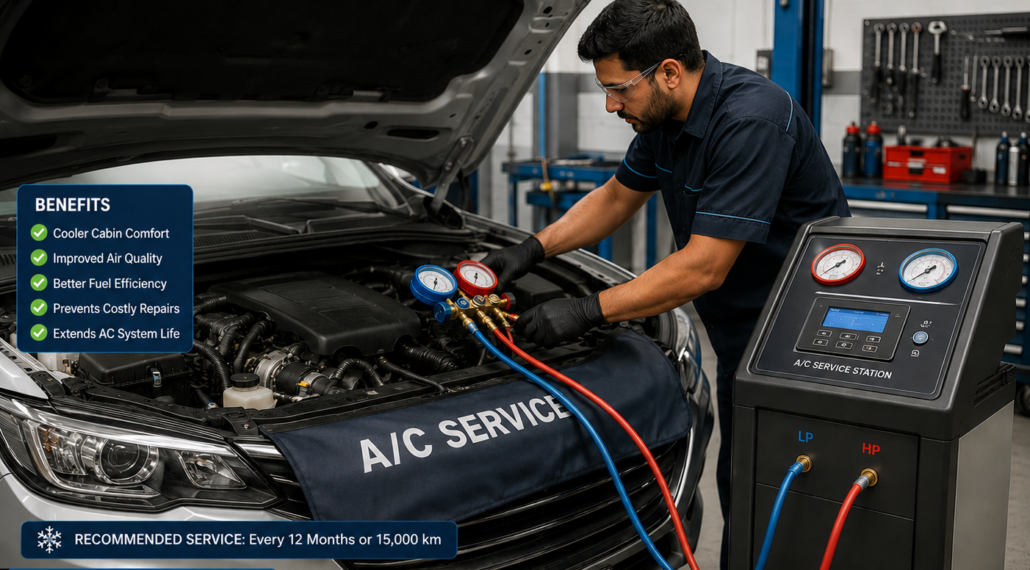
Preventative maintenance can help:
– Improve cooling performance
– Extend component life
– Reduce repair costs
– Improve fuel efficiency
– Prevent costly compressor failures
Regular inspections allow technicians to identify small issues before they become major repairs.
Tips for Keeping Your A/C System Healthy
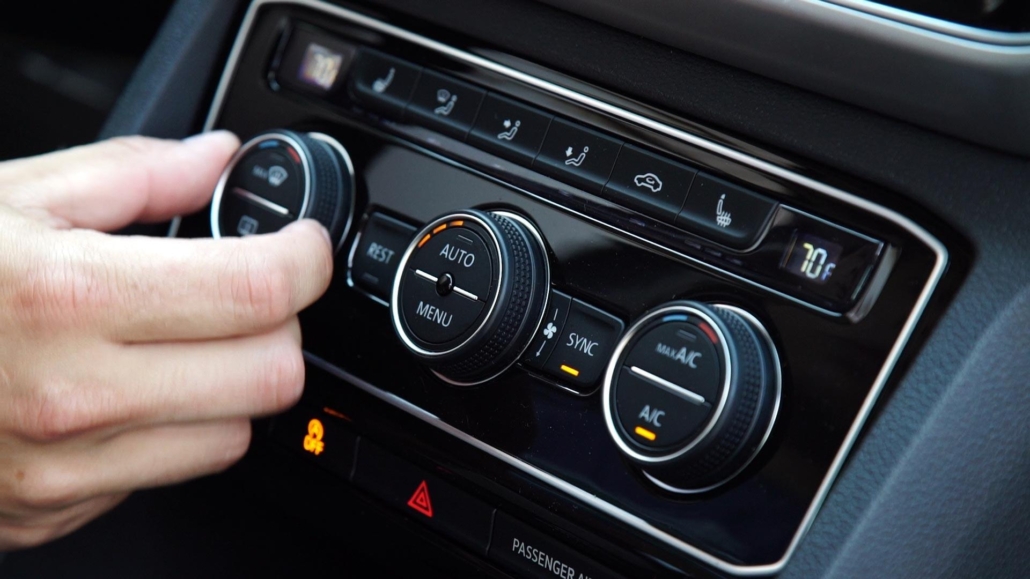
Run Your A/C Year-Round
Even during winter, periodically running the air conditioner helps keep seals lubricated and prevents components from drying out.
Repair Cabin Air Filters
A clean cabin air filter improves airflow and reduces strain on the HVAC system.
Address Issues Early
If your A/C isn’t cooling properly, have it inspected promptly. Operating a system with low refrigerant or failing components can lead to
Keep the Condenser Clean
Road debris, dirt, and bugs can reduce condenser efficiency. Keeping the condenser clean helps maintain optimal cooling performance.
Stay Comfortable All Year Long
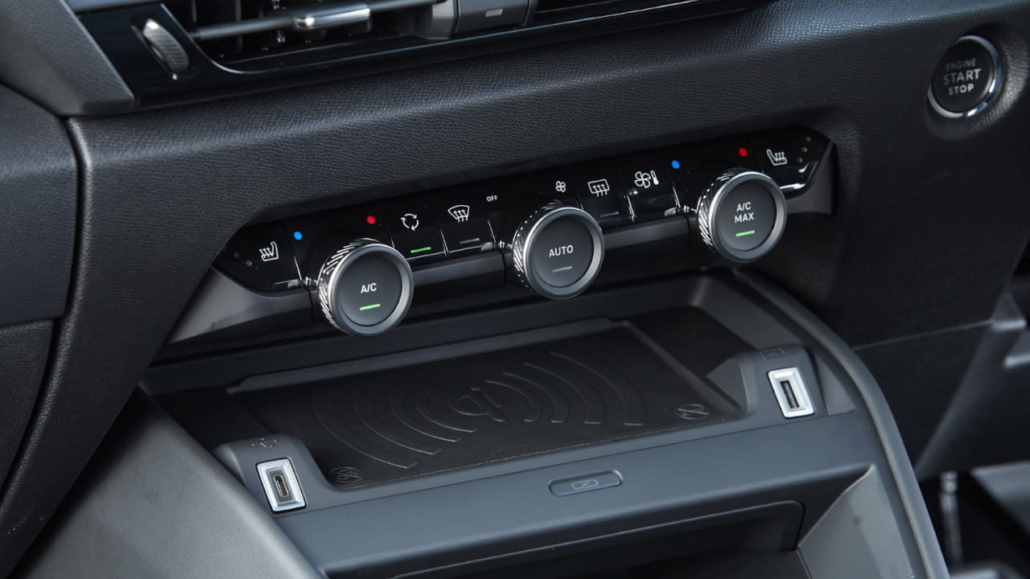
Your vehicle’s air conditioning system does much more than simply keep you cool—it contributes to comfort, visibility, and overall driving enjoyment. Understanding how the system works and recognizing early warning signs can help you avoid unexpected breakdowns and costly repairs.
If your vehicle’s A/C system isn’t performing the way it should, the experienced technicians at Those Guys Garage can inspect, diagnose, and repair your heating and cooling system to keep you comfortable in every season.

Book Your A/C Inspection Today
Whether your air conditioning isn’t blowing cold, airflow seems weak, or you simply want peace of mind before summer arrives, contact Those Guys Garage today. Our team can help ensure your vehicle’s A/C system is operating at peak performance when you need it most.