
Understanding Auto Start/Stop Systems
How They Work, Why They Exist, and What Drivers Should Know
Over the last decade, Auto Start/Stop systems have become increasingly common in new vehicles—from compact cars to full-size trucks. While some drivers appreciate the fuel-saving benefits, others find the system surprising or even frustrating the first time it kicks in. So, what exactly is this feature? Why is it in so many newer vehicles? And what are the real advantages and downsides? Let’s break it down.
Why Auto Start/Stop Exists?
Auto Start/Stop technology was developed to reduce emissions and improve fuel efficiency—especially in city driving where vehicles spend a lot of time idling.
When regulations tightened for automakers around fuel consumption and environmental impact, manufacturers needed a practical way to improve efficiency without major engine redesigns. The solution: shut the engine off when it doesn’t need to run.
By turning off the engine while the vehicle is stopped (such as at red lights or during traffic), manufacturers claim:
Reduced fuel consumption
Lower emissions
Improved overall environmental rating
Better real-world efficiency in stop-and-go traffic
For many manufacturers, including this system allows them to meet regulatory targets and avoid hefty penalties—making it a near-universal feature on modern vehicles.
How Auto Start/Stop Systems Work?
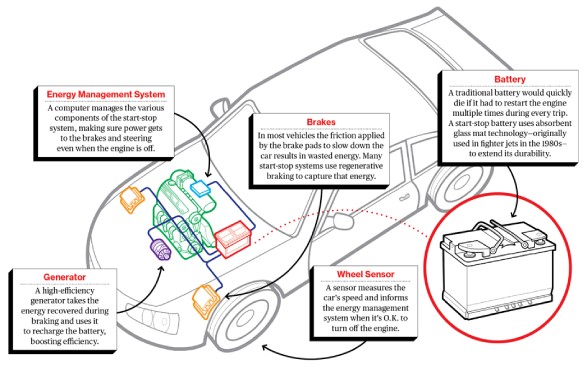
Even though it seems simple—engine off, engine on—the technology behind Auto Start/Stop is surprisingly complex. The system relies on multiple sensors and upgraded components to operate smoothly and reliably.
Here’s how it works step-by-step:
1. Detecting a Stop
When the vehicle comes to a complete stop and certain conditions are met (engine warm, seatbelt fastened, AC load acceptable, battery sufficiently charged), the system prepares to shut the engine off.
2. Engine Shutoff
As you stay stopped with your foot on the brake, the system cuts fuel and spark, shutting the engine off.
Important systems like lights, infotainment, and climate controls stay active, powered by a stronger AGM or EFB battery and alternator designed for repeated cycling.
3. Monitoring Conditions
During the stop, the system continuously checks:
Battery voltage
Cabin temperature
Brake pedal pressure
Steering input
Transmission status
If any of these fall outside acceptable ranges, the engine will restart automatically.
4. Restarting the Engine
As soon as you lift your foot off the brake pedal (or engage the clutch on manual-transmission vehicles), the system engages a reinforced starter motor or integrated starter-generator to fire the engine back up quickly.
This is why restarts typically feel smoother and faster than a normal cold start—these systems are engineered specifically for rapid, repeated activation.

Advantages of Auto Start/Stop
Auto Start/Stop can provide meaningful benefits depending on your driving habits and environment.
✔ Improved Fuel Efficiency
In heavy city traffic, idling can consume a surprising amount of fuel. This system reduces unnecessary burn time, helping drivers squeeze more out of every tank.
✔ Lower Emissions
Every second the engine isn’t running is a reduction in tailpipe emissions. It’s a relatively simple way for automakers to reach emissions goals and help reduce environmental impact.
✔ Seamless Operation
Once accustomed to the system, most drivers find the transition nearly unnoticeable. Modern vehicles use upgraded components to ensure smooth restarts with minimal vibration.
✔ More Efficient Battery Technology
Vehicles with Auto Start/Stop systems are equipped with stronger, more advanced batteries (AGM/EFB). These provide more reliable power for accessories and electrical demand—even when the engine is shut off.

Disadvantages of Auto Start/Stop
Of course, the system isn’t perfect, and some drivers prefer to turn it off. Here’s why:
✖ Potential Wear on Components
Even though the starter and battery are engineered for this use, they still experience more cycles than a non-Start/Stop vehicle. Over time, this can lead to:
Shorter battery life
Higher replacement battery cost
Increased starter strain (though modern designs help mitigate this)
✖ Reduced Comfort in Extreme Temperatures
If your HVAC system depends on the engine running (like older-style AC compressors), the cabin may warm up or cool down less effectively during extended stop periods. Many systems will auto-restart the engine to maintain comfort, but drivers may still notice a difference.
✖ Not Ideal for Certain Driving Habits
In rural areas or for drivers who rarely encounter stop-and-go traffic, the system may provide minimal real-world benefit.
✖ Some Drivers Simply Dislike It
Many drivers report feeling:
Start/Stop lag when re-accelerating
Mild vibration during restart
Loss of “smoothness” in the driving experience
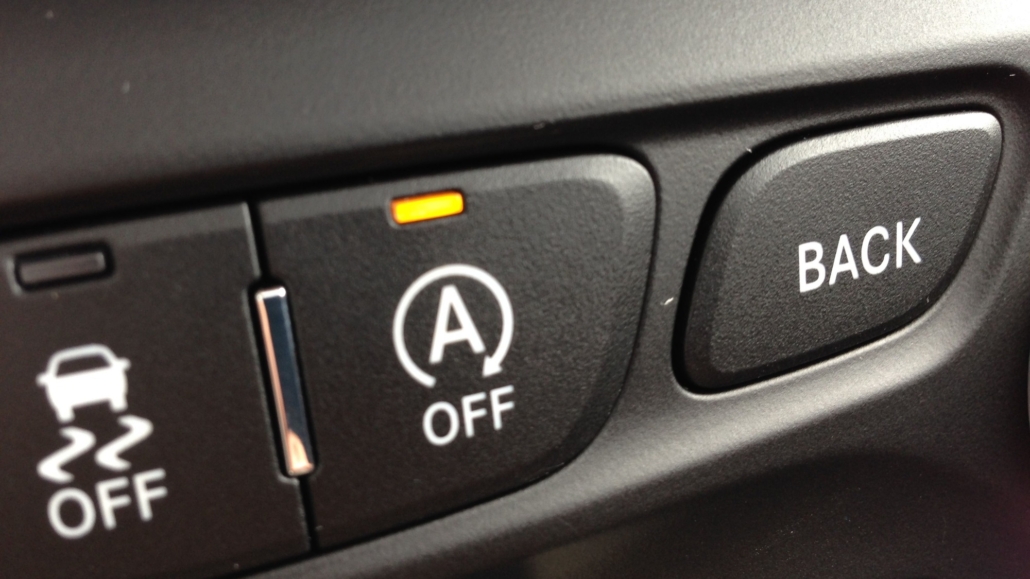
Thankfully, many vehicles offer a button to disable Auto Start/Stop—although it often resets each time the vehicle is restarted.

Is Auto Start/Stop Good or Bad?
The truth is: it depends on your driving style, environment, and what you prioritize.
If you drive in the city or stop frequently → You’ll likely benefit from reduced fuel consumption.
If you drive mostly highway, rural, or prefer maximum comfort → The system may feel unnecessary or annoying.
If you want lower emissions or want your vehicle to operate more efficiently → Auto Start/Stop helps accomplish that.
Regardless of personal preference, the system is engineered to protect itself. Auto Start/Stop will not shut the engine off if conditions could harm the battery, climate control, or drivetrain.

Final Thoughts
Auto Start/Stop systems are here to stay—driven by environmental standards, efficiency goals, and modern engineering. While not every driver is a fan, understanding how the system works can help you get the most out of it and decide whether to use it daily.
If you’re experiencing issues like rough restarts, the engine failing to shut off, or repeated “Start/Stop not available” messages, it may be a sign of battery or sensor concerns.
Those Guys Garage can help diagnose, test, and maintain these systems to keep your vehicle running smoothly—whether you use Start/Stop or prefer it turned off.


