
Automotive Batteries: Types, How They Work, and How to Maintain Them
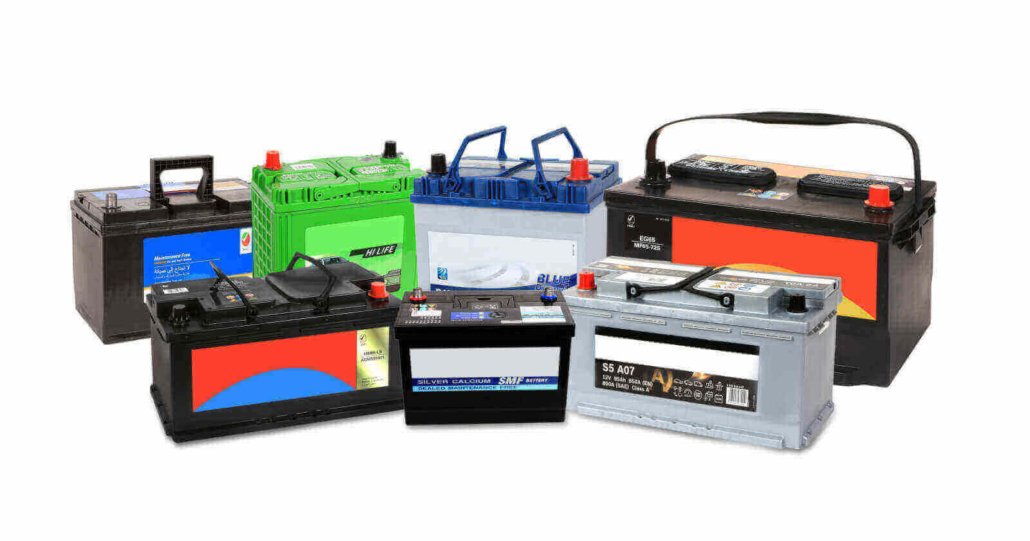
Your vehicle’s battery is one of the most critical components in the entire electrical system. From starting the engine to powering onboard electronics, modern vehicles rely heavily on a properly functioning battery. Understanding the different types of automotive batteries, how they work, and how to maintain them can help you avoid unexpected breakdowns and extend battery life.
What Does an Automotive Battery Do?
An automotive battery serves three primary functions:
Starting Power – Supplies a burst of electrical energy to start the engine.
Stabilizing Voltage – Regulates voltage to protect sensitive electronics.
Power Supply – Provides electricity when the engine is off or when electrical demand exceeds alternator output.
Once the engine is running, the alternator recharges the battery and supplies power to the vehicle’s systems.
Common Types of Automotive Batteries
Flooded Lead-Acid Batteries
Best for: Most standard passenger vehicles
Pros: Affordable, widely available
Cons: Requires venting, sensitive to deep discharge
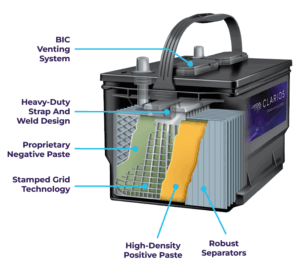
These are the most common batteries found in vehicles today. They use liquid electrolyte and lead plates to store and release energy. While reliable, they require proper charging and can suffer damage if repeatedly drained.
AGM (Absorbent Glass Mat) Batteries
Best for: Vehicles with start-stop systems, high electrical demand
Pros: Maintenance-free, vibration resistant, longer lifespan
Cons: Higher upfront cost
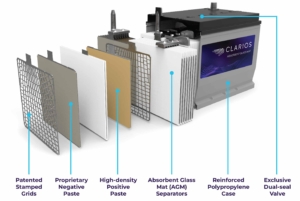
AGM batteries use fiberglass mats to absorb electrolyte, making them spill-proof and more durable. They recharge faster and deliver higher performance than traditional flooded batteries.
Gel Cell Batteries
Best for: Specialty or low-vibration applications
Pros: Leak-proof, good deep-cycle performance
Cons: Sensitive to charging voltage, less common
Gel batteries suspend the electrolyte in a gel-like substance. While durable, they require precise charging and are less common in modern passenger vehicles.
Lithium Automotive Batteries
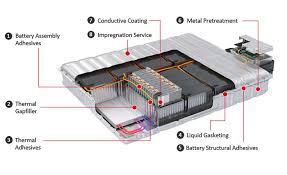
Best for: Performance vehicles, off-road builds, specialty applications
Pros: Lightweight, long lifespan, high efficiency
Cons: Expensive, requires compatible charging system
Lithium batteries are gaining popularity due to their weight savings and performance benefits, but they are typically reserved for specialized applications rather than daily drivers.
How Automotive Batteries Work
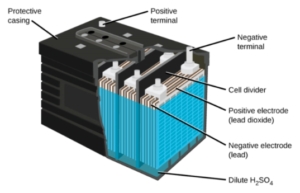
Automotive batteries store chemical energy and convert it into electrical energy through a chemical reaction between lead plates and electrolyte. When you turn the key or press the start button, this reaction releases electrons, creating electrical current to start the engine.
As the engine runs, the alternator reverses the process by recharging the battery, restoring its chemical balance and preparing it for the next start.
Signs of a Weak or Failing Battery
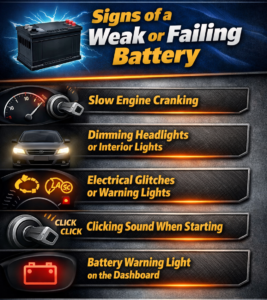
Slow engine cranking
Dimming headlights or interior lights
Electrical glitches or warning lights
Clicking sound when starting
Battery warning light on the dashboard
Most automotive batteries last 3–5 years, depending on climate, driving habits, and electrical load.
Battery Maintenance Tips
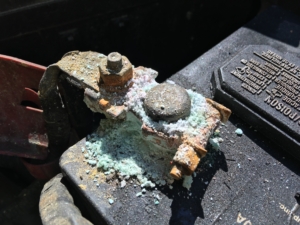
Keep Terminals Clean
Corrosion buildup on terminals can restrict current flow. Clean terminals periodically using a battery-safe cleaner or baking soda and water.
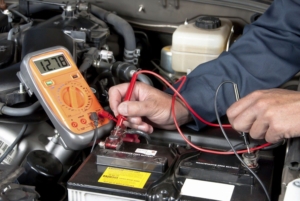
Check Battery Voltage
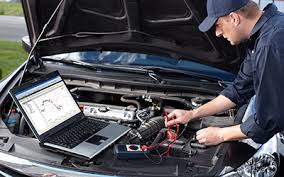
A healthy battery typically measures around 12.6 volts when fully charged. Regular testing can identify issues before failure occurs.
Secure the Battery
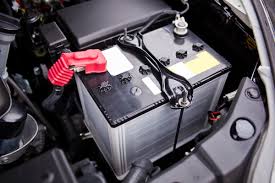
Loose batteries can suffer internal damage from vibration. Ensure the hold-down bracket is tight and intact.
Limit Short Trips
Frequent short trips prevent the battery from fully recharging. Occasional longer drives help maintain proper charge levels.

Inspect Before Extreme Weather
Cold temperatures reduce battery efficiency, while heat accelerates internal wear. Testing your battery before winter or summer can prevent surprises.
When to Replace Your Battery
If your battery is nearing the end of its service life or showing signs of failure, replacement is often more cost-effective than risking a no-start situation. Choosing the correct battery type and rating for your vehicle is essential to ensure reliability and electrical system compatibility.

Final Thoughts
Automotive batteries may be easy to overlook, but they play a vital role in vehicle reliability and performance. Understanding the different battery types, how they function, and how to properly maintain them can help extend battery life and reduce the chance of unexpected breakdowns. When in doubt, a professional battery test and inspection can provide peace of mind and keep your vehicle starting strong year-round.


