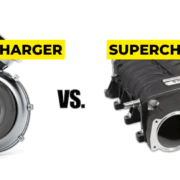
Forced Induction 101

How Turbochargers & Superchargers Work — And Which One Is Right for You

When you hear enthusiasts talk about “boost,” they’re talking about forced induction—a method of increasing an engine’s power output by pushing more air into the combustion chamber. More air + more fuel = bigger combustion, which means more horsepower, more torque, and a lot more smiles per gallon.

The two most common forms of forced induction are turbochargers and superchargers, and while both achieve the same end result, they go about it in very different ways. Here’s a breakdown of how each system works, their differences, and the pros and cons of each.
What Is Forced Induction?

A naturally aspirated engine can only suck in so much air on its own. Forced induction systems compress incoming air before it enters the cylinders. Compressed air is denser, meaning it contains more oxygen—allowing the engine to burn more fuel and generate more power without increasing displacement.

It’s the fundamental upgrade behind many high-performance street cars, diesel pickups, and race engines.
Turbochargers: Power Driven by Exhaust

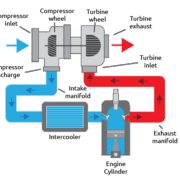
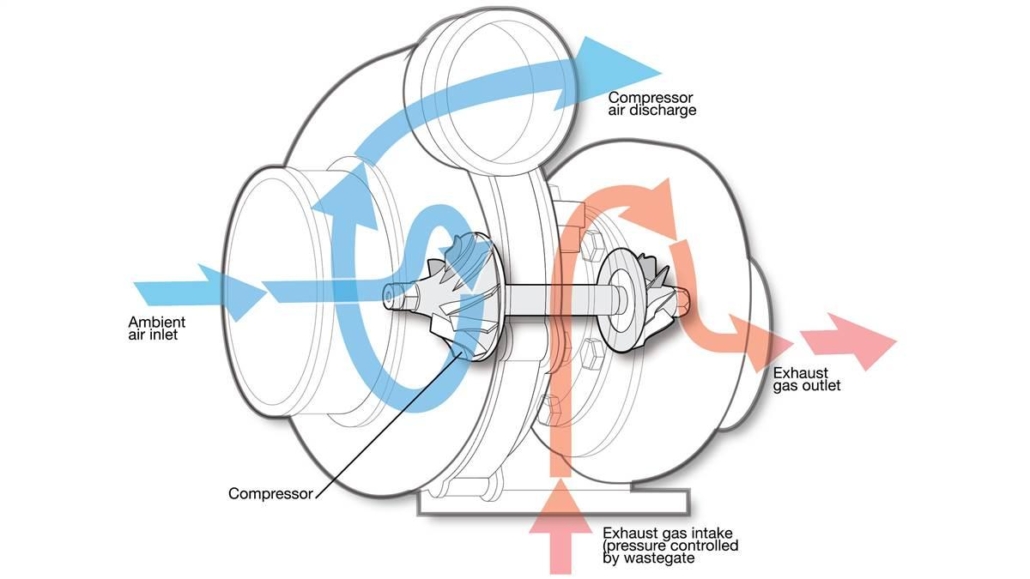
A turbocharger uses the engine’s exhaust gases to spin a turbine. That turbine drives a compressor wheel, which forces more air into the engine.

How a Turbo Works

1. Hot exhaust gas exits the engine.
2. The exhaust spins the turbine wheel.
3. The turbine is connected by a shaft to the compressor wheel.
4. The compressor wheels pulls in and compresses fresh air.
5. Compressed air enters the intake manifold and feeds the engine.

This allows the engine to recover energy that would normally be wasted—exhaust pressure and heat.

Pros of Turbochargers

More efficient: Uses exhaust energy instead of drawing power from the crankshaft.
Better fuel economy: Especially on small displacement engines.
High horsepower potential: Great for serious power builds.
Quieter operation: No belt whine—mainly spool and blow-off sounds.

Cons of Turbochargers

Turbo lag: A delay in boost until exhaust pressure builds.
Heat management: Turbos get extremely hot, requiring good cooling and oiling.
More complex plumbing: Intercoolers, piping, wastegates, etc.
Superchargers: Instant Power From the Crankshaft

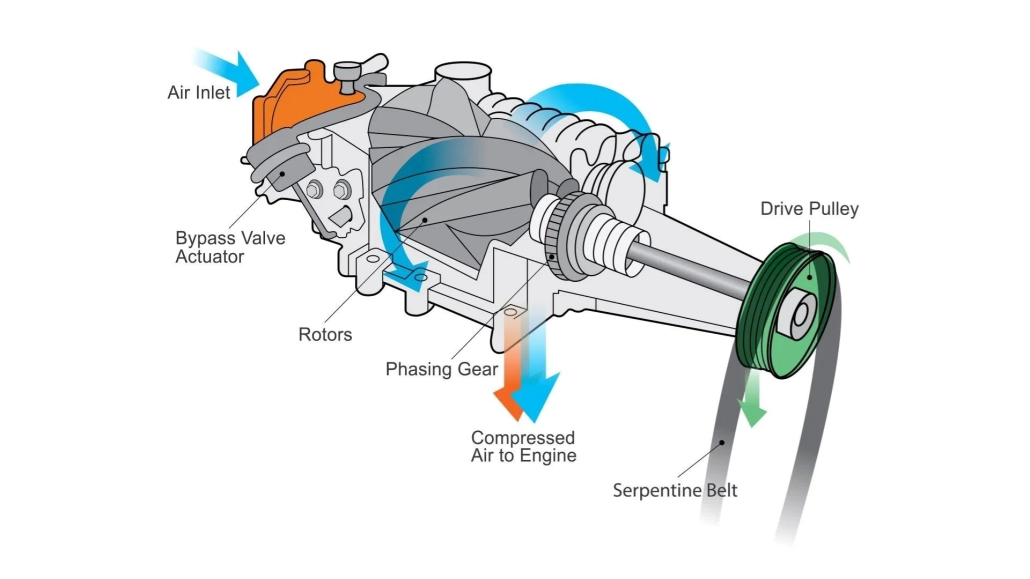
A supercharger is mechanically driven by the engine—usually by a belt connected to the crank pulley. Because it relies on engine RPM instead of exhaust flow, boost is instant.

Three Main Types of Superchargers

Roots-style: Delivers huge low-end torque. (Think big American V8s)
Twin-screw: Compresses air internally—more efficient than Roots.
Centrifugal: Works similar to a belt-driven turbo; best top-end performance.

How a Supercharger Works

1. The belt turns the supercharger’s rotors or impeller.
2. Air is drawn in and compressed.
3. Boost increases proportionally with engine RPM.
4. Compressed air feeds the engine immediately with no lag.

Pros of Superchargers

Instant throttle response: No waiting—boost is right now.
Simple setup: Fewer pipes and heat shielding than a turbo system.
Reliable & consistent: Power delivery feels predictable.
Great for towing or trucks: More low-RPM torque.

Cons of Superchargers

Parasitic loss: Uses engine power to make power.
Lower efficiency: Roots-style units especially create heat.
More strain on the engine at low RPM: Because boost is available immediately.
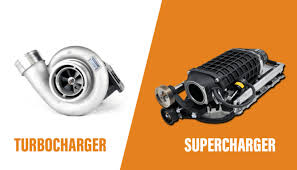
Turbo vs. Supercharger: What’s the Difference?
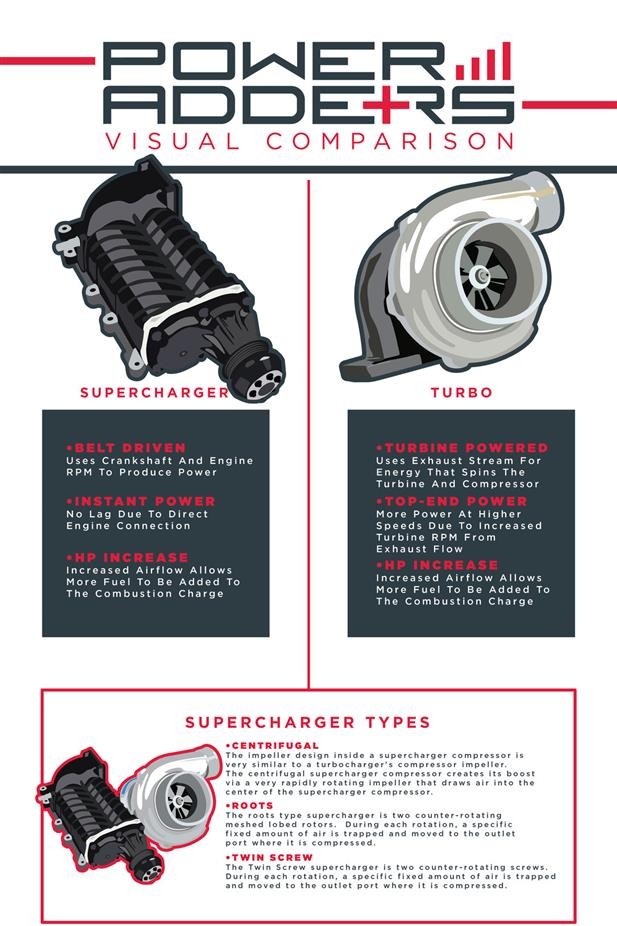
FEATURETURBOCHARGERSUPERCHARGER
Power SourceExhaust gasesCrankshaft/belt drive
Throttle ResponseSome lagInstant
EfficiencyHighModerate
ComplexityHigherLower
Best UseHigh-HP builds, diesels & small enginesTowing, muscle cars & low-end power
SoundSpool + blow-offWhine (especially Roots type)

Which One Should You Choose?

Choose a Turbocharger if you want:

Maximum horsepower per dollar
Better fuel efficiency
Wild top-end performance
That addictive turbo spool + blow-off sound

Choose a Supercharger if you want:

Instant power with no lag
A more predictable driving feel
More torque for towing or heavy trucks
Iconic supercharger whine

Final Thoughts

Forced induction is one of the most effective ways to increase horsepower, no matter what you drive. Both turbochargers and superchargers can transform the way your vehicle performs—but the right choice depends on how you use your vehicle, your aftermarket goals, and the driving experience you want.

If you’re considering a turbo or supercharger setup, Those Guys Garage can help break down the best options for your engine, fuel system, and overall build plans.

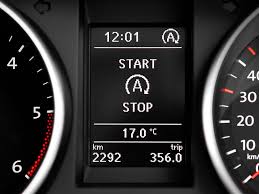
Understanding Auto Start/Stop Systems

How They Work, Why They Exist, and What Drivers Should Know

Over the last decade, Auto Start/Stop systems have become increasingly common in new vehicles—from compact cars to full-size trucks. While some drivers appreciate the fuel-saving benefits, others find the system surprising or even frustrating the first time it kicks in. So, what exactly is this feature? Why is it in so many newer vehicles? And what are the real advantages and downsides? Let’s break it down.

Why Auto Start/Stop Exists?

Auto Start/Stop technology was developed to reduce emissions and improve fuel efficiency—especially in city driving where vehicles spend a lot of time idling.
When regulations tightened for automakers around fuel consumption and environmental impact, manufacturers needed a practical way to improve efficiency without major engine redesigns. The solution: shut the engine off when it doesn’t need to run.

By turning off the engine while the vehicle is stopped (such as at red lights or during traffic), manufacturers claim:

Reduced fuel consumption
Lower emissions
Improved overall environmental rating
Better real-world efficiency in stop-and-go traffic

For many manufacturers, including this system allows them to meet regulatory targets and avoid hefty penalties—making it a near-universal feature on modern vehicles.

How Auto Start/Stop Systems Work?

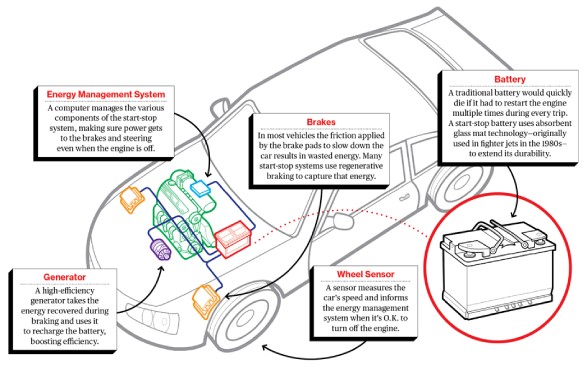
Even though it seems simple—engine off, engine on—the technology behind Auto Start/Stop is surprisingly complex. The system relies on multiple sensors and upgraded components to operate smoothly and reliably.
Here’s how it works step-by-step:

1. Detecting a Stop

When the vehicle comes to a complete stop and certain conditions are met (engine warm, seatbelt fastened, AC load acceptable, battery sufficiently charged), the system prepares to shut the engine off.

2. Engine Shutoff

As you stay stopped with your foot on the brake, the system cuts fuel and spark, shutting the engine off.
Important systems like lights, infotainment, and climate controls stay active, powered by a stronger AGM or EFB battery and alternator designed for repeated cycling.

3. Monitoring Conditions

During the stop, the system continuously checks:

Battery voltage
Cabin temperature
Brake pedal pressure
Steering input
Transmission status

If any of these fall outside acceptable ranges, the engine will restart automatically.

4. Restarting the Engine

As soon as you lift your foot off the brake pedal (or engage the clutch on manual-transmission vehicles), the system engages a reinforced starter motor or integrated starter-generator to fire the engine back up quickly.

This is why restarts typically feel smoother and faster than a normal cold start—these systems are engineered specifically for rapid, repeated activation.

Advantages of Auto Start/Stop

Auto Start/Stop can provide meaningful benefits depending on your driving habits and environment.

✔ Improved Fuel Efficiency

In heavy city traffic, idling can consume a surprising amount of fuel. This system reduces unnecessary burn time, helping drivers squeeze more out of every tank.

✔ Lower Emissions

Every second the engine isn’t running is a reduction in tailpipe emissions. It’s a relatively simple way for automakers to reach emissions goals and help reduce environmental impact.

✔ Seamless Operation

Once accustomed to the system, most drivers find the transition nearly unnoticeable. Modern vehicles use upgraded components to ensure smooth restarts with minimal vibration.

✔ More Efficient Battery Technology

Vehicles with Auto Start/Stop systems are equipped with stronger, more advanced batteries (AGM/EFB). These provide more reliable power for accessories and electrical demand—even when the engine is shut off.

Disadvantages of Auto Start/Stop

Of course, the system isn’t perfect, and some drivers prefer to turn it off. Here’s why:

✖ Potential Wear on Components

Even though the starter and battery are engineered for this use, they still experience more cycles than a non-Start/Stop vehicle. Over time, this can lead to:

Shorter battery life
Higher replacement battery cost
Increased starter strain (though modern designs help mitigate this)

✖ Reduced Comfort in Extreme Temperatures

If your HVAC system depends on the engine running (like older-style AC compressors), the cabin may warm up or cool down less effectively during extended stop periods. Many systems will auto-restart the engine to maintain comfort, but drivers may still notice a difference.

✖ Not Ideal for Certain Driving Habits

In rural areas or for drivers who rarely encounter stop-and-go traffic, the system may provide minimal real-world benefit.

✖ Some Drivers Simply Dislike It

Many drivers report feeling:

Start/Stop lag when re-accelerating
Mild vibration during restart
Loss of “smoothness” in the driving experience

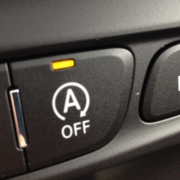
Thankfully, many vehicles offer a button to disable Auto Start/Stop—although it often resets each time the vehicle is restarted.

Is Auto Start/Stop Good or Bad?

The truth is: it depends on your driving style, environment, and what you prioritize.

If you drive in the city or stop frequently → You’ll likely benefit from reduced fuel consumption.
If you drive mostly highway, rural, or prefer maximum comfort → The system may feel unnecessary or annoying.
If you want lower emissions or want your vehicle to operate more efficiently → Auto Start/Stop helps accomplish that.

Regardless of personal preference, the system is engineered to protect itself. Auto Start/Stop will not shut the engine off if conditions could harm the battery, climate control, or drivetrain.

Final Thoughts

Auto Start/Stop systems are here to stay—driven by environmental standards, efficiency goals, and modern engineering. While not every driver is a fan, understanding how the system works can help you get the most out of it and decide whether to use it daily.

If you’re experiencing issues like rough restarts, the engine failing to shut off, or repeated “Start/Stop not available” messages, it may be a sign of battery or sensor concerns.


Those Guys Garage can help diagnose, test, and maintain these systems to keep your vehicle running smoothly—whether you use Start/Stop or prefer it turned off.


Understanding DEF

Why It’s Essential for Your Diesel and How Winter Can Cause Problems

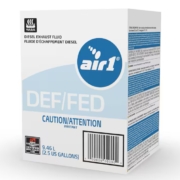
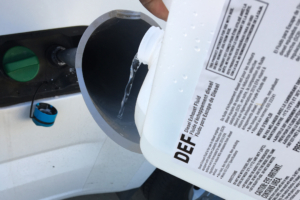
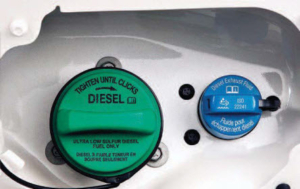
If you drive a diesel vehicle, chances are you’ve seen that blue cap beside your fuel filler — that’s for DEF, or Diesel Exhaust Fluid. It might not seem like much, but this simple fluid plays a huge role in keeping your vehicle running clean, efficient, and compliant with emissions standards.

At Those Guys Garage, we often see drivers run into DEF-related problems, especially during the cold Canadian winters. So, let’s break down what DEF does, why it’s important, and how to avoid common cold-weather issues.

What Is Diesel Exhaust Fluid (DEF)?

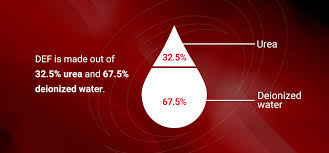
DEF is a mixture of 67.5% deionized water and 32.5% urea — a compound that helps convert harmful nitrogen oxide (NOx) emissions into harmless nitrogen and water vapor.

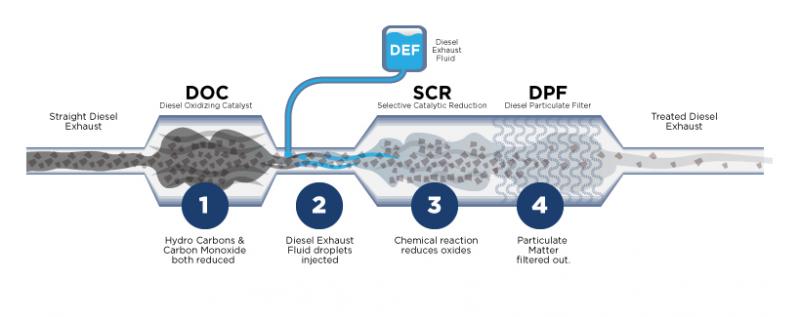
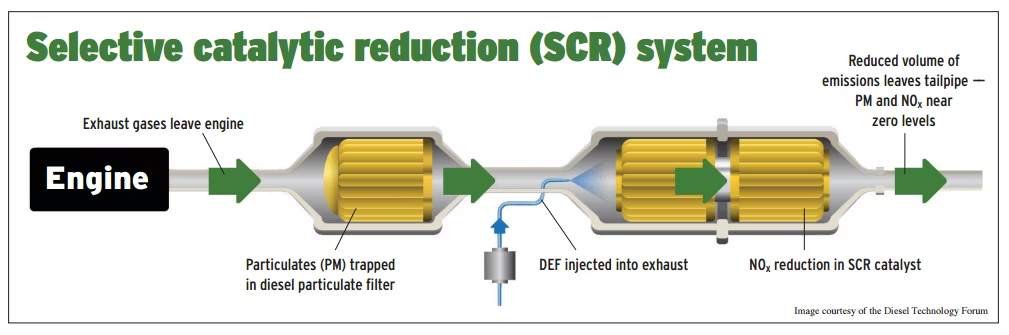
It’s used in trucks equipped with Selective Catalytic Reduction (SCR) systems, a key part of modern diesel emissions control. When your truck injects DEF into the exhaust stream, it reacts with the NOx gases, reducing pollution and helping your vehicle meet environmental standards.

Without DEF, your truck can’t properly control emissions — and most diesel vehicles will go into limp mode or refuse to start if the DEF tank runs empty.

Why DEF Is So Important

Keeps Your Diesel Truck Compliant
It ensures your engine meets strict emission standards, avoiding fines or performance restrictions.

Protects the Environment
DEF significantly reduces NOx emissions, which contribute to smog and air pollution.

Maintain Engine Performance
A properly functioning SCR system helps your diesel run more smoothly and efficiently.

Prevents Costly Repairs
Running with contaminated or low-quality DEF can damage sensors, pumps, and injectors – repairs that aren’t cheap.

How Cold Weather Affects DEF

Here in Alberta, our winters bring freezing temperatures that can cause issues with DEF systems if you are not prepared.

DEF Freezing Point
DEF begins to freeze at -11°C (12°F). Since it’s mostly water, this is completely normal. Most modern diesel trucks have built-in DEF tank heaters that thaw the fluid once the engine is running. However, problems can still occur if the fluid freezes solid or if you’re using older equipment that doesn’t have a heated DEF system.

Crystallization
When DEF gets too cold or when the system isn’t sealed properly, it can crystallize — forming white deposits that clog injectors and lines. These crystals can also form around the filler cap, making it tough to close properly.

Contamination Risk
During winter, condensation or dirt can easily contaminate your DEF if it’s not stored correctly. Even a small amount of contamination can trigger check engine lights or DEF quality errors.

Reduced Efficiency
If DEF can’t flow properly or freezes in lines, your vehicle’s SCR system won’t function as it should — leading to potential performance loss or emission system warnings.

Winter Tips to Avoid DEF Problems

Store DEF Properly
Keep DEF containers in a temperature-controlled area whenever possible. If stored outside, use insulated containers.

Avoid Overfilling
Leave some space in the tank for expansion when the fluid freezes.

Use Fresh DEF
DEF has a shelf life of about a year (less if stored in hot conditions). Always check the expiration date before topping up.

Clean the Cap Area
Before refilling, wipe around the cap to prevent debris or ice from entering the tank.

Let the System Do Its Job
Don’t panic if the DEF light comes on during a cold start — it may just be frozen. Once the fluid warms up, the system will function normally.

When to Get It Checked

If your truck throws a DEF quality, low DEF, or SCR malfunction code — or if you notice reduced power — it’s worth bringing it in for a check. Those issues could stem from frozen or contaminated fluid, a faulty heater, or crystallized lines.

At Those Guys Garage, we can run a diagnostic on your DEF system, check the heaters and sensors, and get your truck back to full performance — especially important before those deep-freeze mornings hit.

How Diesel Exhaust Fluid (DEF) Works
And Why It’s Essential for Your Truck

If you own a modern diesel truck, chances are you’ve topped up the DEF tank a few times — and maybe wondered what that blue fluid actually does. Diesel Exhaust Fluid (DEF) plays a major role in keeping your diesel engine clean, efficient, and compliant with emissions standards.

Let’s break down how DEF works, why it’s important, and what happens if you ignore it.

What is DEF?

Diesel Exhaust Fluid is a non-toxic, colorless mixture of 32.5% high-purity urea and 67.5% deionized water.
It’s not a fuel additive — it never goes inside your diesel tank.

Instead, it has its own reservoir and is used only in your vehicle’s emission system.

How DEF Works?

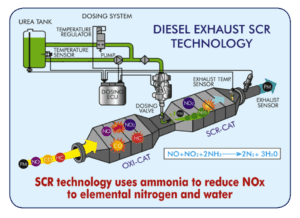
Modern diesel engines use a technology called Selective Catalytic Reduction (SCR) to reduce harmful nitrogen oxide (NOx) emissions — one of the main pollutants created during diesel combustion.

Here’s how it works step by step:

1Diesel combustion produces exhaust gases that contain NOx.
2Before those gases exit through the tailpipe, they pass through the SCR system.
3DEF is injected into the exhaust stream as a fine mist.
4When heated, DEF breaks down into ammonia (NH₃) and carbon dioxide (CO₂).
5Inside the SCR catalyst, ammonia reacts with NOx to form harmless nitrogen (N₂) and water vapor (H₂O).

In short — DEF helps your diesel breathe cleaner and run more efficiently, keeping emissions nearly 90% lower than older systems.

Why It’s Important

Without DEF, your truck’s SCR system can’t do its job. Modern diesel engines are designed to monitor DEF levels — and if the fluid runs too low, you’ll notice:

Warning lights on your dash
Reduced engine power or speed limits
Eventually, the truck won’t start until DEF is refilled

Using DEF properly keeps your truck compliant, powerful, and reliable.

Common Myths About DEF

“It’s just water — I can mix my own.”
Nope. DEF must meet ISO 22241 standards to prevent contamination and damage to your SCR system.

“I can run without it in the winter.”
DEF is crucial year-round. While it can freeze at –11°C, your truck’s DEF tank has built-in heaters to keep it functioning in Canadian winters.

“Adding more DEF improves performance.”
The system injects the exact amount needed — adding extra doesn’t boost power or fuel economy.

How Often Should You Refill DEF?

Usage depends on driving habits, towing loads, and fuel consumption. Most trucks use about 1–3 liters of DEF for every 100 liters of diesel fuel.
Keep an eye on your DEF gauge or reminder light and top up regularly to avoid downtime.

Final Thoughts

DEF might not be the most exciting part of your diesel truck, but it’s one of the most important for keeping your rig clean, legal, and running strong.

At Those Guys Garage, we can help you check your DEF system, sensors, and heater function — especially before the winter months when cold can cause issues.

Keep your diesel running at its best.
🔗👉 Book your service or inspection today!


Why Winter Tires Are Essential for Our Canadian Roads

When the first snowflake starts to fall, it’s a clear sign that Canadian drivers need to prepare for winter driving. And while an oil change and a fresh set of wiper blades are a great step, nothing impacts your safety and control on the winter roads more than the right set of winter tires.

Understanding Winter Tires

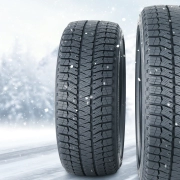
Winter tires are built specifically to handle cold temperatures, snow, ice and slush. They are not just about tread depth – the entire tire is engineered differently than all-season or summer tires.
Here is what sets them apart:

Rubber Compound
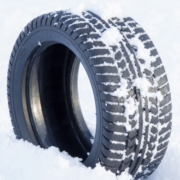
Winter tires use a softer rubber blend that stays flexible in freezing temperatures. This flexibility helps the tire grip the road, even when it’s icy or covered in snow.

Tread Design
The deep grooves and biting edges of winter tire tread are designed to channel snow, slush and water away, improving traction and preventing hydroplaning.

Sipes (Tiny Slits)
These fine cuts in the tread blocks act like claws that bite into ice and packed snow for better braking and cornering performance.

The Canadian Reality

Canada’s winters aren’t for the faint of heart – from freezing rain in the Prairies to heavy snow in Ontario or Quebec, the conditions are constantly changing. Once temperatures dip below below 7°C, all-season tires start to harden, losing grip on cold pavement.

That means even if there’s no snow on the ground, your vehicle can still slide more easily, take longer to stop, and struggle to corner safely.

Safety and Performance Benefits

Shorter Stopping Distances
Studies show that a vehicle with winter tires can stop up to 30-40% shorter on icy or snowy roads compared to all-season tires.

Improved Handling and Control
You’ll notice the difference in how your vehicle corners and accelerates — especially when taking turns or merging onto highways in the winter.

Better Traction in Cold Weather
Even on dry, cold pavement, winter tires grip better and give you the confidence to brake, steer, and accelerate smoothly.

Longer Life for All-Season Tires
By swapping your tires seasonally, you’re not wearing out one set year-round. This extends the life of both your summer and winter tires.

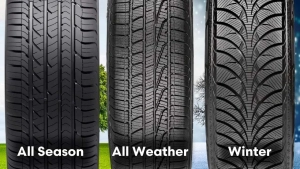
Winter Tires vs. All-Season vs. All-Weather

Tire TypeBest UseKey AdvantageLimitation
Winter TiresBelow 7°C, ice, snow, slushMaximum traction & safety in winterNot ideal for warm weather
All-Season TiresMild spring–fall drivingBalanced performanceLose grip below 7°C
All-Weather TiresYear-round use in mild climatesAcceptable in light snowNot as effective as dedicated winters in heavy snow or ice

For most Canadians — especially here in Alberta and the Edmonton areadedicated winter tires are the safest choice once the mercury drops.

Our Final Thoughts

At Those Guys Garage, we always recommend installing your winter tires early, ideally when the temperature consistently falls below 7°C. Don’t wait until the first big snowstorm — by then, every shop in town will be booked solid.

Your safety on the road this winter starts with proper traction. Don’t risk it — get your winter tires installed and hit the roads with confidence.

Book Your Winter Tire Appointment Today

Stop by Those Guys Garage or call us to reserve your winter tire service.
Book your appointment online!
Let’s keep you rolling safely this winter — no matter what Mother Nature throws your way.

We can help you:
Select the right tire brand and tread for your vehicle
Mount and balance your winter tires
Inspect your brakes, suspension, and alignment while you’re here


Essential Emergency Car Kit Items:

Be Prepared for Any Situation

When it comes to driving, safety should always be your top priority—especially when the unexpected happens. Whether you’re commuting across town or heading out on a long road trip, having a well-stocked emergency car kit can be the difference between a minor inconvenience and a major disaster. Here’s a comprehensive guide to the essential items you should always keep in your vehicle to stay prepared for any situation.


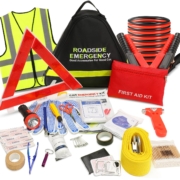
1. First Aid Kit

Injuries can happen anywhere, especially on the road. A basic first aid kit should include:

Adhesive bandages (various sizes)
Antiseptic wipes and ointment
Gauze pads and adhesive tape
Tweezers and scissors
Pain relievers
Emergency blanket
CPR face shield

This kit can handle everything from minor scrapes to stabilizing injuries until help arrives.


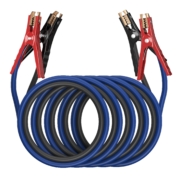
2. Jumper Cables or Jump Starter

Dead batteries are one of the most common roadside issues. Jumper cables are essential if you rely on help from another vehicle. For added independence, consider a portable jump starter with built-in safety features and USB charging capabilities.


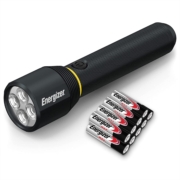
3. Flashlight and Extra Batteries

If you break down at night, a flashlight becomes a vital tool. Choose a durable LED flashlight and pack extra batteries—or go with a rechargeable version that can double as a power bank.


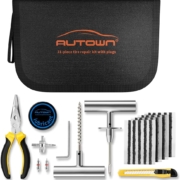
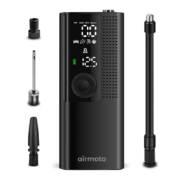
4. Tire Repair Tools / Portable Air Compressor

A flat tire is inconvenient but manageable with the right tools:

Tire inflator/sealant
Portable air compressor
Lug wrench
Tire pressure gauge
Spare tire in good condition

Familiarize yourself with how to use these tools before an emergency strikes.


5. Basic Toolkit

A compact tool kit can help with minor repairs. Include:

Screwdrivers (flathead and Phillips)
Pliers and wrench
Duct tape
Zip ties
Multi-tool


6. Reflective Triangles and Road Flares

These items alert oncoming traffic if you’re stranded on the side of the road, especially at night or in poor visibility conditions. They greatly enhance your safety by reducing the risk of a secondary accident.


7. Blanket, Gloves, and Warm Clothing

If you get stuck in cold weather, staying warm is crucial. Keep a thermal blanket, insulated gloves, and a hat or extra clothing layer in your kit—especially during winter months.


8. Non-Perishable Food and Water

Keep bottled water and high-energy snacks like granola bars, trail mix, or energy bars in your vehicle. This can be a literal lifesaver if you’re stuck for an extended period of time.


9. Phone Charger or Power Bank

Your smartphone is a vital lifeline in an emergency. Keep a car charger or portable power bank on hand to ensure you can always make a call, check a map, or access emergency services.


10. Important Documents and Emergency Contacts

Include copies of your vehicle registration, insurance information, and a list of emergency contacts. A written list is especially useful if your phone is dead or lost.


11. Ice Scraper and Shovel (Seasonal)

In colder climates, include an ice scraper, snow brush, and a compact shovel to deal with snow or ice build-up and help free your vehicle if you’re stuck.


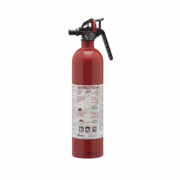
12. Multi-Purpose Fire Extinguisher

Small car-friendly extinguishers can put out electrical or engine fires before they become catastrophic. Be sure it’s rated for automotive use.


Be Proactive, Stay Safe

An emergency car kit isn’t just for doomsday scenarios—it’s a smart, proactive measure that can save time, money, and even lives. Tailor your kit based on your location, climate, and how often you travel. Check it periodically to replace expired items and recharge batteries.

Drive smart. Stay prepared. Your future self will thank you.


The Impact of Weather on Car Batteries: Tips for All Seasons

When you turn the key or push the start button, you expect your vehicle to roar to life. But few things are as frustrating as being stuck with a dead battery—especially when weather plays a role. Temperature extremes, both hot and cold, are some of the biggest culprits behind battery issues. Understanding how weather affects your car battery and taking the right precautions can help you stay on the road year-round.

How Weather Impacts Your Car Battery

Cold Weather

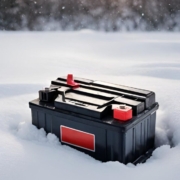
Slower Chemical Reactions: Car batteries generate electricity through chemical reactions. In freezing temperatures, these reactions slow down, reducing your battery’s ability to provide the necessary power.

Thicker Engine Oil: Cold weather also thickens engine oil, making it harder for the starter to crank the engine, which requires more energy from your battery.

Accessory Demands: Heaters, defrosters, heated seats, and wipers all draw extra power when it’s cold, further taxing the battery.

Hot Weather

Increased Fluid Evaporation: Heat causes the water inside a battery’s electrolyte solution to evaporate faster, leading to reduced battery life.

Corrosion Acceleration: High temperatures speed up corrosion on battery terminals and connections, which can reduce efficiency.

Higher Under-Hood Temps: Prolonged exposure to heat under the hood puts stress on the battery and surrounding components.

Seasonal Transitions

It’s often during the change of seasons that weak batteries reveal themselves. A battery that survived a summer of extreme heat may fail as soon as the first cold snap hits, and vice versa.

Tips for Protecting Your Car Battery in Every Season

Have Your Battery Tested Regularly

Most batteries last 3–5 years, but it’s a good idea to test them at least twice a year—before winter and before summer.

Keep Terminals Clean

Check for corrosion or buildup on your battery terminals. Cleaning with a baking soda solution and a brush can improve connections.

Check for Secure Mounting

Vibrations can damage internal components. Ensure your battery is properly secured.

Limit Short Trips in Cold Weather

Frequent short drives don’t give your alternator enough time to recharge the battery. Try to combine errands or take longer drives occasionally.

Protect Against Heat

Park in shaded areas or garages when possible to limit heat exposure during summer.

Turn Off Accessories When Not in Use

Don’t leave lights, chargers, or electronics plugged in when your car is off—they can drain the battery faster, especially in extreme weather.

When to Replace Your Battery

If your car cranks slowly or struggles to start.
If you notice dim headlights or electrical issues.
If the battery is older than 3–5 years.

Being proactive can save you from unexpected breakdowns.

Final Thoughts

Your car battery doesn’t just fail out of nowhere—weather conditions often play a big role in its health. With regular checks and seasonal precautions, you can extend your battery’s life and avoid inconvenient surprises.

At Those Guys Garage, we provide battery testing, replacements, and full electrical diagnostics to keep your vehicle running strong—no matter the season. Stop by today for a quick check before the next big temperature swing catches you off guard.


The Benefits of Choosing a Local Auto Repair Shop

When your vehicle needs maintenance or repair, you’re often faced with a choice: head to a big-name dealership or trust a local auto repair shop. While dealerships can have their place, more and more drivers are discovering the many advantages of working with independent, community-based repair shops.

Here are some of the top benefits of choosing a local auto repair shop for your car or truck:

Personalized Service and Trust

Local shops thrive on relationships. When you bring your vehicle to a neighborhood garage, you’re not just another ticket number—you’re a valued customer. Technicians often take the time to get to know you, your vehicle, and your driving habits. This level of personal attention builds trust and ensures your car gets the specific care it needs.

Supporting Your Community

Choosing a local repair shop means your money stays close to home. Local businesses often support community events, sponsor sports teams, and contribute to the overall economy in your area. Every oil change or brake repair you do with them helps strengthen your community.

Competitive Pricing

Many people assume dealerships are the only option for quality service, but local repair shops often provide the same services—sometimes at a fraction of the cost. Independent garages typically have lower overhead, allowing them to pass the savings directly to customers without sacrificing quality.

Flexibility and Faster Turnaround

Local shops can be more flexible with scheduling, often fitting you in faster than a dealership with long wait times. Whether you need a same-day appointment or a quick fix, smaller shops are usually able to accommodate you quicker.

Experienced and Certified Technicians

Independent auto shops employ skilled, certified technicians who are trained to handle a wide variety of makes and models. Unlike dealerships that may specialize in one brand, local mechanics often have broad experience, giving them the know-how to fix nearly any vehicle that rolls into the bay.

Honest Recommendations

Local businesses depend heavily on reputation and word-of-mouth referrals. Because of this, you’re more likely to receive honest advice, straightforward pricing, and recommendations that put your best interests first—not just upsells.

Final Thoughts

Your vehicle is a major investment, and who you trust to service it matters. By choosing a local auto repair shop, you’re not only getting reliable service, but you’re also helping to support your community, save money, and enjoy a more personalized experience.

Next time your vehicle needs attention, consider skipping the dealership and giving your local shop a call—you may be pleasantly surprised by the difference.


Steps to Winter Prep for Your Vehicle

As the temperatures start to dip and the roads get slick, it’s time to start thinking about winter prep for your vehicle. Cold weather, snow, and ice can be tough on both your ride and your peace of mind. A little preparation now can help you avoid breakdowns, improve safety, and keep your vehicle running smoothly through the harshest months of the year.

Here are the key steps to get your vehicle winter-ready:

1. Swap to Winter Tires

All-season tires just don’t cut it once the mercury drops. Winter tires are designed with special rubber compounds and tread patterns that grip cold, icy roads better. If you already have a set, check the tread depth (at least 5/32″) and look for any cracks or uneven wear.

Pro tip: Don’t forget to check your tire pressure frequently—cold air lowers PSI.

2. Test Your Battery

Cold weather is a battery killer. A weak battery that worked fine in summer might leave you stranded in January. Have your battery tested, and replace it if it’s nearing the end of its life. Also, clean the terminals and make sure the cables are snug.

3. Check Your Fluids

Oil: Depending on your vehicle and climate, consider a thinner winter-grade oil for easier cold starts.

Antifreeze/Coolant: Make sure it’s topped up and mixed properly to prevent freezing.

Windshield Washer Fluid: Switch to a winter formula that won’t freeze on contact.

Oil: Depending on your vehicle and climate, consider a thinner winter-grade oil for easier cold starts.

4. Inspect Wipers & Defrosters

Snow and freezing rain demand a clear windshield. Replace old or streaking wiper blades with winter blades designed to handle ice buildup. Double-check that your heater and defrosters are working properly for both comfort and safety.

5. Check Brakes & Suspension

Winter driving requires confident stopping and stable handling. Have your brakes inspected for wear, and ensure your suspension components are in good shape. Slippery roads amplify any issues.

6. Protect Against Rust & Salt

Road salt is tough on metal. A professional undercoating or rust protection treatment can extend the life of your vehicle and keep it looking sharp. Don’t forget to wash the undercarriage regularly during the season

7. Pack a Winter Emergency Kit

Even the most prepared driver can end up in a roadside emergency.

Your kit should include:

Booster cables
Small shovel & traction aids (sand, kitty litter, or traction mats)
Ice scraper & snow brush
Blanket and warm gloves
Flashlight & extra batteries
First aid kit

8. Book a Winter Inspection

If you’re not comfortable checking everything yourself, bring your vehicle to a trusted shop for a full winter prep inspection. A mechanic can spot issues early and give you confidence before the snow hits.

👉 Book your inspection today and breathe easier on your next drive!

Bottom line: A little preparation goes a long way. Winter doesn’t have to be stressful—make sure your vehicle is ready to handle whatever the season throws at it.


Smart Cars: What You Need to Know

The world of automotive technology has shifted gears in recent years, and “smart cars” are leading the way. Whether you drive a vehicle with advanced driver-assist features, built-in connectivity, or fully integrated infotainment systems, smart cars are changing the way we interact with the road. But with these advancements comes a new responsibility—caring for the technology inside your vehicle.

In this blog, we’ll break down what makes a car “smart” and highlight some of the special care these vehicles require, including on-boarding diagnostics, software updates, and sensor calibrations.

What is a Smart Car?

When we say “smart car,” we’re not just talking about compact city vehicles like the brand Smart. We’re talking about any vehicle equipped with advanced technology that relies on computer systems, sensors, and connectivity to operate safely and efficiently.

Examples of smart car features include:

Advanced Driver Assistance Systems (ADAS):
lane-keeping assist, adaptive cruise control, blind-spot monitoring.

Connectivity:
integration with smartphones, navigation apps, and over-the-air updates.

On-board computers:
systems that track everything from fuel efficiency to maintenance schedules.

In short, smart cars are vehicles where technology plays just as big a role as the engine under the hood.

On-Boarding Diagnostics: The New “Check-Up”

Traditional vehicles rely on basic error codes when a problem arises. Smart cars, however, use on-boarding diagnostics (OBD) that provide a much deeper look into the health of your vehicle.

More Data:
Instead of a simple “check engine” light, the system can track hundreds of potential issues.

Precision:
Diagnostics can identify specific components or systems in need of attention.

Integration:
Mechanics now use specialized tools and software to communicate directly with your car’s computer systems.

Routine check-ups aren’t just about oil and brakes anymore—they’re about ensuring your vehicle’s “digital brain” is functioning properly.

Software Updates: Keeping Your Car Current

Just like your smartphone or laptop, smart cars need software updates to stay safe and effective.

Security:
Updates help protect against potential cyber threats.

Performance:
New updates can improve fuel efficiency, adjust driving modes, or enhance battery life in hybrid/electric vehicles.

Features:
Some automakers add new capabilities—like improved navigation systems or voice assistants—through updates.

Many updates can now be performed over the air (OTA), meaning they’re sent wirelessly to your vehicle. In some cases, however, your vehicle may need to visit the shop for larger, more complex updates.

Sensor Calibrations: Eyes and Ears of the Vehicle

Smart cars rely on sensors for nearly everything—cameras for lane assist, radar for adaptive cruise, and ultrasonic sensors for parking assistance.

Why Calibration Matters:
After windshield replacements, bumper repairs, or suspension adjustments, sensors can be knocked out of alignment.

Safety First:
A misaligned camera or radar sensor could mean your lane-keeping assist or automatic emergency braking doesn’t work correctly.

Professional Tools:
Sensor calibration requires precision equipment and a controlled environment—something that can’t be done in your driveway.

Regular calibration checks ensure your vehicle’s safety systems are working exactly as designed.

Final Thoughts

Smart cars are revolutionizing the way we drive, offering safety, convenience, and efficiency like never before. But this technology also means these vehicles require a new level of care.

Diagnostics keep your systems healthy.

Software updates keep your vehicle current and secure.

Sensor calibrations keep your safety features reliable.

If you own a smart car, think of it as a rolling computer with wheels. Regular maintenance isn’t just about the mechanical side anymore—it’s about keeping the technology finely tuned as well.


How To Identify and Fix Brake Problems Before They Become Dangerous

When it comes to vehicle safety, nothing is more important than your brakes. They’re the first—and sometimes only—line of defense between you and a potential accident. The good news? Most brake issues show warning signs long before they fail completely. The key is recognizing those signs and addressing them early. Here’s what every driver should know about identifying and fixing brake problems before they become dangerous.

Common Signs of Brake Problems

Squealing or Grinding Noises

A high-pitched squeal usually means your brake pads are worn and need replacing.

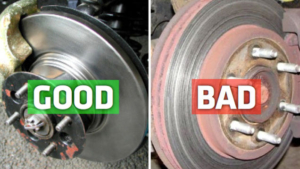
Grinding noises suggest the pads are completely worn down, and metal-on-metal contact is occurring—this can damage your rotors and lead to costly repairs.

Spongy or Soft Brake Pedal

If the pedal feels squishy or sinks to the floor, it could indicate air in the brake lines, a brake fluid leak, or worn master cylinder components.

Vibration or Pulsation

A vibrating brake pedal when you stop often points to warped rotors. This can happen when brakes overheat from heavy use, such as towing or repeated hard stops.

Pulling to One Side

If your car pulls left or right during braking, it may mean a stuck caliper, uneven brake pad wear, or contaminated brake fluid.

Why You Shouldn’t Delay Repairs

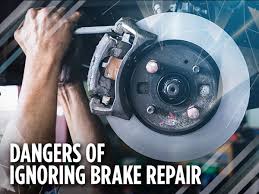
Brake problems don’t get better on their own. Delaying repairs can:

Increase repair costs (worn pads destroy rotors, leaks damage other parts).
Reduce stopping power, making emergency braking dangerous.
Put you and others at risk of an accident.

A small squeal today could turn into a costly tow bill tomorrow.

How Brake Problems Are Fixed

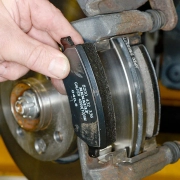
Brake Pad Replacement

Replacing worn pads is one of the most common and affordable brake repairs.

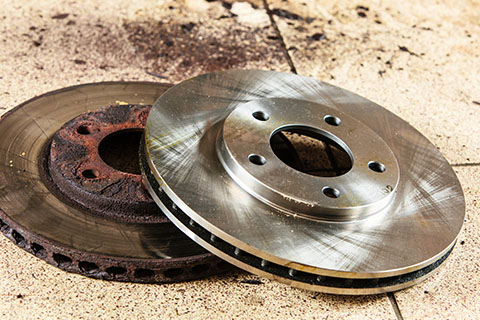
Rotor Resurfacing or Replacement

Warped or damaged rotors may be machined smooth if still within spec, or replaced entirely.

Brake Fluid Service

Flushing old, contaminated brake fluid helps maintain hydraulic performance and prevent corrosion in the system.

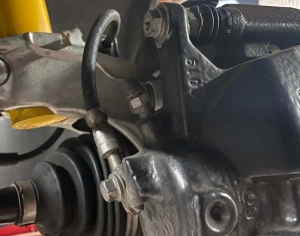
Caliper and Hose Repairs

Seized calipers or damaged brake hoses are replaced to restore proper braking balance.

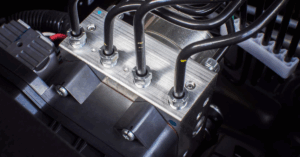
ABS Diagnostics and Repair

If the ABS light is on, specialized equipment is used to diagnose and fix electronic or sensor issues.

Preventative Maintenance Tips

Regular Brake Inspections

Have your brakes checked every 20,000 km (or sooner if you notice symptoms).

Fluid Checks

Replace brake fluid every 2–3 years, depending on manufacturer recommendations.

Listen and Feel

Don’t ignore noises, vibrations, or warning lights—these are your car’s way of asking for help.

Final Thoughts

Your brakes are your vehicle’s most critical safety feature. Paying attention to early warning signs and scheduling timely repairs not only saves money but also ensures you, your family, and everyone else on the road stays safe.If you’ve noticed any of the brake symptoms above, don’t wait until it’s too late—book an appointment with Those Guys Garage today, and let our experienced technicians keep your stopping power strong.